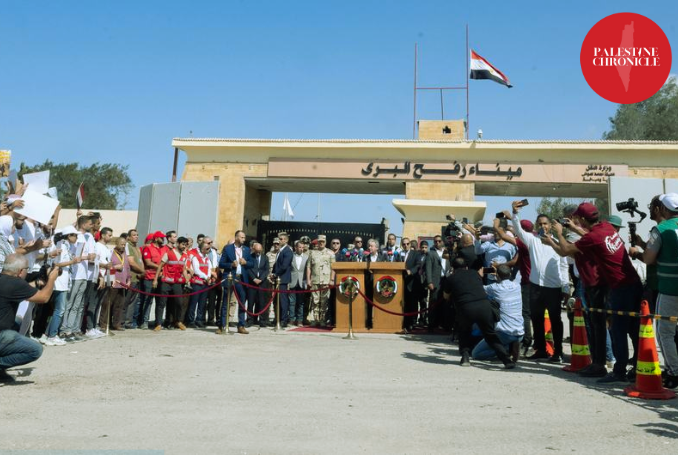

Rafah reopens under a limited trial amid uncertainty, as Gaza officials warn of delays, political pressure, and a deepening medical crisis.
Key Developments
- Israeli media reported a limited, trial opening of the Rafah crossing, with passenger movement expected to begin under restricted conditions and unclear long-term guarantees.
- Gaza officials warned of ambiguity surrounding the crossing’s operating mechanism, saying initial passage would be limited and vulnerable to Israeli obstruction.
- Medical authorities said thousands of patients remain trapped in Gaza, warning that past evacuation procedures led to preventable deaths and could be repeated.
- Hamas and other Palestinian resistance factions cautioned that Israeli conditions at Rafah could amount to a renewed siege, calling on mediators to closely monitor Israel’s conduct.
Israeli media reported on Sunday that the Rafah crossing has begun operating under a limited, experimental framework, with Egyptian and European Union representatives present, as preparations continue for the start of passenger movement on Monday.
The crossing is Gaza’s only outlet to the outside world not directly controlled by Israel, making its reopening a critical development amid ongoing humanitarian and medical emergencies.
Limited Trial Operation Announced
According to Israeli outlets, including Channel 15, the Rafah crossing will open on Sunday under a trial phase, with actual passenger movement expected to begin on Monday. Under the reported mechanism, approximately 150 people would be allowed to leave Gaza daily, while around 50 would be permitted to enter.
The reports said the trial opening is taking place in coordination with Egypt and the European Union. No formal Palestinian or Egyptian statement has yet clarified the full operational framework, raising concerns about the durability and scope of the reopening.
Gaza Government Warns of ‘Ambiguity’
The Government Media Office in Gaza said there remains “significant ambiguity” surrounding the mechanism governing the Rafah crossing.
Ismail Al-Thawabta, director of the office, told the Palestinian Information Center that while Israeli forces will not be present inside the crossing, the first phase of the reopening is expected to be limited to wounded patients, the sick, and holders of Egyptian passports.
Al-Thawabta accused Israel of attempting to obstruct broader political and administrative efforts in Gaza, including moves to enable the national committee tasked with managing the Strip. He said Israel is seeking to undermine these efforts through pressure and restrictions tied to the crossing, while expressing optimism that the national committee will eventually succeed.
‘Fabricated’ – Gaza Health Director Disputes Israel’s Birth Rate Data for Gaza
Hamas Warns against Renewed Siege
Hamas said any Israeli restrictions, conditions, or interference in the operation of Rafah would constitute a violation of the ceasefire agreement.
In a statement, the movement called on mediators and guarantor states to closely monitor Israel’s conduct at the crossing, warning that Gaza could face a “new form of siege” under the pretext of a partial reopening.
Hamas stressed that free, dignified movement through Rafah is essential to preventing further humanitarian deterioration.
Medical Catastrophe and Delayed Evacuations
The reopening comes amid a deepening medical crisis in Gaza. Dr. Mohammed Abu Salmiya, director of Al-Shifa Medical Complex, said no clear mechanism has yet been established for the evacuation of patients and wounded individuals through Rafah.
Abu Salmiya said Gaza currently has around 20,000 patients and wounded, including approximately 4,500 children in urgent need of treatment abroad. He warned that returning to previous evacuation procedures—characterized by Israeli delays, limited approvals, and bureaucratic obstruction—would likely double mortality rates and leave patients waiting for years.
According to Abu Salmiya, around 1,280 patients and wounded Palestinians have died while waiting for permission to leave Gaza for treatment during previous periods of restricted access.
LIVEBLOG: Israel Resumes Massacres across Gaza, Shattering Ceasefire
WHO Inspects Readiness of the Crossing
A Palestinian source told Al Jazeera that a delegation from the World Health Organization has headed to the Palestinian side of the Rafah crossing to inspect its readiness, particularly in relation to the evacuation of medical cases.
The visit comes amid mounting pressure from international health bodies to accelerate the transfer of critically ill patients, especially children, amid the collapse of Gaza’s healthcare system.
Israeli Political Reaction
Israeli opposition figure Yair Golan described the reopening of Rafah as a “painful reminder of ongoing strategic failure,” saying key security arrangements concerning Gaza were formulated without Israeli participation.
In a post on X, Golan called for the creation of a security system along the Egypt–Gaza border overseen by an external entity trusted by Israel, specifically to prevent smuggling. His remarks highlighted internal Israeli debates over control, security, and the political implications of Rafah’s reopening.
Security Incidents and Protests in Gaza
As developments around Rafah unfolded, Al-Aqsa TV reported the explosion of a booby-trapped vehicle in the Al-Tuffah neighborhood of eastern Gaza City, as Israeli forces continued demolishing residential buildings in the area.
Separately, national forces organized a protest in Jabaliya refugee camp against what they described as international neglect of displaced residents, warning that living conditions continue to deteriorate amid shortages, destruction, and lack of shelter.
Calls for ‘Restraint’
Ali Shaath, head of Gaza’s technocratic administration committee, said recent civilian casualties are “deeply painful” and called on ‘all parties’ to adhere to the ceasefire.
Shaath said his committee is working with international partners to prevent further bloodshed and stressed that any future political path must be grounded in restraint and respect for civilian lives.
(PC, Al-Aqsa TV, AJA, Palestinian Media)