
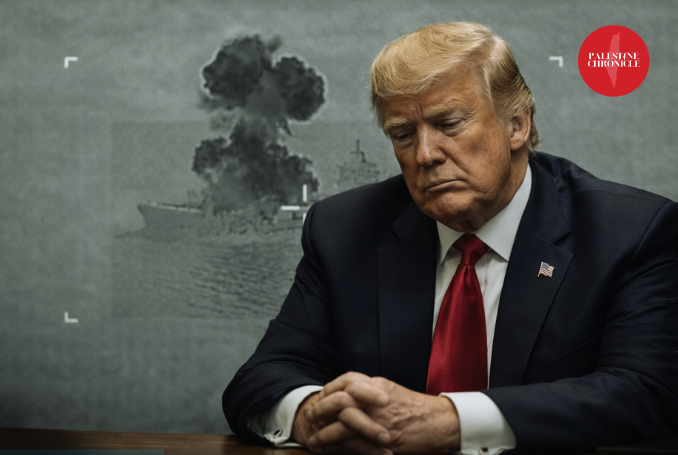

Republican support for Trump’s war on Iran “is wobbling” as funding debates intensify and lawmakers question strategy, costs, and sanctions policy, Foreign Policy reported.
Mounting Republican Unease
Nearly one month after the US-Israeli military aggression against Iran, divisions are emerging within the Republican Party, even as formal support for President Donald Trump largely holds.
According to a report by Foreign Policy, lawmakers are expressing growing frustration over troop deployments, unclear strategic objectives, and the anticipated cost of the war, which could reach around $200 billion.
As Congress prepares for a two-week recess, the Pentagon has yet to submit a formal funding request, though discussions about emergency war spending are already underway.
According to the report, Republican Senator Roger Wicker, chairman of the Senate Armed Services Committee, said that if a reconciliation bill is used, “the Iran money would be in there,” signaling a possible attempt to bypass Democratic opposition.
However, such a move would still face procedural hurdles and internal resistance. With narrow majorities in both chambers, even limited Republican defections could derail the effort.
‘It Breaks My Heart’
A major source of frustration among Republican lawmakers has been the administration’s decision to grant temporary waivers on sanctions affecting Iranian and Russian oil shipments, according to FP.
Several senators reportedly criticized the move, arguing that it contradicts the logic of the war itself.
“It makes no sense to provide financial relief to a country that we’re currently fighting,” said Senator Jerry Moran, warning that the policy allows adversaries to strengthen their military capabilities. “Russia can now more easily fund its war machine,” he added.
For his part, Senator John Kennedy said he “hated” the decision, adding that “it breaks my heart to see us remove sanctions on Iranian oil and on Russian oil.”
Senator Thom Tillis similarly warned that the move was “helping our adversaries again,” even if aimed at stabilizing energy markets, the report said.
Democratic leaders echoed the criticism in stronger terms, describing the policy as contradictory. “Waging war on a regime while simultaneously enabling it to increase oil profits by lifting sanctions makes zero sense,” they said, calling it “a panicked move that benefits our adversaries.”
‘Not Enough Answers’
Beyond sanctions, lawmakers from both parties are raising concerns about the lack of a clearly defined strategy and insufficient communication from the administration.
Republican Senator Mike Rounds initially downplayed the need for immediate congressional authorization. Still, he later emphasized the need for clarity, stating: “Our oversight responsibilities are important… we expect to get good answers.”
After classified briefings, several lawmakers expressed dissatisfaction with the level of detail provided.
“I will not support troops on the ground in Iran, even more so after this briefing,” Representative Nancy Mace stated.
House Armed Services Committee Chairman Mike Rogers also pointed to gaps in information, saying lawmakers are “just not getting enough answers” about the administration’s plans and options.
These concerns have intensified following reports that Trump ordered an additional 2,000 troops to the region, bringing recent deployments to nearly 7,000.
‘Pretty Staggering’ Costs
The anticipated $200 billion funding request presents a significant political challenge, particularly as public opinion remains skeptical of the war.
Polling indicates that support drops sharply when military escalation is considered. At the same time, economic concerns—particularly energy prices—remain a top priority for voters.
Democratic Senator Tim Kaine highlighted the implications of the projected costs, saying the figures are “pretty staggering in the sense of what they say about how long this is going to go on.”
Kaine has led efforts to force congressional votes on war powers, though only one Republican, Senator Rand Paul, has broken ranks so far.
Still, the broader reluctance within the Republican Party reflects growing political risk. As Kaine put it, any Republican backing a formal authorization under current conditions “would get absolutely roasted by their constituents.”
(PC, Foreign Policy)





Truck Fump! and to hell with all the rest; they’re all killing America.
We The People have ZERO power and/or influence over what our elected officials do in our name, and obviously never did.