
Saudi Arabia urges the US to lift the Hormuz blockade, warning Iran could retaliate by disrupting Red Sea routes and global energy flows.
Key Developments
- Saudi Arabia pressures US to lift Strait of Hormuz blockade.
- Fears Iran could escalate by targeting Bab al-Mandeb chokepoint.
- Risk of wider disruption to global oil and shipping routes grows.
Saudi Pressure on Washington
Saudi Arabia is pressing the United States to abandon its blockade of the Strait of Hormuz and return to negotiations, amid fears the move could trigger broader regional escalation.
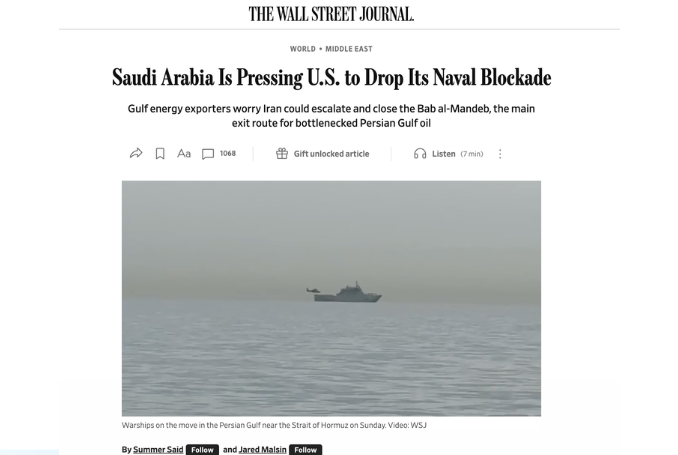
According to the Wall Street Journal, Saudi officials warned that continued pressure on Iran could provoke retaliation targeting other critical maritime routes.
The US blockade, imposed after failed negotiations, aims to increase economic pressure on Iran following its disruption of traffic through the Strait of Hormuz.
Saudi officials are particularly concerned that Iran could respond by targeting the Bab al-Mandeb Strait, a vital chokepoint linking the Red Sea to global shipping lanes.
‘No Port Will Be Safe’ – Iran Condemns ‘Maritime Piracy’ as Pakistan Pushes New Talks
The route is critical for Saudi oil exports, especially after the kingdom rerouted crude shipments away from the Persian Gulf through pipelines to the Red Sea.
Officials warned that if Bab al-Mandeb were disrupted, it would directly threaten these exports and significantly widen the economic impact of the conflict.
An expert cited by the WSJ said: “If Iran does want to shut down Bab Al-Mandeb the Houthis (Ansarallah – pC) are the obvious partner to do it.”
Hormuz Blockade and Global Impact
The Strait of Hormuz remains central to the war, with Iran effectively restricting traffic earlier in the war by targeting vessels, cutting off around 13 million barrels per day in exports.
The US blockade of Iranian ports came into effect after Washington failed to convince Tehran to reopen the waterway through diplomatic channels.
‘Hands on Trigger’: Ansarallah Issues Ultimatum, Signals Readiness to Intervene
The disruption has already driven oil prices above $100 per barrel and raised concerns about long-term instability in global energy markets.
According to the Wall Street Journal, a White House spokesperson said: “President Trump has been clear that he wants the Strait of Hormuz to be fully open to facilitate the free flow of energy.”
‘Hands on Trigger’
Iran’s allies in Yemen, Ansarallah, are seen as a key factor in any potential escalation.
The group controls territory along the Bab Al-Mandeb Strait and has previously demonstrated its ability to disrupt shipping through missile and drone attacks.
Ansarallah has repeatedly signaled readiness to intervene. In a statement late March, the group’s military spokesman, Yayha Saree, said that the war does not target Iran alone but extends to “our entire Islamic nation,” including Palestine, Gaza, Iraq, and Lebanon.
Saree stated that the Yemeni Armed Forces have “our hands on the trigger for direct military intervention” if specific thresholds are crossed.
(PC, WSJ)