
Seven Palestinians were killed as Gaza authorities documented 1,244 Israeli ceasefire violations; UNRWA warned of rising military activity, aid obstruction, and worsening winter displacement.
Seven Palestinians were killed on Thursday by Israeli occupation forces in central and southern Gaza, as Palestinian authorities documented 1,244 Israeli violations of the ceasefire agreement during its first phase, underscoring the fragility of the truce and the continued deterioration of humanitarian conditions in the besieged Strip.
Medical sources at Al-Aqsa Martyrs Hospital in Deir al-Balah confirmed that six Palestinians were killed and others wounded in two Israeli airstrikes targeting the western part of the city. The strikes reportedly hit the courtyard of a home belonging to the al-Jarou family.
In southern Gaza, ambulance crews recovered the body of a Palestinian killed after being targeted by Israeli forces in areas of Israeli military deployment in the Mawasi area of Rafah. The body was transferred to Nasser Medical Complex in Khan Younis.
With these deaths, the number of Palestinians killed since the ceasefire came into effect on October 11, 2025, has risen to 456, with 1,251 others injured, according to Gaza health authorities.
Meanwhile, Palestinian media reported heavy gunfire from Israeli military vehicles positioned on Jabal al-Rais toward civilian homes in the al-Tuffah neighborhood, east of Gaza City.
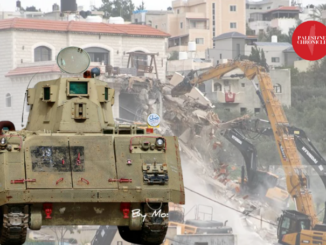
Israeli occupation forces were also reported to have demolished an entire residential block in the al-Zaytoun neighborhood, also east of the city.
A member of Gaza’s Civil Defense was injured when a concrete slab collapsed during efforts to remove debris from a war-damaged home at risk of collapse.
Israeli Military Attacks Persist Across Gaza as Withdrawal Delayed
UNRWA Warns
The UN Relief and Works Agency for Palestine Refugees (UNRWA) reported a marked increase in Israeli military activity, particularly near the so-called “yellow line”, an area that remains undefined on the ground but heavily militarized.
UNRWA said access to humanitarian facilities, public infrastructure, agricultural land, and relief assets remains severely restricted or entirely blocked, raising further concerns over civilian safety and aid delivery.
Civil Engineer, Ali Shaath, to Head Gaza Technocratic Committee – Who is He?
‘Slow Genocide’
Gaza’s Government Media Office warned that the Strip is facing a “slow genocide”, noting that fewer than 25,000 aid trucks have entered Gaza out of 57,000 stipulated under the ceasefire agreement.
UNRWA has also sounded the alarm over acute shortages of shelter materials, as winter storms and flooding expose tens of thousands of displaced families to contaminated water and freezing temperatures.
UNRWA media adviser Adnan Abu Hasna said Gaza lacks hundreds of thousands of tents and mobile housing units, while thousands of aid trucks remain stalled at border crossings.
Israeli Obstruction
Turkish Foreign Minister Hakan Fidan accused Israel of deliberately obstructing the entry of humanitarian aid and temporary housing, warning that such actions are exacerbating civilian suffering amid severe cold.
Politically, Egypt announced that an agreement had been reached on the formation of a 15-member technocratic committee to administer Gaza.
Hamas leader Basem Naim described the committee as a positive step toward stabilizing the ceasefire and easing the humanitarian crisis, stressing that Hamas does not seek a direct administrative role and will limit itself to oversight.
However, Israeli sources have ruled out any withdrawal from the “yellow line” without progress on disarming Hamas—a position Naim said shifts responsibility onto mediators and the US guarantor to address Prime Minister Benjamin Netanyahu’s continued stalling.
Israeli occupation forces continue to maintain control over Gaza’s southern and eastern borders, large parts of northern Gaza, and approximately 50 percent of the Strip’s total area, despite the ceasefire agreement.
(PC, AJA, QNN)