

Since his arrest in 2003, Asmaa and their two children have lived in constant waiting, including seven years during which visits were forbidden.
While extremist Israeli Minister Itamar Ben-Gvir was distributing sweets to celebrate the initial approval of a death penalty law targeting Palestinian prisoners, Asmaa Hamouda was weeping over the fate of her husband, who remains imprisoned in Israel.
Asmaa has been waiting for him for 23 years, despite the draconian sentence — 22 life terms plus 150 years — imposed by Israeli courts. Now, she fears the law will advance to final approval, and she will lose her husband, 53-year-old Raed al-Houtari, forever.
The controversial bill is progressing through several readings in the Israeli Knesset. Israel is eager to portray the process as part of a democratic framework, claiming that such legislation is enacted only through parliamentary procedure.
According to the bill’s sponsors, its final draft requires judges to impose the death penalty on any Palestinian convicted of killing an Israeli Jew on the basis of identity.
Use of Lethal Injection – Knesset Debate Reveals Details of Death Penalty Bill
The legislation does not only target those who allegedly carry out an attack. It extends the punishment to those accused of planning or directing it. According to Israeli media reports, the execution would be carried out by lethal injection, under medical supervision.
At the start of the session, an internal document was circulated outlining the principles behind the proposed law. It described the bill as “a moral law unparalleled for the people of Israel in their land” and claimed it would serve as a significant deterrent “based on past experience.”
The document stressed that the law must be enforceable in practice — not merely symbolic — in an attempt to present it as a functional framework rather than a political statement. Yet it has already sparked widespread condemnation from human rights advocates.
The text makes clear that the death penalty applies solely to Palestinian defendants convicted of killing an Israeli Jew because of identity, not to Israelis who kill Palestinians for the same reason. The selective standard renders the bill overtly racist and places it in direct conflict with international human rights norms.
‘We Were Living in Torture Centers’: Freed Prisoner Speaks to the Palestine Chronicle
Not the First Tragedy
Since his arrest in 2003, Asmaa and their two children have lived in constant waiting, including seven years during which visits were forbidden.
The passage of the death penalty law would devastate the family, but Asmaa says it would not be the first tragedy inflicted on Palestinian prisoners.
“For two years, prisoners have been deprived of food, medical treatment, and family visits,” she told the Palestine Chronicle. “They are subjected to torture, beatings, solitary confinement, and punishment without cause. My husband has been assaulted repeatedly — most recently just weeks ago. His ribs were broken, and he never saw a doctor.”
To her, the bill’s progression is no surprise.
“Even proposing such a law was unjust — and the world did nothing,” she said. “We saw Ben-Gvir distributing sweets, and the international community remained silent. Now they will pass it without any real pressure.”
Raed has already survived two assassination attempts during detention — one during interrogation when tear gas canisters were fired into a sealed cell, and another in 2005, when he was struck on the head, leaving a wound he suffered from for months.
“What is happening is the systematic targeting of prisoners and their families,” Asmaa said. “Without real pressure, nothing will stop Israel from approving this law and killing detainees.”
‘I Wished for Death’: A Palestinian Man’s Torture at an Israeli Checkpoint
‘An Ideological, Partisan Decision’
For decades, Israel’s policy toward Palestinian detainees has shifted from pressure and deprivation to direct killing. Over the past two years alone, more than 80 prisoners have died from torture or medical neglect, not including those from Gaza whose fates remain unaccounted for.
According to the internal explanatory document, the sentence would be imposed by a simple majority in the judicial panel, with no discretion, no possibility of appeal regarding the type of punishment, and no plea bargains or pardons.
Execution must take place within 90 days of the final ruling — an unprecedented timeframe in the Israeli system — “to prevent any possibility of evading punishment.”
The law would also apply retroactively to hundreds of detainees held since October 7, 2023.
During the deliberations, Ben-Gvir declared that he hoped the executions bill would be passed before the upcoming Israeli elections.
The proposal passed its first reading on November 10, with support from 39 lawmakers from Netanyahu’s Likud, the Religious Zionism alliance led by Ben-Gvir and Bezalel Smotrich, and opposition member Avigdor Lieberman. Sixteen members — including lawmakers from Degel HaTorah, the Democratic Party, and Arab parties — voted against.
Inside the Torture Cells: How Israel is ‘Slowly Killing’ Palestinian Resistance Leaders
Helmi al-Araj, director of the Center for Civil Rights, said the law is likely to pass — this time with a solid majority aligned with a ruling coalition built on racist, ultranationalist platforms.
With Israeli aggression on Gaza having paused, he added, the government is now focused on maintaining coalition unity — and advancing the death penalty law is part of that calculation.
“The push for this law is rooted in internal partisan, electoral, and ideological considerations,” al-Araj explained. “All of these factors make its approval more likely than ever before.”
The bill seeks not only to execute individuals but to strip Palestinian detainees of their political and legal status as prisoners of war protected under the Geneva Conventions, reframing them as criminals.
“This means targeting the prisoner movement itself and continuing the crime of genocide — killing Palestinians simply because they are Palestinian,” al-Araj concluded.
(The Palestine Chronicle)
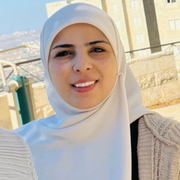
– Fayha’ Shalash is a Ramallah-based Palestinian journalist. She graduated from Birzeit University in 2008 and she has been working as a reporter and broadcaster ever since. Her articles appeared in several online publications. She contributed this article to The Palestine Chronicle.




Be the first to comment