The presence of Palestine within Iran’s revolutionary vision and state policy—as the foremost and central issue of the Islamic nation—constitutes one of the deeper reasons behind the Western Zionist-American war on Iran.
Both the United States and Israel have openly declared their objectives in a war on Iran: dismantling its nuclear program, halting missile production, and weakening the Axis of Resistance. US President Donald Trump and Israeli Prime Minister Benjamin Netanyahu went even further, initially stating that their aim was the overthrow of the Islamic Republic itself, before later retreating to the formulation of “creating conditions” for Iranians to bring about regime change.
These objectives—particularly the pursuit of regime change—are not new. They have defined Western policy toward Iran since the victory of the Iranian Revolution in 1979 and the establishment of the Islamic Republic. This reality necessitates a deeper examination of the underlying motives behind the American-Israeli war on Iran, in order to understand the roots of Western hostility and the broader Zionist-American confrontation with the country.
The first of these underlying reasons lies in the very nature of the Iranian Revolution itself. Led by Imam Ayatollah Khomeini and later carried forward by Imam Ali Khamenei, the revolution introduced a distinct model of governance outside the orbit of American dominance. It rejected the fragmented and hybrid state models prevalent in much of the post-colonial world, instead advancing the model of an Islamic Republic grounded in revolutionary Islam.
This model carries a humanistic, civilizational, and progressive vision, built upon unity, independence, production, resistance, and solidarity with the oppressed and marginalized worldwide. It seeks to restore authenticity, identity, and collective purpose, mobilizing societies against colonialism, domination, and injustice.
Crucially, it replaces passivity with action—advancing a revolutionary Islamic theory rather than waiting for external salvation, and elevating the philosophy of sacrifice and resistance over submission. In doing so, it challenges both Western-imposed political systems and competing interpretations of Islam that align either with accommodation or extremism, placing them under scrutiny.
At its core, the revolutionary Islamic model rejects externally imposed alternatives that are disconnected from the region’s cultural and civilizational foundations. Many post-colonial states, shaped by Western frameworks and governed by elites alienated from their own societies, have remained politically and economically dependent on the West. Iran, by contrast, sought to break this dependency by constructing an independent model rooted in self-reliance, resisting intellectual, cultural, political, and economic subordination.
The second fundamental reason behind the war concerns Iran’s method of building power—an approach the West does not wish to see replicated, whether in Iran or elsewhere in the region. This model is based on two interdependent pillars: the internal development of a modern, self-sufficient state, and the external projection of a moral and political role.
These two dimensions reinforce one another. A strong internal foundation enhances external influence, while weakness at home limits international impact. From the Western perspective, such a model—particularly when it challenges American hegemony and resists Israeli dominance—is unacceptable.
As a result, efforts to confront Iran have focused on undermining both pillars simultaneously: targeting infrastructure, scientific progress, and industrial capacity on the one hand, while also seeking to eliminate key figures and disrupt its regional influence on the other. The aim is to weaken both Iran’s internal development and its external role.
Yet the external dimension of Iran’s strategy is not incidental—it is embedded within the identity and constitutional framework of the Islamic Republic. Article 154 of the Iranian Constitution affirms support for “the just struggles of the oppressed against the arrogant anywhere in the world.” Within this framework, Palestine occupies a central position.
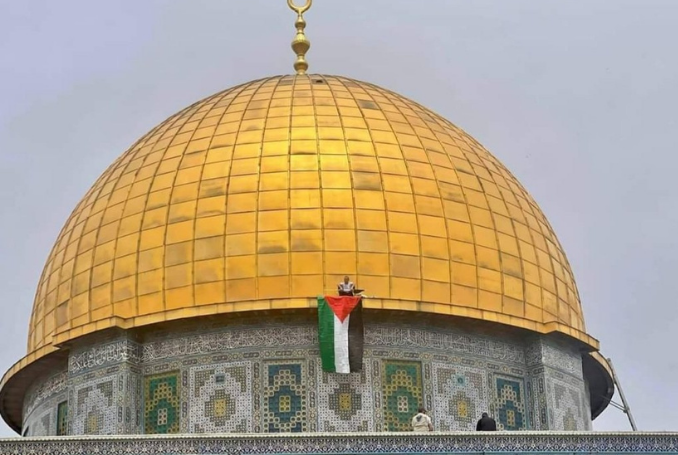
The Palestinian cause—particularly the status of Jerusalem and Al-Aqsa Mosque, with their profound religious and historical significance—has become integral to Iran’s political and ideological outlook. Palestine represents not only a humanitarian issue, but also a focal point of confrontation with Israeli occupation and Western dominance in the region.
This centrality of Palestine constitutes the third core reason for Western hostility toward Iran. Just as the Zionist project holds a central place in Western strategic thinking, Palestine occupies a central place in Iran’s revolutionary vision. Supporting Palestinian resistance is thus framed as both a moral obligation and a strategic necessity.
Taken together, these factors—an independent political model, a strategy of self-reliant power-building, and the centrality of Palestine—form the deeper foundations of the ongoing confrontation with Iran. They explain not only the persistence of Western hostility, but also the broader objectives of the current war.
In this context, Iran’s path forward, as articulated by its leadership and ideology, is one of continuity: maintaining its revolutionary model to preserve independence, strengthening self-reliance through internal development and external engagement, and sustaining its commitment to Palestine as a central pillar of its political and moral project.
(This article was originally published in Al Mayadeen Arabic. It was translated and edited by the Palestine Chronicle)