

By Romana Rubeo 
Orbán’s defeat does not immediately translate into a hostile Hungarian policy toward Israel. Péter Magyar has yet to define a clear position on Gaza or on Benjamin Netanyahu himself. But the significance of this moment lies elsewhere.
Broad Public Demand for Change
The political landscape of Europe shifted sharply this weekend as Prime Minister of Hungary Viktor Orbán conceded defeat after 16 years in power, marking the collapse of one of Europe’s most entrenched nationalist governments.
Orbán was unseated following a record voter turnout of 77.8 percent—the highest since the fall of Communism—signaling broad public demand for political change.
The election delivered a decisive victory to Péter Magyar, a former Orbán ally who broke away in 2024 to lead the Tisza party. Early projections indicate a commanding parliamentary majority, potentially reshaping Hungary’s domestic and foreign policy orientation.
In his concession, Orbán acknowledged defeat but struck a defiant tone:
“The responsibility and opportunity to govern were not given to us. But we are not giving up. Never, never, never.”
Magyar’s rise is widely viewed as a return toward European consensus, following years of tensions between Budapest and Brussels, as well as Hungary’s alignment with Moscow and right-wing movements in the United States.
Netanyahu’s Shrinking European Shield
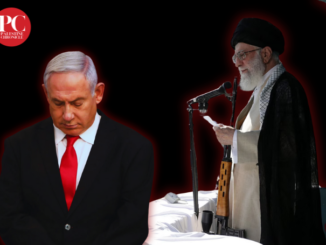
The consequences of Orbán’s defeat extend far beyond Hungary, with immediate implications for Israeli Prime Minister Benjamin Netanyahu and his government’s standing in Europe.
For years, Orbán functioned as Israel’s most reliable ally within the European Union. Hungary repeatedly used its veto power to block or dilute EU statements critical of Israeli actions in Gaza and the occupied West Bank, effectively shielding Tel Aviv from collective European pressure.
Orbán went further than diplomatic shielding. In April 2025, following the International Criminal Court arrest warrant issued for Netanyahu, he openly rejected the court’s authority and guaranteed that Hungary would not carry out any arrest.
Despite being a signatory to the Rome Statute, Budapest signaled it would not comply—effectively turning Hungary into a safe political space for Israeli leadership within the European Union.
The political relationship between Orbán and Netanyahu was rooted in shared ideological ground—emphasis on national sovereignty, hostility toward migration, and opposition to liberal international institutions.
Just weeks before the election, Netanyahu publicly endorsed Orbán at a CPAC event in Budapest, describing him as a “rock” and a defender of Western civilization.
With Orbán’s exit, that protective layer inside the EU is now gone. Hungary is no longer expected to reflexively obstruct EU initiatives targeting Israel, opening the door to stronger collective positions on Gaza and broader accountability measures.
The Rise of a More Assertive European Bloc
Meanwhile, a more vocal European front is emerging, mainly led by Spanish Prime Minister Pedro Sánchez. Sánchez has positioned himself at the forefront of calls for European action in response to Israel’s war on Gaza, advocating measures that were previously stalled by Hungarian opposition.
He recently urged the European Union to suspend its Association Agreement with Israel, citing what he described as “flagrant violations of international humanitarian law” in Gaza and Lebanon.
Speaking at the European Pulse Forum on Friday, Sánchez said Europe must “not only rearm itself to address its security and defense problems, but to also rearm itself morally.”
According to Politico, he framed this as essential for ensuring “stable and peaceful development throughout the world” at a time of increasing global instability.
In one of his strongest positions, Sánchez called for concrete measures against Israel.
He said it was “imperative for Brussels to suspend its cooperation agreement with Israel” in response to what he described as “flagrant” disrespect for international law. With Hungary potentially no longer serving as a veto barrier, such proposals are increasingly entering the core of European policy debate.
A Structural Shift
Orbán’s defeat does not immediately translate into a hostile Hungarian policy toward Israel. Péter Magyar has yet to define a clear position on Gaza or on Benjamin Netanyahu himself. But the significance of this moment lies elsewhere.
For over a decade, Hungary functioned as a structural barrier inside the European Union—consistently delaying, diluting, or blocking collective positions critical of Israel. That role was not dependent on rhetoric, but on power: the ability to veto.
With Orbán gone, that mechanism may disappear. What may change, therefore, is not necessarily Hungary’s tone, but Europe’s capacity to act.
(The Palestine Chronicle)

– Romana Rubeo is an Italian writer and the managing editor of The Palestine Chronicle. Her articles appeared in many online newspapers and academic journals. She holds a Master’s Degree in Foreign Languages and Literature and specializes in audio-visual and journalism translation.




Wonderful that Orban is gone! Europe Union may now be able to bring morality in to the picture, we hope, now Hungary cannot veto it.
I also hated Orban’s pro-Zionism but Orban vetoed EU’s madness for Euros for Zelensky and Orban had a more practical policy with Russia – Russia was a stable source of energy. With Hungary’s Magyar, as Rubeo pointed out, he’s a dark horse. Hungary may have voted another rubber stamp for EU’s Russiaphobic madness, NATO (Right, Daddy?), white wash the Zionist genocide of Gaza and beyond, etc. EU morality?? Sanchez, yes, but Ursula von der Leyen? Moral???