
By Ramzy Baroud 
Despite military gains, despite political pressure, and despite attempts to co-opt sections of Lebanon’s political establishment, Israel failed to fundamentally alter the equation.
Israel’s war on Lebanon is doomed to fail. This is not a mere prediction, nor an argument rooted in ideology or wishful thinking. It is a logical conclusion drawn from history, military reality and the strategic quagmire that Israeli Prime Minister Benjamin Netanyahu has once again created for his country.
History alone should have taught Israel this lesson.
The expansion of Israeli military operations in southern Lebanon to create a so-called security belt is not a new strategy. Israel tried it before and failed. Following its 1978 invasion of Lebanon, Israel gradually established and maintained a buffer zone in the south through direct military occupation and proxies, most notably the South Lebanon Army. That experiment endured for over two decades.
It ended in failure.
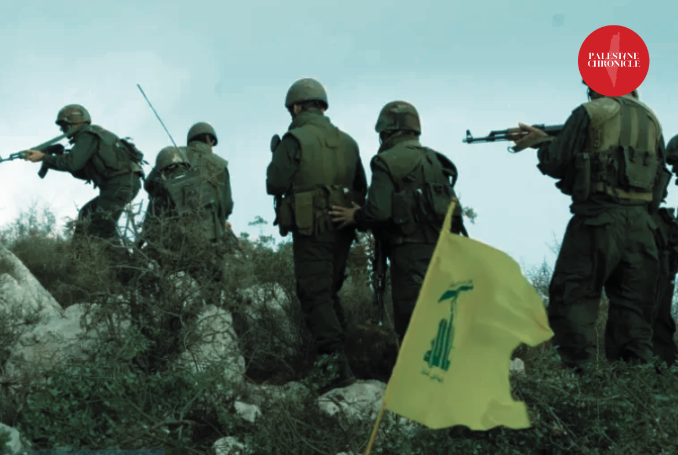
The Lebanese Resistance transformed the occupation into a costly war of attrition. Through persistent guerrilla tactics and continuous military pressure, the Resistance steadily eroded Israel’s ability to sustain its presence. In May 2000, Israeli forces withdrew in what many Israelis themselves viewed as a humiliating retreat.
In 2006, Israel attempted to reproduce that failed experiment. During the July War, Israeli leaders believed they could decisively defeat Hezbollah and reshape Lebanon’s political equation. Instead, the Resistance absorbed the assault, adapted quickly and denied Israel the decisive victory it sought. The war ended not with triumph, but with another embarrassing Israeli withdrawal and another strategic defeat.
Yet political ambitions often erase historical memory.
Following October 2023, when Hezbollah entered the confrontation in support of Gaza amid Israel’s genocide against Palestinians, Israel believed it had finally found its opportunity. The objective was no longer merely to push Hezbollah away from the border. Israel saw a chance to fulfill an old dream: occupying southern Lebanon up to the Litani River, permanently altering Lebanon’s political landscape and fundamentally reshaping the balance of power in the region.
Initially, events seemed to favor Israel. It succeeded in assassinating a whole layer of Hezbollah’s leadership, including Secretary-General Hassan Nasrallah. Israel also carried out a series of intelligence operations designed to disorient and weaken the movement. The communications and pager operation in September 2024, despite its brutality, was perhaps the most dramatic of these efforts, signaling an unprecedented level of Israeli intelligence penetration.
These developments created an impression, especially in Western circles, that Hezbollah had suffered a strategic collapse.
Still, Israel could not secure what Netanyahu repeatedly called “total victory.”
Despite military gains, despite political pressure, and despite attempts to co-opt sections of Lebanon’s political establishment toward direct negotiations and even discussions resembling normalization, Israel failed to fundamentally alter the equation.
Then came what was intended to be the decisive phase.
The later escalation against Iran was designed not merely as a confrontation with Tehran itself, but as an attempt to destroy the broader Axis of Resistance. Israeli calculations were straightforward: a weakened Iran, or perhaps even regime change, would sever the strategic ties binding various resistance movements together. Hezbollah would become isolated, politically vulnerable, and militarily exposed.
The script, had it succeeded, would have transformed the Middle East for generations. But it failed. Worse still for Netanyahu, it backfired.
Iran endured. More importantly, it demonstrated resilience and strategic depth that surprised many observers. Rather than retreating, Tehran regained the initiative and re-emerged as a central actor in shaping the terms of regional negotiations.
The tables have turned. Now Tehran is placing its own conditions on the table, and Lebanon increasingly appears central among them. Reports surrounding ongoing negotiations suggest that ending Israeli attacks on Lebanon and securing a complete withdrawal are among the demands being advanced by Iran.
Hezbollah’s own return to the battlefield was unlikely to have occurred independently of these broader regional calculations.
Yet Western media once again misunderstood—or perhaps deliberately misrepresented—the sequence of events.
The Israeli war on Lebanon never truly ended.
True, a ceasefire agreement was signed in late 2024. But while Lebanon largely observed it, Israel repeatedly violated its terms through airstrikes, incursions and military operations.
Thus, Hezbollah’s return to military engagement was not the beginning of a new war. It was a continuation of one that had never actually stopped.
Perhaps more surprising to Israel was Hezbollah’s apparent ability to rapidly recover. Even more significant was its willingness to expand the confrontation despite extensive Israeli airstrikes, assassinations and destruction.
Even Hezbollah’s opponents within Lebanon proved unable to alter this reality. There were efforts through political pressure, diplomatic channels and international negotiations to isolate the movement and reduce Iranian influence. These efforts culminated in various initiatives, including pressure surrounding regional negotiations and efforts targeting Tehran’s diplomatic role.
Still, little fundamentally changed.
If anything, Hezbollah’s messaging became increasingly forceful, empowered by renewed Iranian confidence and by Tehran’s reassertion of regional influence.
Netanyahu now insists that Lebanon should remain separate from any broader agreement involving Iran. But his wishes are unlikely to prevail—not necessarily because US President Donald Trump may be growing impatient with Netanyahu’s political and military calculations, but because battlefield realities increasingly dictate otherwise.
This time, Hezbollah appears prepared for a prolonged war of attrition—the very kind of war that ultimately expelled Israeli occupation forces in 2000.
This is Hezbollah’s terrain. Guerrilla warfare provides flexibility. Attrition creates opportunities for adaptation. Time favors those capable of enduring.
Israel, by contrast, rarely possesses the luxury of time. Israeli political culture demands immediate results. Public expectations intensify further as elections approach, particularly in one of the most contested political periods in Israel’s history.
Reports already suggest that Israeli military operations face growing tactical constraints. Hezbollah’s use of drones, loitering munitions and decentralized operations increasingly complicates Israeli movements and logistics.
This may explain Netanyahu’s increasingly aggressive rhetoric regarding expanding military operations in Lebanon.
Netanyahu seeks to project initiative, strength and control. He wants Israelis to believe that the government possesses a coherent strategy. Yet even in its early stages, the project of recreating a “security belt” appears to face precisely the obstacles that doomed similar strategies in the past.
Israeli officials now openly discuss intensifying attacks against Beirut’s southern suburbs, Hezbollah’s civilian stronghold. It is a brutal but entirely predictable strategy.
Yet even this will bring Israel little relief. Hezbollah leader Naim Qassem has repeatedly made clear that surrender would mean the destruction not only of the Resistance itself, but of entire communities connected to it.
For Hezbollah, this is increasingly framed as an existential battle.
And now that the movement appears to have regained its rhythm after the setbacks of the early war period, Israel’s military presence in Lebanon increasingly looks less like a strategic achievement and more like a temporary condition.
Netanyahu’s rhetoric notwithstanding, both the Israeli leadership and its military establishment likely understand a reality they may not yet publicly acknowledge: the war on Lebanon has already been lost.

– Dr. Ramzy Baroud is a journalist, author and the Editor of The Palestine Chronicle. He is the author of eight books. His latest book, ‘Before the Flood,’ was published by Seven Stories Press. His other books include ‘Our Vision for Liberation’, ‘My Father was a Freedom Fighter’ and ‘The Last Earth’. Baroud is a Non-resident Senior Research Fellow at the Center for Islam and Global Affairs (CIGA). His website is www.ramzybaroud.net




Articles like this are too detached from the thousands of people being murdered by Israel while their latest genocide continues.
Semi-academic semantics really. The academic disease of pacifism put too many on their knees, like religion did. Which allowed the zio-capitalists to slaughter onwards with impunity. The only language they understand is force.
Articles like this, semi-academic, academic, pacifism, knees, religion, detached LOL.
Logistics has been Israel’s Achilles’ Heel. It’s why their wars have always been blitzkriegs, intended to force the enemy to their knees before the ammo runs out. Only, in Lebanon, and increasingly in Southern Syria, they’re committing to a set of sitzkriegs, and they just don’t have the supply chain for that without Uncle Sam. They somehow managed to survive in Southern Lebanon from 1982 to 2000, but not this time, not the way Hizbullah’s rebounded.