
The tragedy in Ceuta is Spanish, Moroccan, and human. The political assault that followed is the work of an order that fears any government still capable of saying no.
In the final days of July 2026, the Spanish city of Ceuta became the stage for a human tragedy that the powerful and right-wing regimes immediately converted into political weaponry.
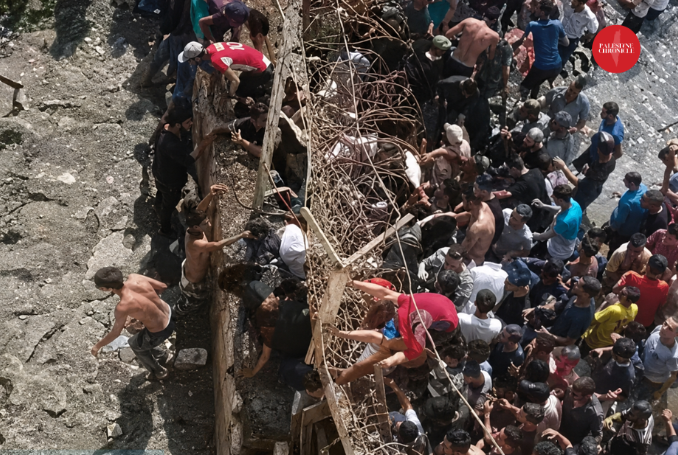
Tens of thousands of desperate people — most of them young Moroccans driven by poverty, rumor, and the absence of any real future — surged across the border from Morocco. Some swam. Some climbed. Some were crushed or drowned. At least seventy-two bodies were recovered on the Spanish side. Within days the vast
majority had returned.
Spain, working with Moroccan authorities, restored order with a speed that should have earned solidarity. Instead it earned condemnation.
What followed was not concern for the dead or for the living who remain. It was a coordinated howl from the reactionary right across Europe, from the Trump White House, and from the Israeli government. Giorgia Meloni of Italy demanded Spain’s suspension from the Schengen area and imposed controls. Denmark, Finland, and others joined the chorus. German Chancellor Friedrich Merz spoke of the need to “regain control.” Far-right figures from Vox and beyond descended on Ceuta itself, speaking of “invasion,” of walls that must be defended, of a civilization under siege.
The language was familiar: the same vocabulary that has been used for decades against the poor of the Global South, against Muslims, against anyone who refuses to accept the hierarchy of human life imposed by the North.
Spain, under Pedro Sánchez, refused the script. The government called the surge a violation of territorial integrity, insisted that Ceuta and Melilla are unquestionably Spanish, and rejected the attempt to turn a border crisis into a moral indictment of a country that has, almost alone among major European states, refused to treat the destruction of Gaza as business as usual.
While much of Europe has averted its eyes or offered carefully worded equivocation, Spain recognized the State of Palestine, imposed an arms embargo, banned the transit of fuel and weapons destined for the Israeli military, and named the slaughter for what it is: a genocide carried out under the banner of Zionism in pursuit of a Greater Israel through the annexation and erasure of Palestine. That independence of position is precisely what made Spain a target.
The same independence marked Spain’s response to the joint U.S.-Israeli war on Iran. When Washington and Tel Aviv demanded logistical cooperation — the use of Spanish airspace, bases, and facilities to support the campaign — Madrid refused.
Sánchez’s government would not allow Spanish territory to become a staging ground for another assault sold under the banner of “security.” Trump responded with open contempt, labeling Spain a “terrible partner” and a “wasted cause,” and instructing his Treasury Secretary to prepare to cut trade ties. Netanyahu’s government added its own warnings that countries conducting a “diplomatic war” against Israel would pay a price. The refusal to facilitate the attack on Iran joined Spain’s stand on Palestine as an unforgivable deviation from the expected alignment.
The Abraham Accords sit at the center of this story like a poisonous knot. Morocco’s normalization with Israel, purchased with Donald Trump’s recognition of Moroccan claims over Western Sahara, created a new axis of convenience: American power, Israeli strategic depth, and Moroccan regional ambition. That axis has little patience for European governments that still speak of international law when the law inconveniently applies to Palestine or that refuse to subordinate their territory to the next military adventure.
When Spanish ports refused ships carrying weapons for Israel, those ships found welcome in Morocco. When Sánchez called the war in Gaza a genocide, pushed for consequences, and then declined to assist the assault on Iran, the response from Tel Aviv and Washington was not debate but punishment. The migrant surge in Ceuta became the perfect instrument — whether actively facilitated, passively allowed, or simply exploited after the fact — to discipline a European government that had stepped out of line on both fronts.
Europe’s role in this architecture is one of deep complicity and political servitude. NATO, far from a defensive alliance, has functioned as the military arm of a Western order that shields Zionism’s expansionist project while demanding obedience from its members. Most European governments have chosen servitude: supplying weapons, offering diplomatic cover, criminalizing criticism of Israel as antisemitism, and remaining silent as the genocide in Gaza and the ongoing annexation of Palestinian land advance the vision of Greater Israel.
Spain’s relative refusal of that servitude — its willingness to name the crime and withhold cooperation— exposed the price of independence. The reactionary right across the continent, from Meloni’s Italy to the hardening forces in Germany and beyond, rushed to enforce the discipline that the larger order required.
The reaction across Europe’s right-wing governments and movements revealed something uglier than policy disagreement. It revealed the mainstreaming of a politics that once lived on the fringe. The rhetoric of invasion, of demographic threat, of civilization under siege is no longer confined to the neo-fascist margins.
It is spoken by prime ministers, by interior ministers, by leaders who wrap themselves in the language of security while practicing the oldest European tradition: the racialization of the poor and the criminalization of movement.
Italy under Meloni, the hardening line in Germany, the Scandinavian governments that once postured as progressive and now compete in cruelty — all of them found in Ceuta an opportunity to perform toughness for domestic audiences while ignoring the structural violence that produces such surges in the first place.
Spain’s handling of the crisis was imperfect, as any sudden human emergency of this scale must be. Reception systems were overwhelmed. Minors remain in precarious conditions. Yet the speed of the returns, the cooperation with Morocco, and the refusal to abandon the principle that Ceuta is Spanish territory stand in contrast to the bad faith of those who demanded punishment rather than solidarity.
The European Union that lectures the world on values suddenly discovered that solidarity is conditional— conditional on the right kind of government, the right kind of rhetoric, the right kind of alignment with the strategic priorities of Washington and Tel Aviv, and the continued complicity in Zionism’s project of annexation and erasure.
This is the deeper meaning of the Ceuta episode. It is not primarily about migration numbers or border fences. It is about who is permitted to dissent from the emerging order of the Abraham Accords and the broader alliance of military, financial, and political elites that treats the Mediterranean as a controlled corridor and the lives of its southern shore as expendable.
Spain’s relative independence on Palestine — its refusal of complicity in the genocide and the annexation that serves Greater Israel — and its refusal to serve as a platform for the war on Iran made it a problem. The migrant surge became the solution: a crisis that could be framed as Spanish failure, a pretext for isolation, a stage on which the reactionary right could rehearse its favorite themes of invasion and purity.
The dead of Ceuta deserve more than to be used as props in this theater. The young people who crossed and returned deserve more than the contempt of governments that have spent decades
extracting wealth from their region while sealing the exits.
And Spain, whatever the imperfections of its government, deserves solidarity from those who still believe that international law cannot be applied selectively, that the destruction of Gaza is not an internal Israeli matter but a genocide enabled by European and NATO complicity and servitude, that the assault on Iran was not a defensive necessity, and that the rise of openly racist and authoritarian politics in Europe is not a temporary excess but a structural danger.
The walls of Ceuta are real. The walls being built in the minds of Europe’s reactionary governments are more dangerous still. They are walls of selective memory, of racial hierarchy, of strategic convenience dressed up as principle, and of willing servitude to a Zionist project of permanent annexation.
Against those walls, the only coherent response is the one Spain has, however incompletely, tried to articulate: that human life is not ranked by passport, that sovereignty is not a license for atrocity, and that the alliance of criminal elites and Zionist interests that seeks to discipline every independent voice will not go unchallenged.
The tragedy in Ceuta is Spanish, Moroccan, and human. The political assault that followed is the work of an order that fears any government still capable of saying no — on Palestine, on Iran, on the genocide and the annexation, or on the right of the powerful to demand complicity and servitude as the price of belonging.
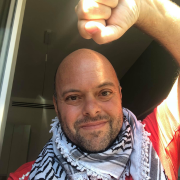
– Michael Leonardi is an Italy-based journalist. Leonardi is the vice president of the Treewater Initiative, a non-profit dedicated to building sustainability in a Free Palestine for over a decade. He contributed this article to the Palestine Chronicle.



