
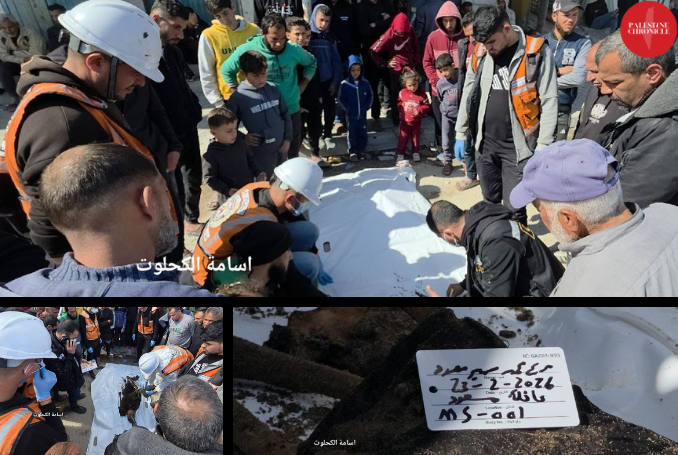

Israeli occupation forces opened fire and carried out artillery strikes in Gaza on Tuesday, wounding civilians and hitting residential neighborhoods.
Key Developments
- Three Palestinians were wounded by Israeli gunfire east of Gaza City during ceasefire hours.
- Israeli artillery shells struck heavily populated areas in central and northern Gaza.
- Eyewitnesses reported multiple explosions in residential districts.
- Gaza Health Ministry condemns violations, underscoring ongoing risks to civilians.
- Fresh violations and harsh winter conditions underscore the fragility of the current ceasefire across the Strip.
Three Palestinians Wounded
Three Palestinians were wounded by Israeli occupation army gunfire on Tuesday, in an attack east of Gaza City that occurred amid what is officially designed as a ceasefire.
The Anadolu news agency reported that the three injured civilians were struck by live fire from Israeli occupation forces positioned near the perimeter of Gaza City.
Medical sources in the Strip confirmed that the wounded were treated in local hospitals for varying degrees of injuries, although none were reported to be in life-threatening condition.
Israel has killed at least 72,073 Palestinians and injured at least 171,749 since the beginning of its genocide in Gaza in October 2023. pic.twitter.com/wjTyQ95OUU
— Al Jazeera English (@AJEnglish) February 24, 2026
According to the report, the incident took place during daylight hours, underlining repeated breaches of the truce.
Local residents told Anadolu that they heard sustained small-arms fire emanating from positions adjacent to agricultural zones as families attempted to carry out daily activities.
The attack comes as Gaza’s Health Ministry continues to document a pattern of ceasefire violations, noting that such incidents endanger civilians and undermine any semblance of calm across the Strip.
Breaking | Israeli artillery shells Beit Lahia in the northern Gaza Strip. pic.twitter.com/TXHv2EVVf2
— Quds News Network (@QudsNen) February 23, 2026
Israeli Artillery Shelling Hits Residential Areas
A separate development on the same day saw Israeli artillery fire hit residential neighbourhoods in both central and northern Gaza, according to reporting from Quds News Network.
Local correspondents described multiple artillery strikes that landed in built-up urban districts, including areas where displaced families and children reside. The shelling reportedly caused damage to homes and infrastructure, prompting residents to seek shelter and evacuate affected streets.
Eyewitnesses cited by Quds News Network reported the sounds of successive shell impacts over the course of the afternoon and into the evening, creating widespread fear among civilians. Some families were forced to move children and elderly relatives from exposed locations following the bombardment.
Winter Rains
Meanwhile, heavy rainfall flooded dozens of tents sheltering displaced families across Gaza.
Quds News Network reported that dozens of tents housing displaced families were flooded as rainwater swept through makeshift camps. The shelters, constructed from plastic sheets, nylon fabric, and scrap materials, proved unable to withstand sustained rainfall. Water entered sleeping areas, damaging mattresses, blankets, food supplies, and clothing.
Families attempted to shield their belongings and dig small drainage paths around their tents, but in many cases, the flooding was unavoidable. Several tents partially collapsed under the weight of accumulated water.
39 Dead, Including 22 Children, as Gaza Infrastructure Collapses — B’Tselem
Al-Jazeera described the current season as one of the harshest winter periods faced by displaced residents in recent months. The report noted that camps lack adequate infrastructure, including proper drainage systems and insulated materials, leaving thousands exposed to cold temperatures and damp conditions.
Residents interviewed said they remained awake throughout the night as rain seeped into their shelters, fearing the loss of what little protection they had left. Children and elderly residents were identified as particularly vulnerable to illness due to prolonged exposure to cold and moisture.
The winter flooding, unfolding alongside continued Israeli fire and artillery shelling, illustrates the dual pressures confronting Gaza’s civilian population: recurring security violations and a worsening humanitarian emergency driven by environmental conditions.
(PC, Anadolu, QNN, Al-Jazeera)



