
Trump formally launched his ‘Board of Peace’ in Davos as Israeli attacks continued across Gaza, raising questions over the ceasefire’s viability.
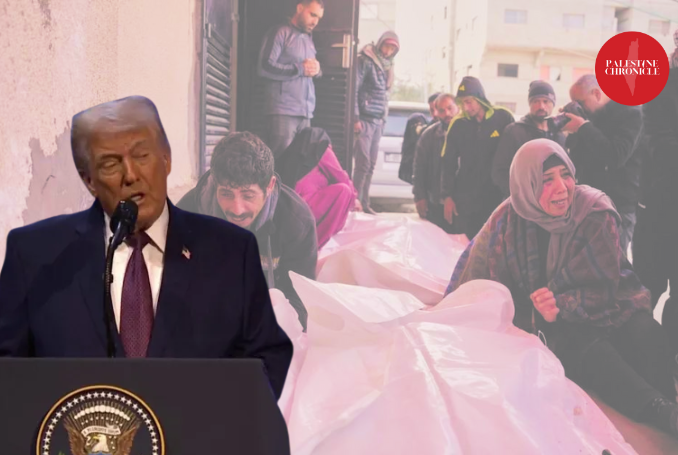
US President Donald Trump on Thursday officially launched his controversial “Board of Peace” during a signing ceremony at the World Economic Forum in Davos, Switzerland, unveiling a US-led body that he says will resolve international conflicts, starting with Gaza.
Standing before an audience of world leaders and diplomats, Trump held up the signed founding charter and declared that the Board of Peace “has a real chance to be one of the most important entities ever created.”
“What we’re doing is so important,” Trump said during the ceremony. “We are going to be very successful in Gaza.”
The Board of Peace was initially conceived as a mechanism to oversee Gaza’s post-war reconstruction following the ceasefire that came into effect on October 10, 2025. However, draft versions of the charter reveal that its mandate extends far beyond Gaza, granting the body authority to intervene in global conflicts, with Trump retaining decisive control over membership and final approvals.
Permanent membership reportedly carries a price tag of at least $1 billion, with exemptions for states that make larger upfront financial contributions.
Egypt Protests Strike on Relief Team as Israel Intensifies Ceasefire Violations, Kills 11
Trump’s Speech: Claims of Peace, Aid, and Success
In a nearly 20-minute address, Trump claimed that his administration had “maintained the Gaza ceasefire,” delivered “record levels of humanitarian aid,” and that Palestinians in Gaza were no longer starving.
“We’ve kept the ceasefire going,” Trump said. “We delivered humanitarian aid at levels nobody’s ever seen before. You don’t hear anymore about people starving in Gaza.”
These assertions sharply contradict reporting by humanitarian agencies, Palestinian health authorities, and international media, which document daily Israeli ceasefire violations, hundreds of Palestinian deaths since October, and severe restrictions on food, fuel, shelter materials, and medical supplies.
Trump also reiterated his long-standing claim that his administration has ended eight wars worldwide since returning to office, stating:
“The world is richer, safer, and much more peaceful than it was before.”
Turning to Gaza, he insisted the enclave would be “demilitarized and beautifully rebuilt,” warning Hamas that if it does not disarm, “it is going to be the end of them.”
Rubio and Kushner: ‘Dreaming the Impossible’
US Secretary of State Marco Rubio followed Trump, praising what he called the president’s “vision and courage to dream the impossible.”
“We are here today because of President Trump’s vision,” Rubio said, arguing that existing international institutions had failed to resolve conflicts and that the Board of Peace represented a new model of US-led diplomacy.
Jared Kushner, Trump’s son-in-law and a key architect of the Gaza plan, framed the post-ceasefire phase as a project of social and political engineering.
“Peace is a different deal than a business deal,” Kushner said. “You’re changing a mindset. You’re changing habits and behaviors.”
Describing Gaza’s future as “very entrepreneurial,” Kushner said he and US envoy Steve Witkoff were “panicking” after the ceasefire deal, asking: “What do we do next? How do we implement peace?”
Israel Drops Leaflets in Gaza Ordering Families to Evacuate – First Since Ceasefire
Rafah Crossing Announcement
During the Davos event, Ali Shaath, the US-backed technocratic head of Gaza’s newly formed administrative committee, announced via video link that the Rafah crossing with Egypt would reopen next week.
“I am pleased to announce the Rafah crossing will open next week in both directions,” Shaath said. “For Palestinians in Gaza, Rafah is more than a gate. It is a lifeline and symbol of opportunity.”
Shaath said opening Rafah would signal that “Gaza is no longer closed to the future and to the war.”
There was no immediate confirmation from Israel, which has retained military control over large areas surrounding the crossing since 2024. Under the ceasefire, Israeli occupation forces continue to control more than 50% of Gaza, including southern and eastern buffer zones.
‘Living Hell’ – New B’tselem Report on Israel’s ‘Network of Torture Camps’
Gaza Under Fire Despite Ceasefire
Trump’s Davos announcement came as Israeli occupation forces continued airstrikes, artillery shelling, demolitions, and gunfire across Gaza.
According to eyewitnesses and correspondents, Israeli warplanes and artillery struck eastern Gaza City, eastern areas of the Bureij refugee camp in central Gaza, and eastern Khan Yunis in the south. Airstrikes hit the Zaytoun and Shujaiya neighborhoods, while Israeli military vehicles and naval vessels opened fire in multiple areas.
Israeli occupation forces also carried out demolition operations, destroying remaining residential structures in northern Gaza.
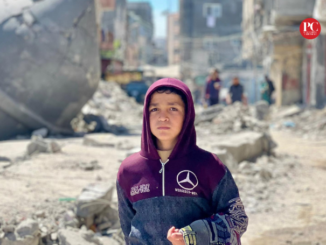
Since the ceasefire took effect on October 10, 2025, Israeli attacks have killed more than 480 Palestinians and wounded over 1,280 others, according to Palestinian health authorities, while Israel has sharply restricted the entry of food, shelter materials, and medical supplies into the enclave, where 2.4 million Palestinians are living in dire conditions.
Since the start of Israel’s military campaign in October 2023, more than 71,000 Palestinians have been killed and over 171,000 wounded, with around 90% of Gaza’s civilian infrastructure destroyed. The United Nations estimates reconstruction costs at $70 billion.
Mounting Criticism
Human rights groups and analysts warn that the Board of Peace effectively entrenches US control over Gaza’s future while sidelining Palestinian self-determination and international legal accountability.
Critics argue that the body risks functioning as a parallel structure designed to bypass the United Nations, prioritizing security arrangements, demilitarization, and economic management over justice, reconstruction led by Palestinians, and accountability for war crimes.
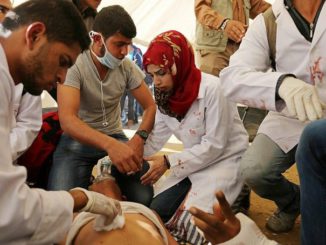
As Trump celebrated the signing in Davos, Gaza remained under bombardment, its population facing winter cold, destroyed homes, overwhelmed hospitals, and continued loss of life — underscoring the widening gap between rhetoric of peace and the realities on the ground.
(The Palestine Chronicle)