
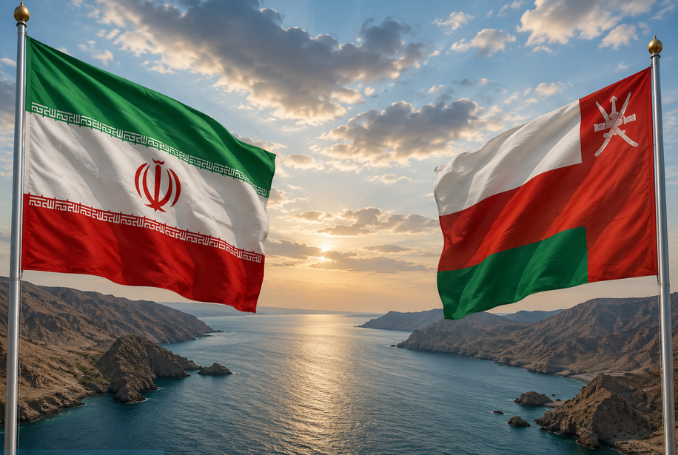

Washington and Tehran resume negotiations in Doha as shipping cautiously returns to Hormuz following military escalation that threatened the ceasefire memorandum.
Key Developments
- The US and Iran will resume technical talks in Doha after several days of military escalation.
- Iran and Oman held the first meeting of the Joint Hormuz Committee to discuss future management of the strategic waterway.
- Commercial shipping has resumed through the Strait of Hormuz, although traffic remains below normal levels.
The United States and Iran are set to resume technical negotiations in Doha this week after several days of military confrontation threatened the Memorandum of Understanding (MoU) signed on June 17 to end the war.
According to US officials cited by AFP, both sides have agreed to suspend further military action while negotiations continue.
“Technical talks are slated to continue on all areas of the MoU,” one US official said, adding that “both sides will stand down for now and vessels can move freely.”
Axios reported that negotiations are expected to resume Tuesday in the Qatari capital, while CNN cited a Trump administration official confirming Washington’s return to the negotiating table.
Shipping Returning to Hormuz
One of the clearest signs of easing tensions has been the gradual return of commercial shipping through the Strait of Hormuz.
According to maritime monitoring reports, vessels have resumed transiting the strategic waterway after several days of disruption caused by US-Iran military exchanges.
Traffic, however, remains below normal levels as shipping companies continue to assess security risks.
Several vessels have reportedly resumed using the navigation corridor designated under the new arrangements, while others remain cautious.
Maritime security authorities, however continue to classify the regional threat level as “substantial,” reflecting continued uncertainty despite the renewed diplomatic process.
Mojtaba Khamenei Orders Prosecution of US, Israeli Leaders over War Crimes
Joint Hormuz Committee
As negotiations resume, Tehran has begun implementing one of the memorandum’s key institutional mechanisms.
Iranian Deputy Foreign Minister Kazem Gharibabadi announced that Iran and Oman held the first meeting of the Joint Hormuz Committee during his visit to Muscat.
According to Gharibabadi, both sides discussed future management of the Strait of Hormuz in accordance with the Memorandum of Understanding while safeguarding the rights of all littoral states.
The committee is expected to coordinate navigation procedures, maritime security and implementation of the new arrangements governing one of the world’s most strategically important waterways.
Iranian officials have repeatedly stressed that responsibility for administering navigation through the Strait of Hormuz rests with the Islamic Republic under the Islamabad Memorandum.
Tehran argues that the agreement recognizes Iran’s primary role in regulating maritime traffic through the strait while establishing coordination mechanisms with neighboring Gulf states.
Iran has also maintained that future maritime security arrangements should be implemented through regional cooperation rather than external military intervention.
‘They Will Taste Hell’: Iran Says It Hit Eight US Bases After New American Strikes
Recent Escalation
The negotiations resume only days after one of the memorandum’s most serious tests.
The United States launched additional strikes against Iranian coastal surveillance infrastructure, communications systems, air defense sites, drone storage facilities and naval mine capabilities after accusing Tehran of attacking a commercial vessel transiting the Strait of Hormuz.
Iran rejected the accusation and described the American attacks as a blatant violation of both international law and the Memorandum of Understanding.
Tehran subsequently launched retaliatory strikes against US military facilities in the Gulf, warning that further American attacks would trigger broader retaliation and could bring all diplomatic tracks established under the memorandum to a halt.
The memorandum also established mechanisms intended to reduce regional escalation, including arrangements related to Lebanon and direct communication channels designed to prevent local confrontations from expanding into wider conflict.
Iranian officials have consistently argued that the agreement must be implemented as a single package, warning that violations in either the Hormuz or Lebanon files risk undermining the broader diplomatic framework.
(Al Mayadeen, US Media, Iranian Media, PC)



I’m an avid reader of the PC. For the average citizen, it is not comprehensible when and where which agreements have been broken and which party must ultimately be held responsible.Polemics are the norm today, and let’s not forget, they are very short-lived.”Making peace” does not mean being on the same page, but peace saves countless innocent lives.