
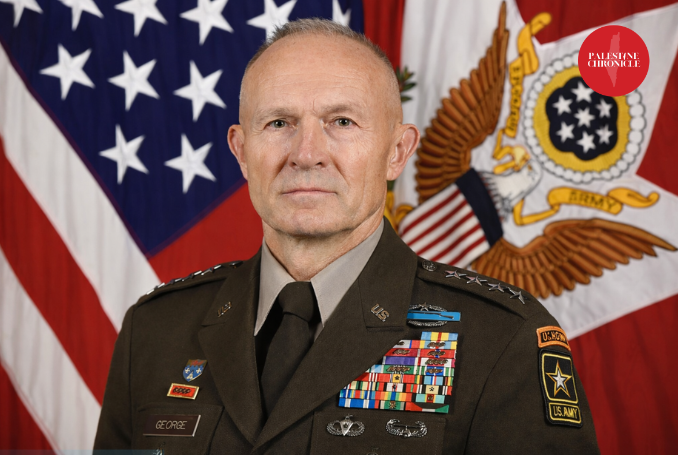

The forced removal of the US Army chief during war signals urgent leadership changes as pressure mounts for results.
Key Developments
- US Army Chief Gen. Randy George forced into early retirement during ongoing war with Iran.
- Trump signals conflict could end within weeks, increasing pressure on military leadership.
- Public opposition to a ground invasion remains high amid growing war fatigue.
Forced Removal
US Defense Secretary Pete Hegseth has ordered the immediate removal of Army Chief of Staff Gen. Randy George.
According to CBS News, Hegseth asked George to “step down and retire immediately,” citing a broader effort to reshape military leadership in line with the administration’s vision.
Reuters similarly reported that Hegseth had “asked the US Army’s top officer to step down,” noting that the decision was made despite the fact that George’s four-year term, which began in 2023 following Senate confirmation, was not due to expire until 2027.
The Associated Press emphasized that the removal comes “while the US wages war against Iran,” highlighting the unusual timing of the decision.
The reports noted that no formal explanation was provided by the Pentagon.
For its part, the Washington Post described the move as part of a wider effort by Hegseth to “force out senior military leaders,” adding that the reshaping of leadership reflects a desire to install officials aligned with the administration’s strategic direction.
According to multiple reports, the dismissal of George is not an isolated case.
More than a dozen senior officers across different branches of the US military have been removed in recent weeks, pointing to a broader restructuring effort within the Pentagon.
CBS News, citing sources familiar with the matter, reported that Hegseth is seeking to appoint figures who “align with his vision and that of President Donald Trump,” reinforcing the view that the changes are driven by political and strategic considerations rather than operational performance.
No allegations of misconduct or failure have been made against George, a career infantry officer who previously served as a senior military aide to former Defense Secretary Lloyd Austin and participated in major US wars, including the Gulf War, Iraq, and Afghanistan.
‘The Whole Family Is Ready’ – Ghalibaf Says 7 Million Iranians Prepared to Fight US, Israel
Trump’s Timeline
The leadership shakeup comes just one day after US President Donald Trump indicated that the war with Iran could reach a conclusion within a short timeframe.
Speaking on Wednesday, Trump suggested that the conflict may wind down within two to three weeks, signaling an expectation of rapid developments on the battlefield.
At the same time, senior US officials have declined to clarify whether the next phase of the war could include the deployment of ground forces.
During a recent exchange, Hegseth refused to confirm or deny the possibility of sending US troops into Iran, maintaining strategic ambiguity over the administration’s plans.
This combination of a compressed timeline and undefined objectives has placed additional pressure on military leadership as operations continue.
‘Wartime Rules Apply’ – Iran, Oman Move to Redefine Strait of Hormuz Transit
Pre-War Warnings
Before the outbreak of the war, senior US military officials had already expressed concerns about the risks associated with a confrontation with Iran.
According to reporting by major US outlets, Chairman of the Joint Chiefs of Staff Gen. Dan Caine warned the administration that Iran could retaliate in ways that would have far-reaching consequences, including potential disruption of global energy supplies through the Strait of Hormuz.
He also raised concerns about the scale and complexity of the conflict, as well as the strain it could place on US military resources.
These warnings reflected a broader awareness within military circles of the challenges posed by Iran, a country with significant regional influence and military capabilities.
While such assessments are typically presented as part of internal advisory processes, they underscore the level of caution that existed before the start of the US-Israeli aggression.
Iran Downs Aircraft in Gulf as Missiles, Rockets Hit Israel from Three Fronts
Public Opposition
As the war continues, public opinion in the United States appears to remain firmly opposed to the prospect of a ground invasion, in fact, to the war itself.
Recent polling conducted by major US organizations indicates that a significant majority of Americans oppose sending US troops into another large-scale war in the Middle East.
Surveys conducted by outlets such as Pew Research and Gallup show consistent skepticism toward military escalation, particularly when it involves long-term deployments.
This sentiment reflects a broader pattern of war fatigue following decades of US involvement in Iraq and Afghanistan.
The removal of Gen. George, alongside the broader wave of dismissals, points to a significant restructuring of the US military’s leadership during an active war.
With no official justification provided, the changes appear to be driven by a desire to consolidate leadership around a unified strategic approach.
The implications of this shift remain unclear, particularly as the war with Iran continues to unfold.
(The Palestine Chronicle)




ALL military personel should resign immediately. The USA is not under threat by anyone but our own government. Let Kegseth and Dondolf, and the rest of the Nutzi Party go fight their illegal wars.