
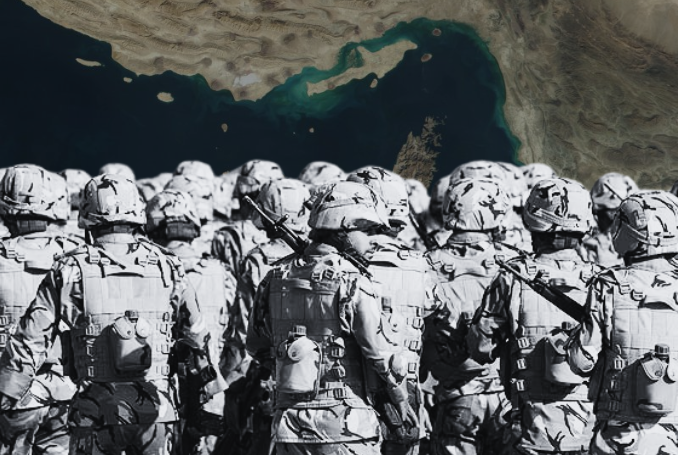

Iran launches Hormuz drill before Geneva talks as Washington’s buildup, Israeli demands, and escalation warnings sharpen tensions.
Key Developments
- Iran’s IRGC launches Strait of Hormuz drill testing “rapid and decisive response” to maritime threats.
- Exercise begins one day before indirect US-Iran nuclear talks in Geneva under Omani mediation.
- US deploys additional carrier presence in the region while claiming negotiations remain the preferred path.
- IAEA seeks clarification over roughly 440 kg of highly enriched uranium after previous strikes on Iranian sites.
- Netanyahu demands dismantling the enrichment infrastructure and removal of enriched uranium for any agreement.
- Analysts warn regional escalation scenarios could include missile barrages and disruption of strategic waterways.
Drill Announced
Iran’s Islamic Revolutionary Guard Corps (IRGC) launched a military exercise in the Strait of Hormuz on Monday, one day before a second round of indirect nuclear negotiations with the United States in Geneva under Omani mediation.
In a statement carried by multiple outlets, the IRGC said the exercise—described as “Smart Control of the Strait of Hormuz”—is intended to assess naval operational readiness and to test security plans and “scenarios for reciprocal military action” in response to potential threats in the strait and surrounding waters.
‘Historic Lesson’ – Iran Warns War Would End US Dominance as Geneva Nuclear Talks Approach
“The rapid, decisive, and comprehensive response of IRGC operational forces to anti-security plots in the maritime domain is at the core of the intelligence and operational exercises,” the statement said.
The Strait of Hormuz is one of the world’s most strategic maritime choke points, forming the narrow sea passage between the Persian Gulf and the Gulf of Oman and serving as the only sea route from the Persian Gulf to open waters—making it central to global energy flows and regional military calculations.
US Deployments
The drill comes as US-Iran tensions have risen in recent days, with Washington increasing its military posture in the region. The Financial Times reported Iran’s drill began as Trump ordered another aircraft carrier to the Middle East amid the renewed standoff and talks.
On Friday, Trump said a second aircraft carrier would be deployed, with the USS Abraham Lincoln and destroyers already in the region, according to the same reporting.
In Washington, officials have continued to publicly emphasize that diplomacy remains the preferred route, even as the military footprint grows. Secretary of State Marco Rubio told reporters the United States is positioned in the region because it “understand(s) that there could be threats to our forces,” while adding that Trump “prefers diplomacy and an outcome of negotiated settlement,” according to his statement reported by Anadolu.
IAEA Meeting in Geneva
As the military signaling played out at sea, the diplomatic calendar moved forward in Switzerland.
The Hidden Map: US and Israel May Use Unexpected Neighbors to Attack Iran
Reuters reported that Iranian Foreign Minister Abbas Araghchi met International Atomic Energy Agency (IAEA) Director General Rafael Grossi in Geneva ahead of the renewed talks.
The same Reuters report said the IAEA is seeking clarity regarding about 440 kilograms of highly enriched uranium that it says are unaccounted for following bombings of Iranian nuclear sites.
This adds pressure to the Geneva track: beyond broad political commitments, any pathway to a deal would likely require verifiable nuclear steps and a credible inspection framework—issues that tend to become flashpoints when trust is low and military escalation remains a risk.
Iran’s Warnings
Iranian officials have paired the talks with sharply worded public warnings. Over the weekend, Major General Abdolrahim Mousavi, Iran’s armed forces chief of staff, warned that any war would serve as “a lesson” for Trump, according to reporting cited alongside the drill coverage.
In parallel, Iran’s messaging has repeatedly framed US pressure as coercive—raising the question that Iranian officials have publicly raised in recent days: if Washington is serious about negotiations, why intensify threats and deployments at the same time?
‘Multi-Stage’ Response Plan
Military analyst Hatem Karim al-Falahi told Al-Jazeera Arabic that Tehran has prepared a multi-stage plan that begins with absorbing a first strike and could escalate through missile and drone saturation, activation of regional allies, and—at the far end—economic pressure through the closure of strategic waterways, including the Strait of Hormuz and Bab al-Mandab.
Al-Falahi argued that mining operations or targeting naval vessels in these corridors could pose a major challenge for Washington, which he said seeks to keep shipping lanes open to ensure oil flows to global markets.
Iran’s Red Lines in US Talks: Missiles Off the Table as Israel Pressure Mounts
He also said a larger US buildup would widen the operational theater, describing a space stretching from the Mediterranean through the Red Sea to the Gulf. He cited figures and indicators—such as heavy airlift movements—as suggestive of escalation readiness, while also noting Iran’s claimed improvements in electronic warfare.
Israel’s Conditions
While the talks are being held indirectly between Washington and Tehran, Israel’s leadership has been publicly attempting to shape the boundaries of any potential agreement.
Reuters reported that Israeli Prime Minister Benjamin Netanyahu said any US deal with Iran must include the complete dismantling of Iran’s nuclear infrastructure, not merely a halt in enrichment.
Separate reporting and live updates quoted Netanyahu outlining key conditions: “The first is that all enriched material has to leave Iran,” he said, adding “the second is that there should be no enrichment capability… dismantle the equipment and the infrastructure that allows you to enrich in the first place.”
Netanyahu, who is wanted by the ICC for war crimes in Gaza, also called for addressing ballistic missiles, an issue that has repeatedly complicated nuclear-only frameworks.
Iran, for its part, has said its missile program is not up for negotiation and that the talks should remain focused on the nuclear file, while seeking sanctions relief—positions that make Israel’s maximal conditions a direct point of friction with Tehran’s red lines.
What a War on Iran Would Really Look Like — Beyond the Regime-Change Fantasy
The Iranian Strategy
From Tehran’s perspective, the convergence of naval drills, political messaging, and negotiations reflects a familiar pattern: entering talks while signaling that pressure will not force strategic concessions. Iranian officials have repeatedly framed the exercise as a demonstration of preparedness rather than escalation, arguing that diplomacy must take place “from a position of balance,” not under threat.
In this view, the military activity in the Strait of Hormuz serves as a reminder that Iran retains leverage in regional security and global energy routes, even as it engages in indirect dialogue. Officials close to the negotiations have emphasized that any agreement must preserve Iran’s right to peaceful nuclear technology and avoid what they describe as attempts to redefine the talks through external demands.
Accordingly, the Geneva round is seen in Tehran less as a breakthrough moment and more as a test of whether negotiations can proceed without preconditions. Iranian messaging suggests that if talks remain limited to the nuclear file and sanctions relief, progress remains possible — but if broader security issues are imposed, the diplomatic track could stall while parallel deterrence signaling continues.
(Iranian Media, US Media, AJA, AA, PC)




” level Israel ”
Wasrael 2026
the usa military CRAVEN COWARDS only ever attack a Nation that they are convinced has no means of attacking them back ( they are often wrong, witness the usa military defeats in Vietnam, Laos, Cambodia, Iraq, and Afghanistan )…but this has yet to completely convince them of the failure of military force…..But IRAN must NEVER place itself in that perceived situation, for the moment the usa is convinced that IRAN would be an easy conquest is the moment the usa will attack
In Dune, Frank Herbert has Paul Mu’adDib tell the Emperor that one of the conditions for inheriting the throne was “letting the spice flow” – or in other words, maintaining the flow of the ingredient needed to power the interstellar trade. If the US attacks (after displaying perfidy in using talks as a shield) and Iran cuts off Hormuz Strain and Bab al-Mandab in retaliation, US stockmarkets will crash like Concorde’s engines exploding after ingesting rubbish from the runway. Or in other words, Trump has indicated he has no interest in the survival of the US – or world – economy whatsoever. MAGA will henceforth mean “Made America Go Away”.