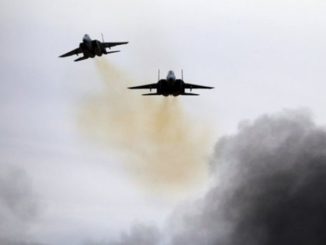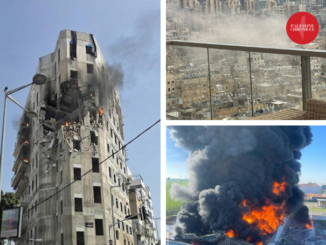
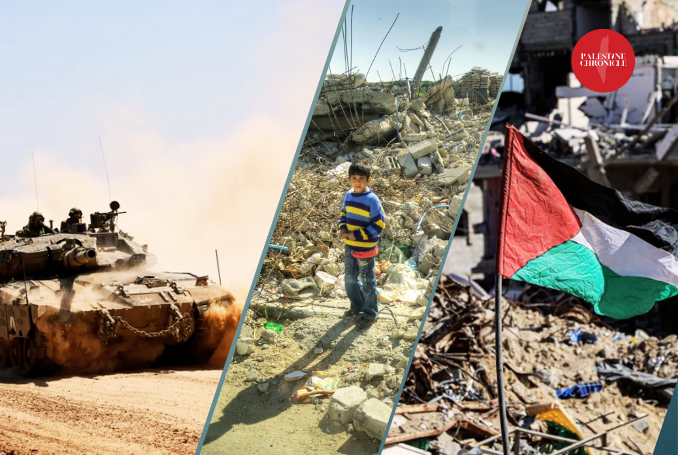
Desperate to cling to the idea of its “deterrence capacity”, Israel continues inflicting suffering upon the civilian population of Gaza. This behavior is precisely what resulted in the October 7, 2023, attack – dubbed “Operation al-Aqsa Flood” – and will inevitably result in another blow of this nature.
Key Takeaways
- Israeli political and media discourse increasingly frames post-October 7 actions as a restoration of “deterrence”.
- The October 7 operation shattered long-standing assumptions about Israeli military supremacy and security.
- Ongoing destruction in Gaza and Lebanon has not eliminated resistance movements despite massive force.
- Regional actors appear less deterred than repositioned, expecting further confrontation.
- Without a political resolution, conditions that led to October 7 are likely to re-emerge.
The Return of the Deterrence Narrative
As Israel continues to violate the Gaza Ceasefire on a daily basis, having killed around 100 Palestinians last week alone, its domestic media is increasingly discussing the framing of the outcomes of its actions since October 7, 2023, as having achieved “deterrence”.
The return of Israeli “deterrence capacity” discourse, beyond simply the rhetoric of its political leadership, is to be taken note of. This language has interestingly returned to even the likes of Haaretz News.
What the rise in “deterrence” talk appears to suggest is that at least a portion of the Israeli population is beginning to justify their national project of committing a genocide, passing it off through the lens of a “security achievement”. In fact, the obsession with security is an even more prevalent theme in Israeli Hasbara and domestic supremacist thought than many may think.
The Gaza Ceasefire Has No Phase Two, Only a Permanent Limbo – Analysis
The Shock of October 7
When the Hamas-led October 7 attack occurred, it immediately shattered this notion of “deterrence”. Although in the Western corporate media, the al-Aqsa Flood operation was sold as a devastating assault on civilians, it was much more than this. The pillars on which the Zionist project was built and has sustained itself are on the idea of total supremacy; security as a result of deterrence; and that their racist regime was a safe place for the favored population of the ethno-State.
Within hours, the Palestinian resistance factions, with only a few thousand men – armed with locally produced and/or light weapons – swiftly collapsed Israel’s southern command, dealing a blow, the likes of which has never been dealt to the prestige of the Israeli military. The scenes that emerged from that day suddenly flipped the Israeli script on its head. Arab populations in the likes of neighboring Jordan, and for a brief period in Egypt and Lebanon, came to the streets and even approached the borders, sensing that Israel’s end could be near.
The words of Lebanese Hezbollah’s Secretary General, Seyyed Hassan Nasrallah, had just been proven, at least amongst the people of the region: Israel is as “weak as a spider’s web”. Therefore, the solution in the minds of the Israelis was to “teach their enemies a lesson”. What was this lesson? It is that ‘if you mess with the Jewish State, we will exterminate you and your families’.
This is not hyperbole; this is the literal thinking of the Israelis, and they demonstrated this immediately following October 7, 2023, openly issuing genocidal statements and announcing what they intended to do openly. Some analysts have struggled to understand why they are so brazen about this. Beyond this aligning with their blatant supremacist beliefs, Tel Aviv wants their enemies to know that this is who they are.
Why Israel’s Drive to Destroy Iran is Ultimately about Palestine
Strength Projection through Destruction
Israel’s genocide in Gaza was never just about Gaza itself; it was to do with the Zionist project as a whole. Why continue committing the worst atrocity the world has seen in decades, live on camera, year after year? Because of its strength projection. It is a message that anyone who stands up to us will be crushed, along with everything they cherish.
However, through all of its sadism and the horrors it continues to commit, the Israelis have collectively lost touch with reality. They have produced no solution for Gaza, and they failed — despite having every conceivable advantage militarily and economically — to defeat the resistance.
After the Ceasefire: Same Reality, Worse Conditions
Now that the so-called ceasefire has been imposed, the position Israel finds itself in is the exact same predicament it faced prior to October 7, 2023, with a few key differences.
Gaza is still unlivable, as UN officials have declared as such since 2020, but now there is not even a glimmer of normality, nor even any existing infrastructure to be spoken of. Everyone in Gaza has lost family members, their homes, and is simply waiting around to see what horrors come next. But they have not been defeated, and neither has their resistance.
Similarly, in Lebanon, the Israelis failed to defeat Hezbollah. Instead, they re-occupied territory illegally, continue to slaughter civilians daily, and the population of the south is living through what feels to them to be a doomsday scenario.
Yes, the Israelis can now bomb at will, which they couldn’t prior to October 7, and it is also true that they have dealt blows to their opposition. Yet, the key point to note here is that there is no longer anything to lose, and the resistance still lives. Neither Hezbollah nor the Palestinian armed groups believe that the Israelis will ever stop their aggression.
Meanwhile, the Israelis no longer have routine sirens for now, as they lounge around in their Jewish Supremacist bubble world, drowning out the rational reactions of the global public and calls for justice. To them, there are new challenges ahead, but they believe that deterrence has been achieved to one extent or another. The very opposite is true.
The Regional Miscalculation
Only eight days prior to October 7, 2023, the US’s national security advisor, Jake Sullivan, had expressed his satisfaction that the Middle East was “quieter” than it had been “in decades”. A comment he would later be criticized for making, and decided to double down on.
The attitudes of policy makers in both Tel Aviv and Washington can be summarized in one word: arrogance. This is what characterizes their joint policy platform for the region.
Back then, the Biden administration believed that it could simply bring Saudi Arabia into the fold of the so-called “Abraham Accords”, doing so in order to achieve its crowning foreign policy achievement. Because the Palestinians were considered militarily inferior and the supremacist mindset that ruled both the Israeli and American governments convinced them that this made Gaza a non-factor, they naively believed nothing stood in the way of their regional program.
The Toxic Border: How Israel’s Chemical Spraying is Reshaping Life in South Lebanon
Meanwhile, inside the Gaza Strip, there was an unprecedented anger. The resistance and its people had tried everything, from diplomacy and watering down some of their hardline stances on different issues to waging a popular non-violent struggle. No matter what they did, the results were the same: more restrictions, worse conditions in their concentration camp and more massacres against their people.
Israel was also choosing to continue its escalation against the Holy Sites in occupied Jerusalem, launching its largest series of killing sprees in the West Bank since the early 2000s, all as the resistance watched the Arab regimes stab them in the back. For over a year, Hamas leader Yahya Sinwar warned of a coming “flood”, but nobody listened to him.
Toward Another Confrontation
So then there came Operation Al-Aqsa Flood, a defiant military campaign that defied all odds and crushed the occupying army. Israel was defeated by only a few thousand Palestinian fighters.
Now, after “teaching the Arabs a lesson”, the Israelis believe that they have restored some kind of “deterrence capacity”. Precisely the opposite is the case; they failed to defeat any of their foes. Instead, they weakened two of them, but took away everything they had to lose.
Another element here is that Iran is, for the first time, adopting an offensive posture against Israel. Yemen’s Ansarallah has also been busy, continuing to develop its own missile arsenal and is waiting with its finger on the trigger.
Hamas, Hezbollah, Iran, and Yemen are not deterred; they are simply waiting for the right time to unleash their next responses when Israel launches their next round of terror. In the case of the resistance in Gaza, they are not powerful enough to do anything significant at this time, but if the opportunity presents itself, they will have a choice to make.
The second Operation al-Aqsa Flood is inevitable because Israel and the United States have again become drunk on their power, working with the belief that they are capable of deterring a people who have been put through hell, and the only thing keeping them alive is their faith that they will eventually achieve justice for what their loved ones were put through.
Either the Palestinian people are granted freedom through a diplomatic pathway to Statehood, or, as Donald Trump loves to say, things will be done the hard way. Nobody should expect a people subjected to genocide and nearly 80 years of oppression to suddenly roll over and submit. It is human nature to fight for your existence, even if the odds appear stacked against you.
So no, Israel does not have deterrence; that ship sailed a long time ago. The blow dealt to it was only reinforced by the cowardly strategy implemented on the ground in both Gaza and Lebanon, where it became even clearer that there is no such thing as an Israeli ground force, only an air force and its sophisticated technology. Israel is more advanced and is devoid of any morals, but it is not unbeatable.
(The Palestine Chronicle)

– Robert Inlakesh is a journalist, writer, and documentary filmmaker. He focuses on the Middle East, specializing in Palestine. He contributed this article to The Palestine Chronicle.