

Trump signals possible Iran strike as US deploys forces, allies issue travel warnings, and diplomacy falters.
Key Developments
- President Donald Trump says he would “love not to” attack Iran but warns “sometimes you have to.”
- The White House confirms no final decision has been made on military action.
- US designates Iran a “state sponsor of wrongful detention,” escalating diplomatic pressure.
- USS Gerald R. Ford arrives near Israel; 11 F-22 stealth jets positioned at Ovda Air Base.
- US Embassy in Jerusalem authorizes departure of non-emergency staff due to “safety risks.”
- Belgium, Italy, Greece, Poland and others urge citizens to avoid or leave Iran and parts of the region.
- Oman continues mediation efforts, but latest Geneva talks end without agreement.
- Iran maintains full enrichment rights and warns it will respond to any military strike.
Trump Signals Conditional Strike
President Donald Trump said Friday that he would “love not to use” the US military against Iran, “but sometimes you have to.”
Speaking to reporters outside the White House before departing on Marine One, Trump emphasized that no final decision has been taken. “We haven’t made a final decision,” he said. “We’ll see what happens. We’re talking later today. We’ll have some additional talks today.”
Trump expressed frustration with Tehran’s negotiating posture. “We’re not thrilled with the way they’re negotiating,” he said. “They cannot have nuclear weapons.”
Asked whether a strike could trigger a prolonged regional war, Trump acknowledged the risk. “I guess you could say there’s always a risk,” he said, adding, “It’d be wonderful if they negotiate, really, in good conscience, good faith. They are not getting there so far.”
The remarks come amid intensifying US military deployments across the Middle East and mounting diplomatic pressure on Tehran.
Military Deployments Expand
On Friday, the USS Gerald R. Ford, the US Navy’s largest aircraft carrier, arrived off Israel’s coast, further reinforcing Washington’s military posture in the region.
Satellite images reported by Israeli media show 11 US F-22 stealth fighter jets positioned at Ovda Air Base in southern Israel. The images also reportedly show a C-17 transport aircraft delivering equipment.
US refueling aircraft have been repositioned in Israel, while other regional bases, including Al Udeid in Qatar, show shifting deployment patterns. Additional US activity has been reported at bases in Crete, Diego Garcia, and Saudi Arabia.
The US Embassy in Jerusalem authorized non-emergency personnel and their families to depart Israel due to “safety risks.” The move stops short of mandatory evacuation but signals heightened alert.
Meanwhile, Secretary of State Marco Rubio is scheduled to visit Israel to discuss Iran and regional developments.
Diplomatic Pressure Intensifies
In a significant escalation, Secretary Rubio designated Iran as a “state sponsor of wrongful detention.”
“The Iranian regime must stop taking hostages and release all Americans unjustly detained in Iran,” Rubio said in a statement, warning that the designation could be lifted if such actions cease.
Rubio reiterated longstanding US accusations that Iran uses detained foreign nationals as political leverage. “This abhorrent practice must end,” he said.
Washington also warned Americans not to travel to Iran “for any reason” and urged those currently in the country to leave immediately.
Despite the rhetoric, indirect negotiations between the US and Iran continue under Omani mediation. A third round of talks in Geneva ended Thursday without a deal. Oman’s Foreign Minister Badr al-Busaidi is reportedly meeting US officials in Washington in an effort to prevent escalation.
The US continues to demand that Iran halt uranium enrichment, transfer enriched material abroad, and abandon its ballistic missile program. Tehran rejects these conditions and insists that sanctions relief must accompany any nuclear limitations.
Global Travel Warnings
As tensions escalate, several European governments have issued urgent travel advisories.
Belgium urged citizens to avoid Iran entirely and discouraged non-essential travel to Israel and Lebanon. Belgian nationals in Iran were advised to leave immediately.
Italy similarly called on its citizens to depart Iran and exercise heightened caution across the region. The Greek Foreign Ministry advised against visits to Israel, the Palestinian territories and Iran unless absolutely necessary.
Poland warned that regional airspace could close, making civilian return travel impossible, and urged its nationals in Iran, Lebanon and Israel to secure documents, finances and essential supplies.
China and Britain have also advised their citizens to leave Iran due to security concerns.
Notably, Turkish Airlines denied reports of canceling flights to Iran, stating that daytime operations to Tehran are continuing as scheduled.
The wave of advisories underscores growing international concern that military confrontation may be imminent.
Iraqi Hezbollah Enters Fray as Iran Signals ‘Full Readiness,’ US Expands Buildup
Iran’s Maritime Capabilities
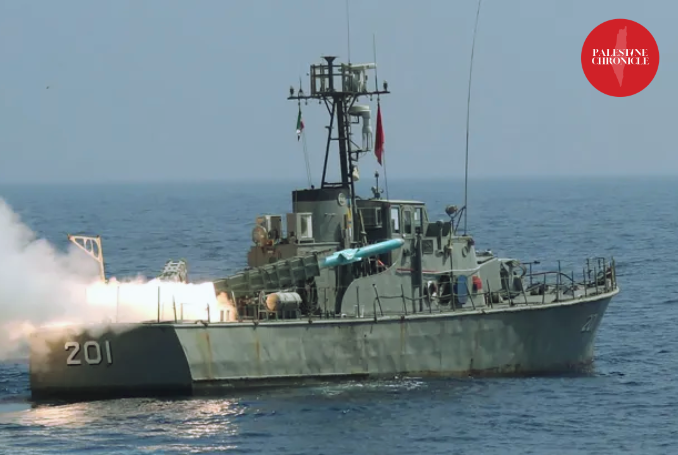
Amid rising speculation about possible US military action, renewed attention has focused on Iran’s naval capabilities and strategic leverage in the Persian Gulf.
Iran controls approximately 2,400 kilometers of coastline overlooking key maritime corridors, including the Strait of Hormuz, through which roughly 27% of global oil supplies and 22% of gas flows transit.
Following heavy losses during the 1980s “Tanker War” and the US Operation Praying Mantis, Iran shifted its naval doctrine away from conventional fleet confrontation toward asymmetric “maritime guerrilla warfare.”
Tehran invested heavily in fast attack boats capable of high-speed swarm tactics in shallow coastal waters. It expanded its inventory of naval mines, developed small submarines such as the Ghadir and Yono classes, and deployed anti-ship missile systems, including the Abu Mahdi and Qader platforms, some reportedly capable of reaching 1,000 kilometers.
Iran has also incorporated drone technology into maritime operations, deploying platforms such as the Shahed and Ababil systems. Larger vessels, including the Makran and Shahid Mahdavi, have reportedly been converted into floating military bases capable of launching drones and missile-equipped speedboats.
Iran’s naval forces are divided between the regular army navy, responsible for open-water security and trade routes, and the Islamic Revolutionary Guard Corps Navy, tasked with control of the Persian Gulf and Strait of Hormuz.
However, analysts note that fully closing the Strait of Hormuz would severely damage Iran’s own economy, cutting off most of its oil exports and imports. As such, it is widely viewed as a high-risk option unlikely to be deployed unless Tehran perceives an existential threat.
According to Global Firepower’s 2024 assessment, Iran’s navy ranks 37th globally, with over 100 naval assets including frigates, submarines, corvettes and numerous fast attack craft.
‘Until the Last Drop of Blood’ – Iran Warns as US Tankers Head to Israel
Our Strategic Assessment
The current trajectory reflects simultaneous military signaling and diplomatic brinkmanship.
Trump’s rhetoric indicates a willingness to use force but preserves flexibility. His emphasis that “sometimes you have to” suggests that Washington is prepared to escalate if negotiations collapse, yet his repeated references to additional talks indicate that diplomacy remains active.
The military buildup — carrier deployment, stealth aircraft positioning, refueling assets, and embassy staff reductions — serves both as deterrence and pressure.
Iran, meanwhile, relies on asymmetric deterrence, particularly in the maritime domain. Its naval doctrine is designed not to defeat US fleets in direct confrontation but to complicate operations, threaten commercial shipping, and raise global economic costs.
The international travel advisories reflect a growing perception that escalation risks are real, even if no strike has yet been ordered.
The convergence of stalled negotiations, expanded US force posture, Iranian deterrent signaling and global diplomatic repositioning places the region in a fragile holding pattern.
Whether this phase results in renewed diplomatic compromise or kinetic confrontation will likely depend on the outcome of the next round of talks — and on Washington’s assessment of whether military action would achieve a “tangible result” without triggering broader regional destabilization.
(PC, Anadolu, CNBC, AJA, US Media)




WHY hang on and report trump’s every word?…. he has NO understanding of the issues involved nor do those around him….as in the case of every dementia sufferer, he just repeats what is familiar….words that he does not even realize that he spoke 1 minute after they leave his mouth….the usa negotiators are also rank amateurs…kushner knows Pro-Wrestling but knows NOTHING about nuclear enrichment or ballistic missiles….witkoff thinks he pursues negotiations in good faith and almost simultaneously consults with GENOCIDAL israel and threatens IRAN…….THE TRUTH IS that the usa is now reduced to a SHIP OF FOOLS as the World careens into NUCLEAR WW3