


Strikes intensify, industries halt, casualties rise, and diplomatic tensions deepen as Iran war disrupts energy, aviation, and regional stability.
Airstrikes Hit Tehran Airport, University
US-Israeli airstrikes struck Mehrabad International Airport and Shahid Beheshti University in Tehran, Iranian state media reported.
The Iranian Red Crescent said the plasma and laser institute at the university was among the facilities targeted, confirming damage to research infrastructure.
Explosions were reported across multiple regions in western and northwestern Tehran, with smoke visible from different parts of the capital.
No official casualty figures were immediately released, and authorities have not confirmed the full extent of structural damage.
The strikes add to a series of attacks on urban and institutional sites in Tehran reported over recent days.
Iran Accuses IAEA Over Nuclear Silence
Iran’s Atomic Energy Organization accused the International Atomic Energy Agency of “clear complicity” following attacks on nuclear facilities.
Officials said the agency’s silence was “not merely negligence, but clear complicity with the aggressors,” in reference to US-Israeli strikes.
Protest letters were sent to the IAEA director general after attacks on facilities including Natanz, Isfahan, and Bushehr.
The organization said this “historic failure” would “destroy what remains of the agency’s credibility,” according to official statements.
Iranian authorities confirmed continued operations at nuclear sites and reiterated their right to respond militarily.
Russia, Egypt Call Immediate Ceasefire
Russian Foreign Minister Sergey Lavrov said Moscow and Cairo support an immediate ceasefire following talks with Egyptian Foreign Minister Badr Abdelatty.
Lavrov said the United States should not “simply demand that Iran unblock the Strait of Hormuz,” but instead end hostilities.
He warned that resolutions excluding Iran’s position would “antagonize the authorities in Tehran” and undermine negotiations.
The meeting also addressed the broader regional impact of ongoing military operations.
Iranian Strikes Shut UAE Aluminium Complex
Emirates Global Aluminium said Iranian missile and drone strikes forced a full shutdown of its Al Taweelah complex in Abu Dhabi.
The company confirmed damage to the smelter, casthouse, power plant, alumina refinery, and recycling facility.
Chief Executive Officer Abdulnasser Bin Kalban said the company was “deeply disturbed by this attack on our people,” noting workers from over 40 nationalities.
The facility produced 1.6 million tonnes of cast metal in 2025, while its alumina refinery produced 2.4 million tonnes.
EGA said full restoration of primary aluminium production could take up to 12 months, with partial operations resuming earlier.
Iraq Extends Nationwide Airspace Closure
Iraq’s Civil Aviation Authority extended the closure of national airspace to all flights for one week starting Friday.
The restrictions apply to arrivals, departures, and overflights, with authorities citing ongoing security risks.
Officials said the decision will be reviewed based on developments, with airlines notified of any changes.
The closure affects commercial and cargo routes crossing Iraqi airspace, a key corridor in regional aviation networks.
Authorities did not provide a timeline beyond the current extension ending April 10.
UAE Rejects Claims on Iranian Residents
The United Arab Emirates denied reports suggesting restrictions on Iranian nationals’ entry or residency during the conflict.
The Foreign Ministry said the country is home to a “respected and valued Iranian community” contributing to its social fabric.
It rejected claims that residency permits were canceled, describing such reports as inaccurate.
The statement followed media reports stating that Iranians abroad had lost residency status during the war.
Officials claimed policies remain based on established procedures to ensure safety and stability.
Russia Condemns Strike Near Tehran Church
Russia condemned a US-Israeli strike near St. Nicholas Orthodox Church in Tehran, citing damage to a cultural heritage site.
Foreign Ministry spokesperson Maria Zakharova said Moscow was “shocked by reports of serious damage and significant material losses.”
She described the incident as a “flagrant violation” requiring international recognition.
The church, built in 1945 and designed by Russian architect N. Markov, serves the Russian diaspora in Iran.
Lebanon Reports Rising Casualties From Strikes
Lebanon’s Health Ministry said Israeli attacks killed 23 people and injured 98 in the past 24 hours.
The ministry said total casualties since March 2 reached 1,368 killed and 4,138 injured.
Officials said the toll includes 125 children and 91 women among the dead.
Airstrikes and ground operations continue in southern Lebanon, with repeated strikes reported in multiple areas.
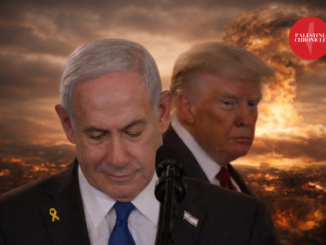
Trump Proposes US Control of Hormuz
US President Donald Trump said Washington could open the Strait of Hormuz and “take the oil and make a fortune.”
He described the move as a potential “gusher” for the world economy in a post on Truth Social.
The Strait of Hormuz carries around 20% of global oil supplies and remains disrupted.
Trump said, “with a little more time, we can easily open the Hormuz Strait,” signaling possible further action.
US messaging on the Strait has included both military and diplomatic options.
Zelensky Offers Role in Hormuz Talks
Ukrainian President Volodymyr Zelensky said Kyiv is ready to help facilitate efforts to reopen the Strait of Hormuz.
“Our signal… was that we were open to discussing it,” Zelensky said on social media platform X.
He said Ukraine has not received a formal request but is prepared for joint steps with the United States and regional countries.
Zelensky compared the situation to the Black Sea grain corridor, which enabled resumed exports from Odesa.
He said any effort could involve “interceptors, military convoys… and a large integrated electronic warfare network.”
Putin, Erdogan Discuss War, Black Sea Security
Russian President Vladimir Putin and Turkish President Recep Tayyip Erdogan discussed ceasefire efforts and regional escalation in a phone call.
The Kremlin said both leaders emphasized the need for agreements reflecting the interests of all regional states.
They warned that continued fighting could have “grave consequences” for global energy, trade, and logistics.
The discussion included threats to gas infrastructure and commercial shipping routes in the Black Sea.
Iranian Officials Issue Escalation Warnings
Senior Iranian official Ali Akbar Ahmadian said Tehran’s responses are based on “precise and rational calculations,” rejecting what he called “Hollywood-style displays.”
He said Iran “does not retreat under pressure” and will continue responding to threats.
Military officials warned that any ground offensive would be met with a full-scale response.
Statements from commanders included warnings that attacking forces “should not expect any of their elements to survive.”
(PC, Anadolu, Al Mayadeen, Iranian Media, Russian Media, Social Media)



😁!!!
he can’t even fight HIS OWN battle…how is he going to help? it’s actually laughable.
And, the Strait is open: just not to people who support Israelica.
coke dreams are like that…
Lorie nailed it!