
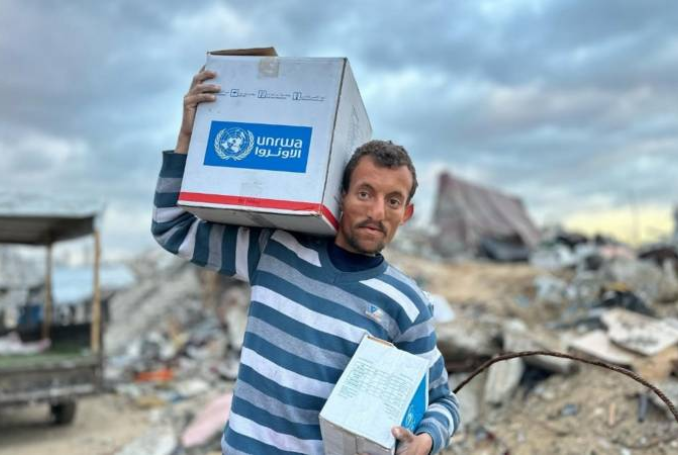

UNRWA, UNICEF, and local officials warn of a worsening humanitarian crisis in Gaza as Israel continues to block essential aid, defying international rulings and leaving millions without shelter, water, or medical care.
The United Nations Relief and Works Agency for Palestine Refugees (UNRWA) has warned that Israel continues to block the entry of essential humanitarian supplies into the Gaza Strip, including materials urgently needed for shelter and heating as winter approaches.
“As winter approaches in Gaza, people are increasingly in need of shelter and warmth,” the agency said in a statement on Saturday.
“Shelter and winter materials meant for displaced families are sitting in UNRWA warehouses in Jordan and Egypt, blocked from entry,” it added.
Israel Kills Two Brothers, Wounds Child despite Ceasefire in Gaza
UNRWA reiterated that it possesses the necessary relief supplies but has been denied permission to deliver them to Gaza. The agency emphasized that it must be allowed to resume its work in the Strip, stressing that Israel’s restrictions remain in place despite the International Court of Justice’s ruling last week affirming that no organization can replace UNRWA in supporting Palestinian refugees.
Dr. Mohammed Abu Afash, director of the Medical Relief Society in Gaza City, said that primary healthcare services remain paralyzed due to severe shortages of supplies and equipment.
“We were hoping to bring in what the health sector needs, but the suffering continues,” he told Al-Jazeera. He added that mobile clinics and field hospitals are urgently needed, calling for policies to support the rehabilitation of Gaza’s population—especially children—two years after what he described as Israel’s war of extermination.
The Gaza Municipality appealed to international and humanitarian bodies to act swiftly to address the worsening crisis as Israel continues to seal off vital crossings, particularly in the north.
“Everything that has been done so far in the Gaza Strip is merely emergency measures,” said Asem al-Nabih, the municipality’s spokesperson. He noted that municipal authorities had prepared a detailed list of urgent needs and coordinated plans for implementation—if the crossings were opened.
For its part, UNICEF has warned that Gaza’s water, sanitation, and hygiene sectors are facing catastrophic conditions. The agency noted that many families are still receiving far less than the minimum daily amount of clean water considered essential for survival, describing the overall situation as “critically desperate.”
It said its ongoing work with partner organizations has so far prevented a complete collapse of the water and sanitation system.
A ceasefire agreement reached in Sharm el-Sheikh, Egypt, on October 9, brokered by Qatar, Egypt, and Turkey with US participation, has failed to halt Israeli violations. Despite the accord, Israel continues to bomb the Gaza Strip and keeps the Rafah Crossing closed, leaving hundreds of aid trucks stranded on the Egyptian side.
(PC, AJA)



Be the first to comment