
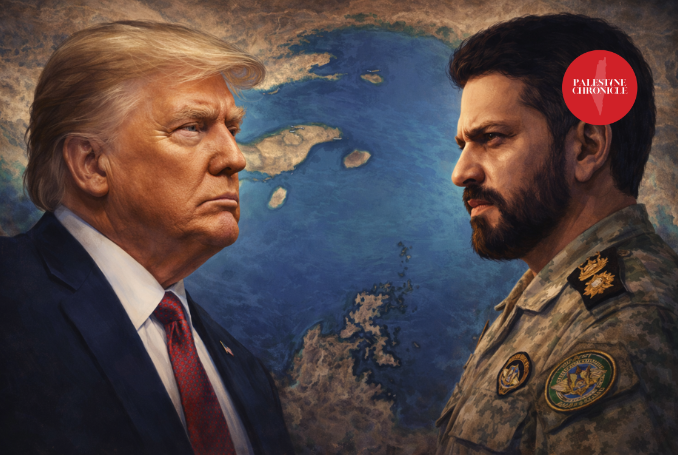

Iran’s Revolutionary Guard says it has taken full control of the Strait of Hormuz, while Washington weighs risky naval escorts.
Key Developments
- IRGC says its naval forces now exercise full control over the Strait of Hormuz.
- Iranian commanders warn ships attempting transit through the passage could be targeted.
- Maritime traffic through the strait has sharply declined amid escalating hostilities.
- Trump says US Navy could escort tankers and provide financial guarantees for shipping.
- Analysts warn escort operations would place US warships directly inside Iran’s missile and drone threat envelope.
IRGC Claims Control of Strategic Waterway
Iran’s Islamic Revolutionary Guard Corps (IRGC) announced on Wednesday that its naval forces now exercise full control over the Strait of Hormuz, one of the world’s most critical energy transit corridors.
Speaking to Fars News Agency, IRGC Navy political advisor Mohammad Akbarzadeh said that “the Strait of Hormuz is currently under the full control of the naval forces of the Revolutionary Guard.”
The announcement comes as tensions escalate following US-Israeli strikes on Iran and Tehran’s retaliatory operations across the region.
Iranian officials have warned that maritime traffic through the passage could be halted entirely.
Brigadier General Ebrahim Jabbari, advisor to the commander of the IRGC, said that “any ship attempting to pass through the Strait of Hormuz will burn,” adding that “not one drop of oil will be allowed to leave the region.”
The Limits of Managed Chaos: Why This Could Be Israel’s Last Great War
Shipping activity through the strait has already fallen sharply. CNN reported that only two oil and chemical tankers crossed the Strait of Hormuz on Monday, citing data from S&P Global Commodities at Sea.
Under normal conditions, roughly 60 vessels transit the narrow waterway each day, carrying about one-fifth of globally traded oil and a similar share of liquefied natural gas exports.
The disruption began earlier this week as insurers raised war-risk premiums and shipping companies reduced operations following attacks on vessels near Oman and the United Arab Emirates.
Energy markets have reacted immediately. Oil prices surged earlier in the week amid fears that sustained hostilities could interrupt global supply flows, while European natural gas benchmarks jumped sharply as traders assessed potential risks to Gulf LNG exports.
Additional pressure emerged after QatarEnergy temporarily halted liquefied natural gas production following drone strikes targeting facilities at Ras Laffan and Mesaieed, two of the country’s main gas processing hubs, Al Mayadeen reported.
Trump Floats Naval Escorts
As maritime traffic slowed dramatically, US President Donald Trump said Washington could deploy naval escorts to protect commercial shipping.
“If necessary, the United States Navy will begin escorting tankers through the Strait of Hormuz,” Trump said, adding that he had ordered the US International Development Finance Corporation to provide political risk insurance and financial guarantees for maritime trade in the Gulf.
According to Reuters news agency, the move represents one of the most aggressive steps yet taken by Washington to try to stabilize energy markets amid the expanding regional conflict.
‘100 US Soldiers Killed in Dubai,’ IRGC Says as Ground Forces Enter War
The Strait of Hormuz connects the Persian Gulf to the Gulf of Oman and is one of the most strategically significant maritime corridors in the world. At its narrowest point, it is roughly 20 nautical miles wide, with two-mile shipping lanes in each direction.
Each month, approximately 3,000 vessels—including oil tankers, LNG carriers, and container ships—pass through the corridor.
With Iranian forces warning that ships attempting to transit the passage could be targeted, maritime traffic has already slowed to a near halt.
Analysts Warn Escort Plan Carries Major Risks
Military analysts warn that escorting commercial vessels through the Strait of Hormuz would place US naval forces directly inside one of the world’s most heavily militarized maritime environments.
According to analysis by The War Zone, convoy operations would require American warships to repeatedly enter what experts describe as a “high-threat engagement zone.”
The report highlights that Iran’s capabilities in the region include anti-ship cruise missiles, ballistic missiles, naval mines, explosive drone boats, and one-way attack drones capable of targeting vessels moving through the narrow corridor.
Escort operations would also expose US warships to repeated engagement opportunities from Iranian coastal missile systems and mobile launchers positioned along the shoreline.
‘Hundreds Killed’ – IRGC Says ‘No Ship Allowed’ in Hormuz Strait
Historical precedent highlights the risks, the report says. During the ‘Tanker War’ phase of the Iran-Iraq conflict in the late 1980s, the United States deployed roughly 30 warships to escort commercial vessels through the Gulf.
Despite that large deployment, US forces suffered serious incidents, including the USS Samuel B. Roberts striking an Iranian naval mine and the USS Stark being hit by anti-ship missiles.
Today, Iran’s missile and drone capabilities are considered significantly more advanced and widely dispersed.
Analysts note that convoy operations are highly resource-intensive and would also divert naval assets from other missions in the region.
(PC, Fars News Agency, Al Mayadeen, Reuters, CNN, The War Zone)




Be the first to comment