
Israeli analysis says Hezbollah remains operational and disciplined despite heavy losses, challenging early assumptions that the group had been severely weakened.
Key Developments
Israeli media says Hezbollah shows “no signs of disintegration” despite Israeli strikes and assassinations.
Analysts say Israel underestimated the group’s ability to maintain command, control and sustained rocket fire.
Hezbollah launched multiple rocket and missile attacks on Israeli military sites and settlements on Saturday.
Israeli Media: Hezbollah Remains Operational
An analysis published in Yedioth Ahronoth argues that Israel underestimated Hezbollah’s resilience during the ongoing war.
Writing in the Israeli newspaper, analyst Avi Issacharoff said early assessments about Hezbollah’s weakness now appear premature.
“Quite a few mocking titles have been written in the Israeli media… about Naim Qassem,” Issacharoff wrote, referring to the Hezbollah secretary-general who succeeded Hassan Nasrallah after his assassination in September 2024.
However, nearly two weeks into the war, the situation appears different. “After almost two weeks of war between Israel, Iran, and Hezbollah, it turns out that Qassem manages to be the most senior decision-maker and maintain a relatively orderly chain of command and control,” he wrote.
❗️🇮🇱 UPDATE: Air raid sirens sounded in Kiryat Shmona and several towns in the Galilee Panhandle after rocket launches were detected, according to the Israeli Home Front Command.
❗️🇮🇱/🇮🇷 ISRAELI MILITARY: The army said it intercepted a missile launched from Iran toward southern… pic.twitter.com/FgR3CYamI1
— The Palestine Chronicle (@PalestineChron) March 14, 2026
Issacharoff noted that Hezbollah continues to function as a structured military organization.
“Contrary to perhaps careless statements, Hezbollah shows no signs of disintegration,” he wrote.
Despite targeted assassinations and Israeli strikes against its missile arsenal, the group continues to maintain discipline and operational capability. “There is discipline in the organization and its operatives are unquestionably subservient to Qassem’s authority,” Issacharoff noted.
Command Structure Still Functioning
According to the analysis, Hezbollah’s leadership structure remains intact despite significant losses.
Issacharoff said a small team surrounding Qassem continues to manage operations, including officials responsible for security, finance and intelligence. The coordinated missile fire between Hezbollah and Iran demonstrates that the group retains operational control.
“The heavy barrages toward Israel, in parallel with missile fire from Iran, indicate the extent to which Hezbollah is managing to maintain its command and control capability,” Issacharoff wrote.
He added that Israeli assessments claiming Hezbollah had been trapped in a strategic ambush now appear overly confident.
“The statement heard in Israel at the beginning of the war that ‘Hezbollah fell into a strategic ambush by Israel’… sounds insufficiently cautious after almost two weeks.”
Hezbollah Still Has Significant Firepower
Despite heavy losses, Hezbollah still maintains significant military capabilities, according to Israeli estimates.
Issacharoff wrote that the group still possesses more than 10,000 rockets, even though Israel claims to have destroyed a large portion of its precision missile stockpile.
❗️🇮🇷/🇮🇱 WATCH: Scenes of destruction following the impact of an Iranian missile in the Galilee region of northern Israel. pic.twitter.com/0mEwdt1aQr
— The Palestine Chronicle (@PalestineChron) March 14, 2026
“The incessant rocket barrages… proved that the organization still has significant firepower,” he wrote.
Israeli assessments estimate that Hezbollah currently launches about 90 rockets per day, most of them Grad rockets. At the same time, the report acknowledges that the organization has suffered major losses.
According to Israeli estimates cited in the article, around 300 Hezbollah fighters have been killed since the war began, and many senior commanders have been eliminated. However, Hezbollah units continue to operate along the border.
Issacharoff wrote that the Radwan Force, Hezbollah’s elite unit, is still active despite sustained Israeli attacks.
In one recent incident, Radwan fighters reportedly killed two Israeli soldiers, Maher Khatar and Or Damri.
Guerrilla Tactics
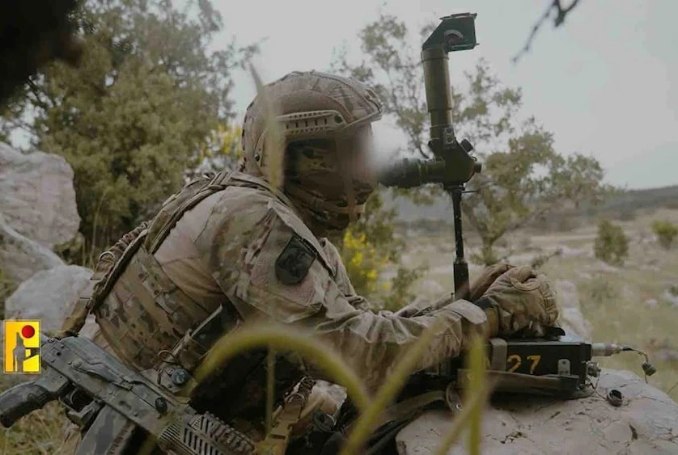
The report says Hezbollah has adapted its battlefield strategy. Instead of preparing for a large-scale invasion of northern Israel, the group now focuses on ambushes and guerrilla-style warfare.
According to Issacharoff, the tactics resemble the methods used during earlier conflicts. “In other words, the Israeli side estimates that the plans for the conquest have been replaced with ambushes for the Israeli forces and beyond guerrilla activity of the 1990s style: IEDs, anti-tank fire and sniping.”
Another notable change is that local fighters now have greater autonomy. Field operatives can decide when to attack Israeli forces without waiting for approval from Hezbollah’s central command, according to the report.
🔴 LIVE BLOG – Day 15
Iran launches new strikes on Israel, Hezbollah fires missiles from Lebanon, and the US embassy in Baghdad is targeted.
Follow developments live ⬇️https://t.co/MuswMDfnMj pic.twitter.com/AeXZxa41d3
— The Palestine Chronicle (@PalestineChron) March 14, 2026
Hezbollah Continues Attacks
Meanwhile, Hezbollah announced several operations targeting Israeli military positions and settlements.
According to the Lebanese news network Al Mayadeen, the group targeted the settlement of Kiryat Shmona at 05:00 with a barrage of rockets.
At 07:00, fighters targeted the newly established Balat military site in southern Lebanon using a missile.
At 07:30, resistance fighters launched a rocket attack on Israeli troops gathered at Aqaba Hill near Maroun al-Ras.
At 08:00, Hezbollah fighters targeted two Merkava tanks near the Jal Al-Alam site, reportedly achieving direct hits.
Later, at 10:00, the group launched rockets at the headquarters of Division 146 in Ja’atun, east of Nahariya.
Hezbollah also fired rockets toward the Metula settlement earlier in the morning. The operations were carried out, according to Hezbollah statements, “in defense of Lebanon and its people.”
Israeli media reported that air raid sirens sounded repeatedly across northern Israel due to rocket fire from Lebanon. Alerts were recorded in multiple areas, including Ma’alot-Tarshiha and surrounding towns.
Israeli reports also noted damage caused by rockets falling in the Upper Galilee region. In parallel with the attacks, Hezbollah’s military media released a video titled “And it was truly incumbent upon Us to help the believers.”
(PC, Yedioth Ahronoth, Al Mayadeen)