
Israeli forces carried out new demolition and shelling operations across southern and central Gaza, as UNRWA warns of a worsening humanitarian crisis due to Israeli restrictions on aid and winter supplies.
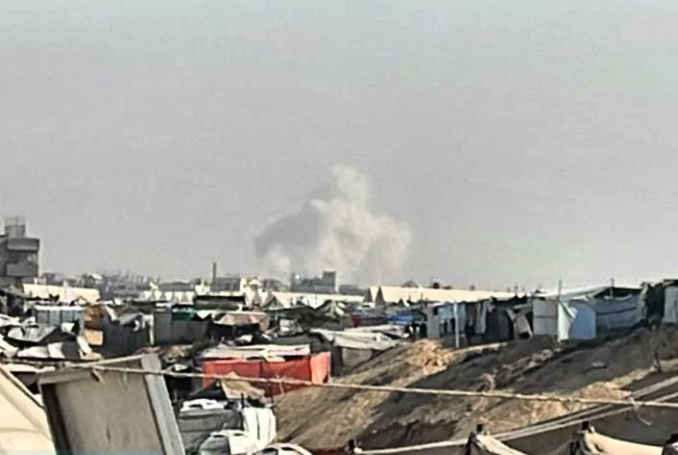
The Israeli army carried out demolition operations on Sunday morning in parallel with air and artillery strikes targeting Khan Yunis and Rafah in the southern Gaza Strip, as well as Deir al-Balah in central Gaza, raising growing concerns about the worsening humanitarian situation.
According to Al-Jazeera, Israeli forces launched heavy artillery fire on eastern Khan Younis while simultaneously carrying out large-scale demolitions in the area.
Similar strikes hit Rafah and eastern Deir al-Balah, where residential areas were reportedly targeted by artillery and airstrikes.
The Israeli occupation army also conducted extensive demolition operations east of Khan Yunis earlier today.
🚨Despite the ceasefire, the Israeli occupation forces continue demolishing Palestinian homes in Khan Younis. pic.twitter.com/hZxbDnAq95
— TIMES OF GAZA (@Timesofgaza) October 31, 2025
Mounting Humanitarian Needs
As winter approaches, fears are mounting that the already dire humanitarian conditions in Gaza will deteriorate further.
The United Nations Relief and Works Agency for Palestine Refugees (UNRWA) said that winter shelter supplies—sufficient for one million people—remain blocked from entering the Strip due to Israeli restrictions.
Engineer Alaa El-Din Al-Batta, Mayor of Khan Yunis and Vice President of the Union of Municipalities of the Gaza Strip, told Al Jazeera that nearly 900,000 displaced people are currently living in camps facing an acute shortage of essential goods.
He noted that no concrete measures have been taken to alleviate their daily suffering, stressing that Gaza is in desperate need of tents, cement, and spare parts for heavy machinery.
The ban on UNRWA’s aid supplies, including hygiene kits, must be lifted. After two long years of war, people in #Gaza need the most basic items.
As the largest UN agency operating in the #Gaza Strip, by far, UNRWA has an unparalleled logistical network, longstanding trust from… pic.twitter.com/1tNgDqy8Bb
— UNRWA (@UNRWA) October 24, 2025
Aid Entry and Health Sector Struggles
The Gaza government media office reported that between October 10 and 31, approximately 3,200 trucks entered the Strip, an average of just 145 trucks per day out of the 600 agreed upon under the ceasefire terms.
The deliveries included 293 food trucks, 220 carrying general goods, six fuel trucks, and four for the health sector, along with limited quantities of spare parts, appliances, and various equipment.
Meanwhile, Gaza’s health system remains on the brink of collapse. Munir al-Barsh, Director General of the Palestinian Ministry of Health in Gaza, told Al-Jazeera that Israeli authorities continue to block the entry of medicines and medical supplies and are obstructing international humanitarian assistance.
The ceasefire, which took effect on October 10 under a plan proposed by US President Donald Trump, called for an end to the war, a phased Israeli withdrawal, mutual prisoner exchanges, and the immediate flow of humanitarian aid into Gaza.
However, Israel has repeatedly violated the agreement. The two-year military assault on Gaza has killed an estimated 68,858 Palestinians and wounded around 170,664 others—most of them women and children.
Despite the declared truce, hundreds more have been killed or injured in continuing Israeli operations.
(PC, AJA)