
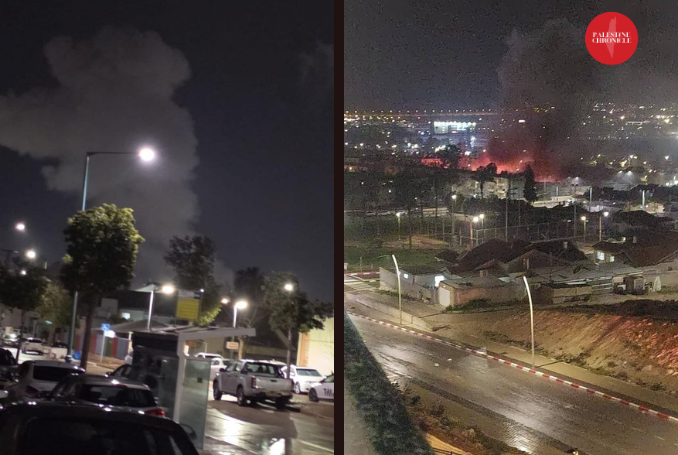

Iranian missiles struck near Dimona, exposing rare Israeli air defense failures and raising concerns over interceptor shortages, according to NYT.
Key Takeaways
- Iranian ballistic missiles hit Dimona and Arad, evading Israel’s multilayered air defense system.
- Israeli officials admit interception failures, raising concerns about system reliability and operational decisions.
- Questions emerge over interceptor stockpiles and sustainability amid prolonged war with Iran.
NYT: Rare Penetrations near Dimona
An investigation by The New York Times has revealed that Iranian ballistic missiles managed to strike near one of Israel’s most heavily protected areas, raising serious questions about the effectiveness and sustainability of its air defense systems.
Last Saturday, Iranian missiles hit residential neighborhoods in Dimona and the nearby city of Arad, both located close to Israel’s main nuclear research facility in the Naqab (Negev) desert—an area typically considered among the most secure in the country.
🎥⭕️ WATCH: Drone footage captures the aftermath of a ballistic missile strike from above, revealing the scale of destruction at the impact site in Arad. pic.twitter.com/wVVVR1Uupr
— The Palestine Chronicle (@PalestineChron) March 21, 2026
The strikes appear to have shaken confidence in Israel’s defenses. As the NYT noted, “even battle-hardened Israelis seemed rattled by the scenes of destruction.”
Failed Interceptions and Military Silence
The Israeli military acknowledged that it had attempted to intercept the missiles but failed. The incidents occurred hours apart, suggesting separate breakdowns rather than a single malfunction.
Officials have so far provided limited details. Israeli military authorities said they are investigating the failures but remain largely silent on the causes.
The NYT highlighted that the incidents have raised “discomfiting questions” about Israel’s air defense system, which is widely regarded as one of the most advanced in the world.
🚨⭕️ WATCH: Israeli Prime Minister Benjamin Netanyahu meets far-right minister Bezalel Smotrich at the impact site in Arad following the missile strike.
"It is time for world leaders to join us, and I am seeing movement from some in that direction". pic.twitter.com/sb0GkFiNgC
— The Palestine Chronicle (@PalestineChron) March 22, 2026
Israeli Prime Minister Benjamin Netanyahu did not explain the failures during a visit to the impact sites. Instead, he emphasized civilian precautions, warning residents: “Don’t be complacent.”
‘Nothing is Perfect’
Israeli military figures acknowledged shortcomings in the system, despite its high interception rates.
Ran Kochav, a former commander of Israel’s air and missile defense forces, told the NYT: “Dimona is protected with multilayered defense systems — Israeli and American, but nothing is perfect. There was an operational failure.”
While Israeli officials claim that over 90 percent of Iranian ballistic missiles have been intercepted, the successful strikes on Dimona and Arad highlight the limitations of even advanced systems.
Military spokesman Effie Defrin added that the two incidents were not connected, suggesting independent failures.
Costly Interceptors and Strategic Calculations
The report raises the possibility that Israel may be conserving its most advanced and expensive interceptor systems, particularly the Arrow 3, which is designed to intercept ballistic missiles outside the atmosphere.
Israeli media reports, cited by the NYT, indicated that the Arrow 3 system may not have been used during the Dimona and Arad strikes.
This Is How We Know the Iran War Is Failing — And Not for Military Reasons
This has fueled concerns about interceptor availability. The NYT noted that during the previous 12-day war with Iran, Israeli officials had already warned about the need to conserve missile defenses.
Kochav underscored this concern, stating: “It is not a bottomless barrel. When we intercept, we also have to think of the next day’s battle.”
Growing Pressure on Stockpiles
The strain on Israel’s missile defense inventory may intensify as the conflict continues. According to the NYT, Israeli defense officials have recently approached the United States to request additional interceptors and munitions.
Although the Israeli military has denied shortages, it acknowledged it is monitoring the situation closely, stating that “as of now” there is no shortage—language that suggests potential future constraints.
The report also notes that Israel has begun relying more on lower-tier systems like Iron Dome and David’s Sling to extend its defensive capacity, even though these are not optimized for high-end ballistic threats.
Experts cited by the NYT emphasized the inherent difficulty of intercepting ballistic missiles, particularly advanced Iranian systems.
Trump Delays Iran Strikes as Tehran Denies Talks, Warns of Retaliation
Yehoshua Kalisky, a senior researcher at Israel’s Institute for National Security Studies, explained the complexity of interception: “That’s very hard — like two bullets meeting.”
He added that some Iranian missiles are capable of maneuvering mid-flight, further complicating interception efforts, while even minor atmospheric variations can disrupt calculations.
The strikes on Dimona and Arad wounded approximately 175 Israelis, including at least 10 seriously. Many casualties were avoided due to the widespread use of bomb shelters.
Describing the aftermath, a resident told the NYT: “It felt like a hurricane mixed with an earthquake.”
(PC, New York Times)





heavily protected areas — because it’s surrounded by human shields! About Smotnitch’s “It is time for world leaders to join us” — what is that fool smoking?? And assuming it’s Netanyhu is still alive …
Re: Smotnich’s comment about “world leaders to join us” — https://www.palestinechronicle.com/israels-war-on-iran-risks-undermining-its-own-long-term-survival-ft-analysis/