
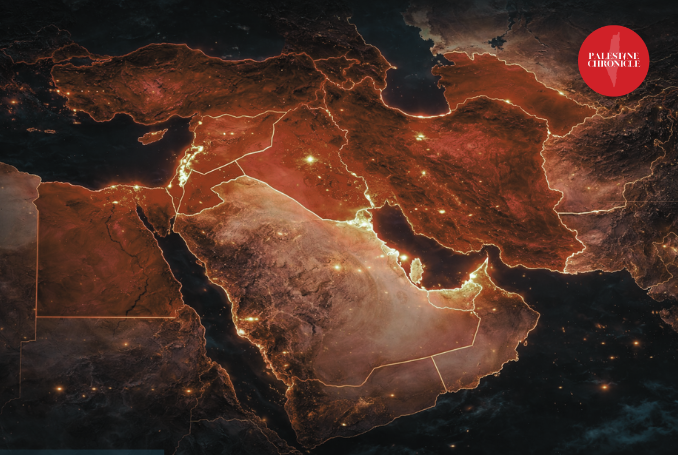

Global reactions mount as Iran installs a new leader, energy markets tremble, and the expanding war reshapes regional politics.
Tehran Closes Ranks Around Mojtaba Khamenei
Iran’s political leadership moved quickly to demonstrate continuity after Mojtaba Khamenei was declared the country’s new Supreme Leader following the killing of his father, Ayatollah Ali Khamenei, in a US-Israeli strike.
President Masoud Pezeshkian described the appointment as “a manifestation of the people’s will to govern,” expressing confidence that the country’s challenges could be overcome through unity under the new leadership.
Iranian officials also signaled that the transition would not slow Tehran’s military response. Foreign Minister Abbas Araghchi warned that Iran is “fully prepared” for further escalation and said Tehran has “many surprises in store.”
According to Iranian authorities, more than 1,200 people have been killed and over 10,000 injured since the US-Israeli attacks began on February 28.
Oman Breaks the Arab Ice
The first Arab diplomatic response to Iran’s leadership transition came from Muscat.
Oman’s Sultan Haitham bin Tariq sent a cable congratulating Mojtaba Khamenei, becoming the first Arab leader to publicly recognize Iran’s new Supreme Leader.
Though brief, the message carried symbolic importance. Oman has long cultivated a role as mediator between Iran and Gulf states, and its early recognition suggests that some regional actors are already adjusting to Tehran’s new leadership rather than waiting for the war’s outcome.
The move could signal quiet efforts to preserve diplomatic channels even as military tensions escalate across the region.
Gulf States Brace for Spillover
Elsewhere in the Gulf, the tone was far more alarmed as Iranian missiles and drones targeted several states hosting US military assets.
Kuwait’s Emir Sheikh Mishal Al-Ahmad Al-Jaber Al-Sabah ordered heightened readiness to protect vital infrastructure and warned that the country had come under “a brutal attack by a neighboring Muslim country, which we consider a friend.”
He said the military and security institutions were operating with “high readiness and coordination to ensure the safety of citizens under all circumstances,” reflecting fears that the war could spread further into the Gulf.
Lebanon Speaks in Two Voices
Lebanon’s internal divisions became starkly visible as political leaders and resistance figures offered competing visions of the country’s response to the war.
President Joseph Aoun called for direct negotiations with Israel under international auspices and urged international support for the Lebanese army to control weapons and disarm Hezbollah.
At the same time, Hezbollah parliamentary leader Mohammad Raad issued a defiant warning, insisting Lebanon faces not a choice between war and peace but between “confronting the aggression or surrendering.”
Raad also criticized the Lebanese government’s inability to deter Israeli attacks, arguing that continued violations and strikes had exhausted Lebanese patience.
Russia Frames the Crisis Through Energy
Moscow quickly placed the conflict within a broader global economic framework.
President Vladimir Putin warned that oil production linked to the Strait of Hormuz could halt “completely within the next month,” highlighting the potential for a major global energy shock.
Putin also stressed that Russia would continue supplying “reliable partners” with oil and gas and suggested Moscow could expand exports to new markets if supply disruptions intensify.
The comments underline how the war is already reshaping global energy calculations.
Hormuz Becomes the War’s Most Dangerous Frontier
The Strait of Hormuz is rapidly emerging as the most sensitive strategic front of the conflict.
Iranian security official Ali Larijani warned that security in the waterway was “unlikely” to be restored while the region remains engulfed in war triggered by US and Israeli actions.
European powers are already preparing contingency plans. French President Emmanuel Macron said Paris and its partners are discussing a “purely defensive” naval mission designed to escort vessels and help reopen the strait once the most intense phase of fighting subsides.
The narrow passageway carries roughly a fifth of the world’s oil supply, making it one of the most critical choke points in global trade.
Britain and Europe Brace for Economic Shock
European governments are increasingly focused on the economic consequences of the widening conflict.
British officials warned that disruptions to Gulf shipping and energy supplies could trigger inflationary pressures and new shocks to global markets.
European leaders are now weighing emergency energy measures and closer coordination with allies to stabilize markets if the crisis around the Strait of Hormuz deepens.
The war is therefore being felt not only on the battlefield but also in financial markets and supply chains across Europe.
China Calls for Sovereignty and De-escalation
China has responded cautiously but firmly, emphasizing respect for Iran’s sovereignty while urging restraint from all sides.
Chinese officials said that “Iran’s sovereignty, security and territorial integrity should be respected” and called for an immediate end to military operations.
Beijing has avoided taking a direct geopolitical side in the conflict, instead stressing negotiations and stability.
The approach reflects China’s broader interest in protecting energy flows from the Gulf while avoiding deeper military entanglement in the region.
Iran’s Allies Rally as Regional Anxiety Grows
Iran’s allies quickly voiced support for the leadership transition in Tehran.
Ansarallah leader Abdul-Malik al-Houthi congratulated Mojtaba Khamenei and said the selection strengthens the Islamic Republic during a period of confrontation with the United States and Israel.
Meanwhile, Iran’s Revolutionary Guard signaled an escalation in military operations.
Aerospace commander Brigadier General Majid Mousavi said that “no missile with a warhead weighing less than one ton will be launched from now on,” warning that the scale and range of attacks would expand.
Washington Signals War Decisions with Israel
As the conflict escalates, US President Donald Trump suggested that decisions about ending the war would be closely coordinated with Israel.
Speaking to the Times of Israel, Trump said the decision to end the war would be “mutual… a little bit,” referring to discussions with Israeli Prime Minister Benjamin Netanyahu.
“I’ll make a decision at the right time, but everything’s going to be taken into account,” Trump said, praising Netanyahu as a wartime leader and saying the two governments had “worked together” against Iran.
The remarks have drawn attention in Washington, where analysts note that framing the end of a major US military campaign as a joint decision with a foreign leader raises broader questions about how the conflict is being managed.
(PC, AA, Al-Mayadeen, ONA, KUNA, HRW, Reuters, Kremlin, FMPRC, X)


Dondolf Trump done Fuh’d up!
He only did it because his husband Benjamin told him to.