
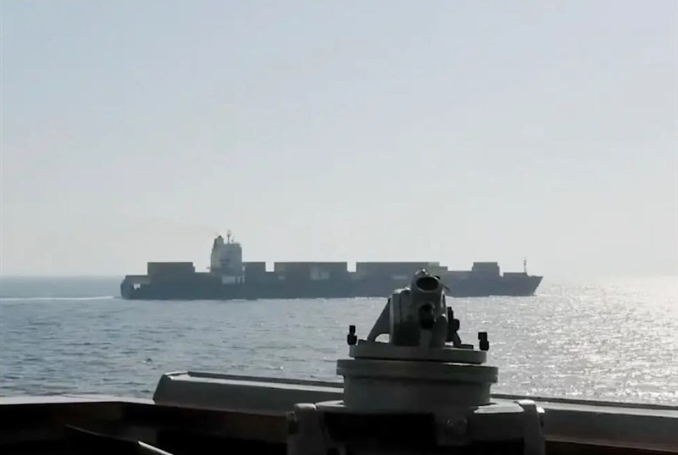

Iran warns of retaliation after US seizes cargo vessel, escalating tensions and threatening collapse of fragile ceasefire arrangements.
Key Developments
- Iran warns US vessel seizure will be met with retaliation.
- US forces disable and board Iranian ship in Gulf of Oman.
- Iranian drones launched toward US naval vessels in response.
- Ceasefire and planned negotiations face growing uncertainty.
Iran Warns of Imminent Retaliation
Iran’s Khatam al-Anbiya Central Headquarters warned on Sunday that the United States will face retaliation after targeting an Iranian commercial vessel in the Gulf of Oman.
“The aggressive United States, by violating the ceasefire and engaging in maritime banditry, attacked one of Iran’s commercial ships in the waters of the Sea of Oman by opening fire at it, disabling its navigation system, and deploying a number of its terrorist marines onto the deck of the vessel,” a spokesperson said, according to Tasnim news agency.
He added that the Iranian armed forces will respond.
U.S. forces operating in the Arabian Sea enforced naval blockade measures against an Iranian-flagged cargo vessel attempting to sail toward an Iranian port, April 19.
Guided-missile destroyer USS Spruance (DDG 111) intercepted M/V Touska as it transited the north Arabian Sea at… https://t.co/iyzOQd93C3 pic.twitter.com/HwU4XS48Oq
— DOW Rapid Response (@DOWResponse) April 19, 2026
“We caution that the Armed Forces of the Islamic Republic of Iran will soon respond to and retaliate for this act of piracy and armed aggression by the US military,” the spokesman stated.
The vessel, identified as Touska, was traveling from China to Iran when it came under attack.
US Claims
The United States Central Command confirmed that US forces intercepted the Iranian-flagged vessel after what it described as a six-hour standoff.
According to US officials, the ship was heading toward the Iranian port of Bandar Abbas and failed to comply with repeated warnings to halt and evacuate the engine room.
US President Donald Trump said the US Navy disabled the vessel.
“We have full custody of their ship, and are seeing what’s on board!” Trump wrote on social media, adding that US forces stopped the ship by “blowing a hole in the engine room.”
US forces then boarded the vessel, with Marines reportedly descending onto the ship from helicopters.
Iranian Response in the Field
Iranian sources said military units launched drone strikes toward several US naval vessels in the area following the incident.
The response came amid an already tense maritime standoff linked to the US-imposed blockade on Iranian shipping routes.
Iran has repeatedly warned that interference with its commercial vessels would trigger direct military consequences.
Ceasefire and Talks in Jeopardy
The incident has raised concerns that the fragile ceasefire between the United States and Iran may collapse.
According to Reuters news agency, tensions have increased significantly following the seizure, with Tehran signaling that it may not participate in a second round of negotiations expected to take place in Islamabad.
Iranian officials cited the continued US blockade, threatening rhetoric, and what they described as “excessive demands” as reasons for reconsidering diplomatic engagement.
Vibe-trading digital oil is like vibe-hedging in treasuries during Hormuz risk-off. Both share one house of cards that works on paper.
Difference: oil at least has Dated Brent. Treasuries? Vibes all the way down.EUCRBRDT Index GP <GO>
— محمدباقر قالیباف | MB Ghalibaf (@mb_ghalibaf) April 19, 2026
“One cannot restrict Iran’s oil exports while expecting free security for others,” Iran’s First Vice President Mohammadreza Aref said, warning of broader consequences if the current situation continues.
At the same time, US officials had been preparing for a new round of talks, though uncertainty now surrounds whether those discussions will proceed.
Strait of Hormuz Standoff Deepens
The escalation comes within the broader confrontation over control of maritime routes, particularly the Strait of Hormuz, a critical chokepoint for global energy supplies.
The waterway handles roughly one-fifth of the world’s oil shipments, making any disruption a matter of international concern.
The United States has maintained a naval blockade targeting Iranian shipping, while Iran has alternated between easing and tightening control over maritime traffic in the region.
Following the latest developments, oil prices rose and global markets reacted with volatility, reflecting fears that the confrontation could expand further.
(PC, Tasnim, Reuters, US Central Command)


Be the first to comment