
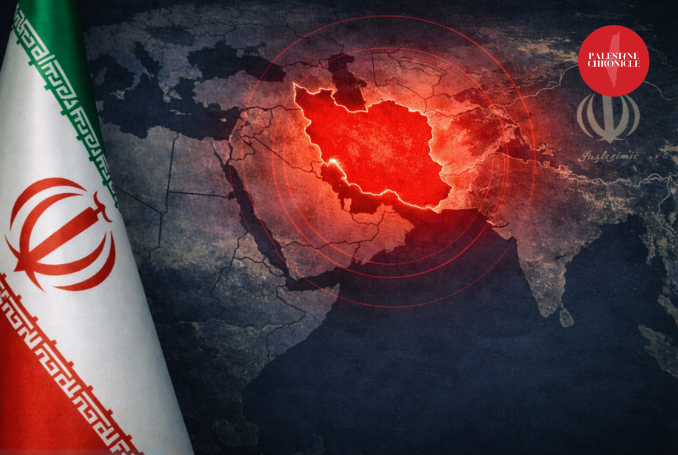

Escalation intensifies as Iran warns US forces, expands missile strikes, and Hormuz disruption threatens global energy stability.
Tehran Warns US Airborne Forces of ‘Carrier Fate’
Iran issued a direct warning to the US 82nd Airborne Division as reports emerged that Washington is preparing to deploy roughly 3,000 troops to the Middle East.
The warning explicitly referenced the withdrawal of the USS Gerald Ford and USS Abraham Lincoln, framing them as examples of US military assets that were forced to leave the region under pressure.
Addressing the elite US unit, Iranian officials signaled that any new deployment would not shift the balance on the ground but would instead expose additional American forces to direct confrontation.
The 82nd Airborne Division is one of the US military’s most prominent rapid-response units, capable of deploying behind enemy lines and securing strategic positions such as airports and communication hubs. Its potential deployment suggests that Washington is preparing for scenarios that go beyond air and naval operations.
According to US officials cited in major media reports, the Pentagon is considering missions that could include securing key infrastructure, with Iran’s Kharg Island—one of the country’s most important energy export terminals—frequently mentioned as a possible target.
Iran Expands Missile Campaign with Multi-Target Strikes
On the battlefield, Iran announced new waves of missile and drone strikes as part of its ongoing campaign, signaling a sustained and coordinated military effort.
According to Iranian military statements, waves 78 and 79 of operations targeted a wide range of sites, including aviation facilities near Ben Gurion Airport, military-industrial infrastructure in Haifa, and intelligence-linked locations across central and southern Israel.
The strikes reportedly involved advanced ballistic missile systems such as Emad, Qadr, Sejjil, and Kheibar Shekan, alongside coordinated drone attacks designed to overwhelm air defenses.
Iran also claimed that its air defense systems successfully intercepted cruise missiles, including Tomahawk-type systems, as well as hostile drones attempting to penetrate its airspace.
The widening range of targets—particularly those linked to aviation, logistics, and intelligence—suggests that Iran is focusing on degrading long-term operational capacity rather than conducting isolated retaliatory strikes.
Wave 79 Unleashed: Iran–Hezbollah Coordinated Strikes – Dispatches from the Battlefield
US Naval Power Shows Strain as Carriers Withdraw
The USS Gerald Ford, the most advanced and expensive aircraft carrier in the US fleet, was forced to withdraw from the Middle East after a fire broke out onboard, sending the vessel to Crete and removing it from active operations.
The incident, though officially described as limited to a non-combat area, has raised broader questions about the readiness and reliability of key US military assets in prolonged conflict scenarios.
The withdrawal comes alongside the earlier departure of the USS Abraham Lincoln, further reducing the number of US carrier strike groups available in the theater.
These developments point to increasing pressure on US naval forces, which have been central to Washington’s ability to project power in the region.
Iranian officials have repeatedly highlighted these withdrawals as evidence that US military presence is more vulnerable than often portrayed, using them as part of a broader narrative of shifting balance.
USS Ford Withdraws after Fire as Pentagon Flags Deeper Failures
Hormuz Occupation ‘Highly Dangerous’
The New York Times, citing military and strategic experts, reported that any US attempt to militarily impose control over the Strait of Hormuz would be extremely dangerous and costly.
According to the report, the first step in any such operation would be trying to strip Iran of its ability to target ships, something experts said has not been achieved despite repeated US and Israeli strikes.
Experts cited by the New York Times said Iran can disperse and conceal its missile batteries across multiple locations, making them difficult to detect and destroy. They also stressed that the narrow geography of the strait and its proximity to Iranian shores give Tehran a significant battlefield advantage.
The report added that US warships operating in such an environment would face serious risks from drones and missiles, while any American casualties or captured troops could fundamentally alter the course of the war.
‘All Red Lines Crossed’: IRGC Warns of Heavy Attacks on Israel, Gaza Envelope
Oil Shock as Hormuz Disruption Hits Global Markets
Kuwait has announced a sharp reduction in oil production due to instability in shipping routes, with output falling from over three million barrels per day to around 500,000.
Officials described the situation as a “serious escalation” that threatens global energy market stability, warning that full production may not resume for several months, depending on the course of the war.
The disruption has also driven up shipping costs and contributed to rising global oil prices, underscoring the widening economic consequences of the conflict beyond the immediate battlefield.
US Sends 15 Points Proposal
Reports indicate that the United States has sent Iran a 15-point proposal through Pakistan, outlining possible steps related to nuclear activity, ballistic missile programs, and maritime security in the Strait of Hormuz.
The proposal appears to reflect an attempt to establish a framework for de-escalation while maintaining military pressure.
US President Donald Trump also announced a temporary five-day pause in strikes targeting Iranian energy infrastructure, citing what he described as productive talks.
However, developments on the ground have complicated this narrative.
Strikes on Iranian energy facilities, including sites in Isfahan, were reported within hours of the announced pause, raising questions about the consistency of US messaging.
Iranian officials have acknowledged receiving indirect messages from intermediaries but have denied engaging in direct negotiations with Washington.
Six Conditions to End the War: Iran Defines Endgame in Unprecedented Shift
International Legal Criticism Gains Momentum
German President Frank-Walter Steinmeier described the US-Israeli campaign as a violation of international law, marking one of the clearest criticisms from a Western leader.
His remarks included criticism of Washington’s withdrawal from the Iran nuclear agreement and its subsequent military actions.
Iran’s Foreign Minister Abbas Araghchi welcomed the statement, framing it as recognition of broader inconsistencies in international responses to conflicts.
The exchange highlights growing divisions within Western political circles and reflects a wider debate over the erosion of international legal norms.
(PC, Anaolu, Iranian Media, NYT, Al Mayadeen)




These terrorists from the U.S. 82nd Airborne Division are going to bathe in their own blood, when they attempt to get off their ships and enter into Iran’s Kharg Island. Exactly how do they plan to defend themselves against all those Iranian drones and missiles that will be flying at them from many different directions?
How extremely absurd, that members of the U.S. military would be willing to sacrifice their lives, to go fight for the genocidal Zionist entity, who has always caused so much harm to the United States.