
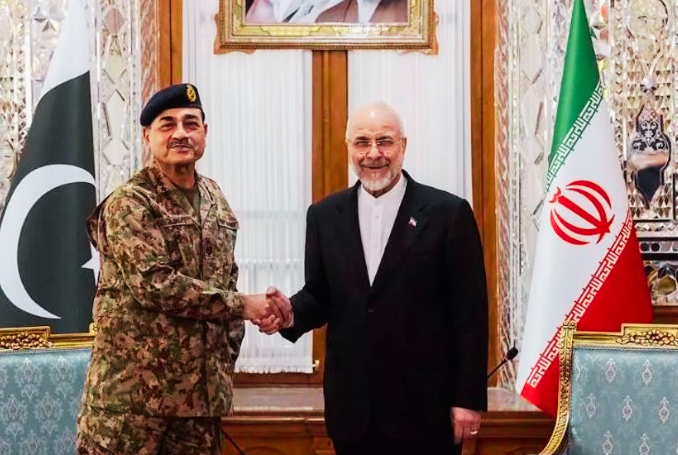

Pakistani military and political officials intensified mediation efforts amid fears the fragile Iran-US truce could collapse.
Key Developments
- Pakistani Army Chief Asim Munir arrived in Tehran as mediation efforts between Iran and Washington accelerated.
- Reports outlined a proposed “calm in exchange for freeze” framework aimed at preventing broader regional war.
- Iranian and regional officials warned that deep disagreements continue to threaten the current truce.
Military Channels Enter the Negotiation Process
Pakistan’s efforts to mediate between Tehran and Washington entered a new stage on Thursday after Pakistani Army Chief Asim Munir arrived in Tehran amid growing efforts to preserve a fragile truce and prevent renewed regional escalation.
The visit came as diplomatic activity intensified around indirect negotiations between Iran and the United States, with multiple regional actors attempting to prevent the collapse of a ceasefire that has remained under increasing strain in recent weeks.
Munir’s arrival followed a series of high-level contacts between Iranian and Pakistani officials focused on regional developments and ongoing mediation efforts.
Pakistani Interior Minister Mohsin Naqvi arrived in Tehran earlier this week for the second time in days, holding meetings with senior Iranian officials, including Interior Minister Eskandar Momeni and President Masoud Pezeshkian.
Discussions centered on bilateral relations, regional security developments and indirect talks between Tehran and Washington.
Al Jazeera reported that the involvement of Pakistan’s army chief suggested negotiations may increasingly be moving beyond traditional diplomatic channels and entering direct military and security coordination.
The military dimension has emerged as concerns grow over maintaining a ceasefire amid continuing tensions surrounding sanctions, maritime routes and regional military deployments.
‘Calm in Exchange for Freeze’
Iranian media reports outlined what mediators described as a phased framework intended to prevent a wider conflict.
The proposal has reportedly been framed as a “calm in exchange for freeze” initiative designed to temporarily halt escalation rather than establish a final political agreement.
According to reports, the proposed framework includes a halt to US and Israeli strikes on Iran in exchange for Iranian commitments not to expand attacks targeting American military positions or international maritime routes.
The initiative also reportedly addresses navigation in the Strait of Hormuz and seeks to prepare broader negotiations expected to continue for between 30 and 60 days.
Future discussions would reportedly include nuclear issues, missile programs, sanctions and regional influence.
Reports indicated that mediators are attempting to structure the initiative in a way that prevents any side from appearing publicly defeated or politically weakened.
Internal Dynamics Complicate Negotiations
While mediation efforts have accelerated, reports also suggested growing complexity inside Iran regarding decision-making structures.
The Associated Press cited regional officials and analysts saying uncertainty surrounding centers of influence within Iran has complicated negotiations.
According to the reports, Revolutionary Guard commander Ahmad Vahidi has increasingly emerged as a central figure in discussions following criticism directed toward earlier negotiators.
Sources suggested Vahidi has become associated with a harder negotiating position and growing influence over strategic decisions.
Iranian reports also linked him to circles close to Supreme Leader Mojtaba Khamenei.
Meanwhile, Iranian Parliament Speaker Mohammad Baqer Qalibaf warned that adversaries were pursuing both overt and covert measures aimed at preparing for another phase of confrontation.
Truce Remains under Pressure
The diplomatic push comes amid continuing tensions following the US-Israeli war launched against Iran on February 28.
The conflict reportedly left more than 3,000 dead according to Iranian figures and triggered retaliatory attacks targeting American and Israeli interests.
Following earlier breakdowns in negotiations, Washington imposed restrictions affecting Iranian ports and maritime activity linked to the Strait of Hormuz.
Iran later responded with measures affecting navigation through the strategic waterway.
Israeli media also reported skepticism in Tel Aviv regarding mediation efforts, with concerns that any pause in confrontation could provide Tehran time to rebuild military capabilities.
Despite the renewed diplomatic activity, officials and analysts continue warning that fundamental disagreements between Tehran and Washington remain unresolved, leaving the future of the current truce uncertain.
(PC, Al-Jazeera, Al Mayadeen)


Be the first to comment