

Iran warns of infrastructure retaliation after US-Israeli attacks on energy sites as Tehran signals wider regional escalation.
Key Developments
- Iran says US and Israeli attacks targeted fuel and energy infrastructure.
- Tehran warns it may retaliate against regional infrastructure if strikes continue.
- Iranian officials say the armed forces have so far avoided targeting energy facilities in the region.
- Iran claims its forces destroyed four US THAAD radar systems at regional bases.
- Parliament Speaker Mohammad Baqer Qalibaf warns the war could disrupt global oil production and trade.
- Goldman Sachs warns oil prices could surpass $100–$150 per barrel amid regional escalation.
Iran Warns against Attacks on Energy Infrastructure
Iranian military officials warned Sunday that continued attacks on energy infrastructure could trigger broader retaliation across the region.
The spokesman for Khatam al-Anbiya Central Headquarters said the United States and Israel had carried out what he described as “brutal and unlimited” attacks targeting parts of Iran’s fuel and energy infrastructure.
He said the strikes also targeted facilities providing services to civilians.
According to the spokesman, Iranian forces have so far avoided responding in kind.
He said the armed forces of the Islamic Republic have “refrained from taking similar actions, out of concern for the interests of the Muslim peoples in the countries of the region.”
However, he warned that Iran possesses the capabilities to strike regional infrastructure if the attacks continue.
FACT SHEET: Iran’s Arsenal Explained — Missiles, Drones and the Military Behind Them
The spokesman said Iran has “intelligence oversight and offensive capabilities that enable them to identify various fuel, energy and public service infrastructures in the region.”
He called on governments in Muslim countries to pressure Washington and Israel to halt the attacks.
He warned that continued strikes could push the conflict into a wider regional war.
“If the parties involved can tolerate the price of oil reaching more than $200 a barrel, then let them continue playing this game,” he said.
Iran Announces Destruction of US THAAD Radar Systems
Earlier Sunday, the spokesman for Khatam al-Anbiya headquarters said Iranian forces had destroyed four radars belonging to the US THAAD missile defense system.
According to the statement, the radars were located at US bases in Arab countries.
The spokesman said the systems were targeted in Rabah, Ruwais, Al-Kharj, and Al-Azraq.
Iran has increasingly focused on targeting US military infrastructure across the region since the war began on February 28, when the United States and Israel launched attacks on Iranian territory.
Tehran has responded with missile and drone attacks targeting Israeli sites and US facilities in the Middle East.
‘Catastrophic Crime’: 104 Killed after US Attack on Iranian Frigate ‘Dena’
Disrupting Global Oil Markets
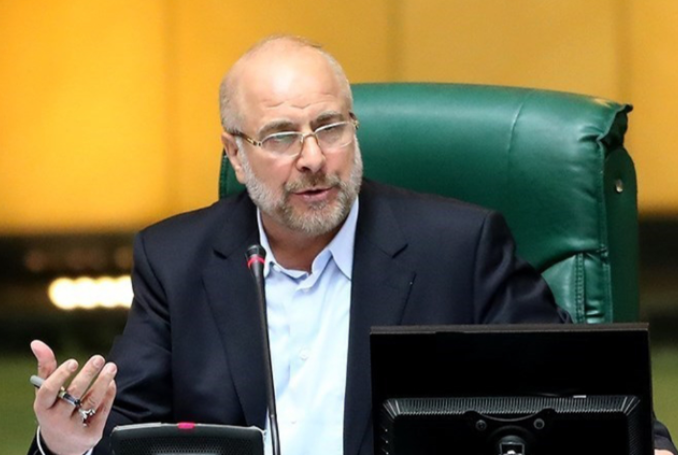
Iranian Parliament Speaker Mohammad Baqer Qalibaf warned that the war could have severe economic consequences if attacks on infrastructure continue.
He said the current confrontation represents “a war between right and wrong, and between the oppressor and the oppressed.”
Qalibaf stressed that Iran is prepared for a prolonged conflict.
“The enemy’s superiority in its air force is countered by Iran’s possession of a missile force capable of carrying out attacks in various ways and methods,” he said.
He warned that escalation could disrupt global energy markets.
“If the war continues in this manner, there will be no way to sell oil and no ability to produce it,” Qalibaf said.
He added that such a development would harm not only the United States but also the wider region and global economy.
Tehran Rejects Ceasefire
Qalibaf said Iran would not allow itself to be drawn into what he described as a recurring cycle of conflict.
He argued that Israel has historically relied on a pattern of “war – negotiations – peace – war.”
According to Qalibaf, Tehran will not accept such a framework.
He described the confrontation as “a fundamental and existential war in light of the enemy’s efforts to fragment and destroy Iran.”
IRGC Announces Major Escalation as Iran Moves to Double Strategic Missile Operations
He also warned that any territory used to launch attacks against Iran would become a legitimate target.
Iran’s relations with neighboring countries, he said, remain based on cooperation.
However, he cautioned that any country allowing US forces to launch attacks from its territory would face retaliation.
Global Oil Markets Already Reacting
The warnings come as analysts increasingly fear disruptions to global energy supplies.
Goldman Sachs warned that oil prices could soon rise above $100 per barrel and potentially reach $150 by the end of the month.
The bank cited the risk of supply disruptions through the Strait of Hormuz, one of the world’s most critical energy transit routes.
The escalation of the war between Iran and the US-Israeli alliance has already begun to affect energy markets and shipping routes across the region.
Iran continues to launch missile and drone attacks against Israeli targets and US military facilities across the Middle East as the conflict enters its second week.
(PC, Iranian media, Fars news agency, Iranian Parliament statement)




Dondolf Twitler and his entire administration are an embarrassment. They should be forced to give all their money stocks, bonds etc.,.to the people of the United States. Then Iran should place sanctions on them all. None of them are worth keeping.