

Iran restricts negotiations to nuclear file, rejects missile limits, warns Israel against escalation amid regional and internal tensions.
Key Developments
- Iran declared its missile program a permanent “red line” outside negotiations with the United States.
- Tehran accused Israel of trying to expand talks beyond the nuclear file and destabilize diplomacy.
- Officials warned Israel cannot wage a large-scale war without US operational support.
- Reformist detainees were released and a probe launched into deadly protests amid domestic pressure.
- Iranian media issued direct threats toward Israeli leaders after Israeli targeting rhetoric.
Scope of Negotiations
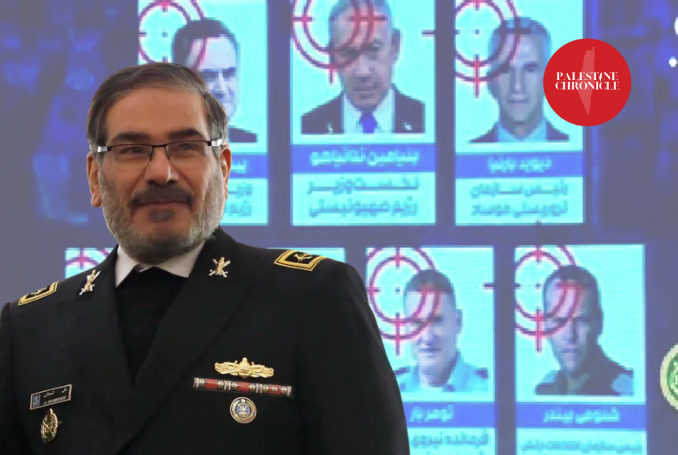
Senior Iranian defense official Ali Shamkhani clarified the boundaries of the ongoing US-Iran talks, stating that Iran’s missile program will not be discussed under any circumstances.
In an interview reported by Al-Jazeera, Shamkhani — the representative of Iran’s Supreme Leader and secretary of the Defense Council — described missile capability as embedded in Iran’s national deterrence doctrine.
He said the program is considered a defensive necessity rather than a bargaining chip.
“The missile capability is part of the country’s defense red lines and is not a negotiable issue.”
According to Shamkhani, negotiations can only be constructive if they are conducted with realistic expectations and mutual respect. He stressed that military defense structures are normally excluded from political negotiations, signaling that Tehran intends to confine diplomacy strictly to the nuclear file.
The statement directly contradicts Israeli and US attempts to expand the framework to include ballistic missiles and regional military influence.
The Death of Law: Israel’s Permanent State of Exception is a Warning to the World
Strategic Coordination
Shamkhani also explained the purpose of activating Iran’s Defense Council at this stage.
He said the regional security environment has become more complex and requires tighter coordination between military and security institutions.
The council, established under Article 176 of Iran’s constitution, aims to unify decision-making across the armed forces and strengthen deterrence mechanisms.
According to Shamkhani, the body is intended to improve strategic coordination and ensure faster responses to threats in a volatile regional climate.
Israel: Reshaping Talks
The Iranian official accused Israel of opposing de-escalation and attempting to redirect negotiations toward confrontation.
“Some players, especially the Zionist entity, oppose any path that reduces tension and try to push dialogue toward instability,” he said.
He added that regional countries increasingly understand that war would threaten collective security, which explains recent diplomatic activity aimed at containing escalation.
The remarks came after the meeting between US President Donald Trump and Israeli Prime Minister Benjamin Netanyahu in Washington, where Israel reportedly pressed for broader restrictions including missiles and regional alliances.
Iran Talks: What We Know So Far After a Week of Regional Diplomacy
Warning Against Military Action
Shamkhani dismissed the possibility of an effective Israeli attack without American support.
He said any major operation would require logistical, operational and political backing from Washington — something he argued was evident during the previous year’s short war.
“Any wide military action requires operational and logistical backing from Washington.”
He warned that Iran would respond decisively and proportionately to any attack and that miscalculation would carry extremely high costs.
Domestic Moves
While projecting firmness externally, Iranian authorities moved internally to ease tensions following weeks of unrest.
Authorities released two prominent reformist figures arrested during the protests, according to the ISNA news agency. They had been accused of undermining national unity after expressing support for demonstrators.
Lawyers indicated additional releases may follow.
At the same time, government spokesperson Fatemeh Mohajerani announced the formation of an official investigative committee tasked with collecting documents and testimonies related to the protests that began in late December.
President Masoud Pezeshkian acknowledged the seriousness of the events, saying officials must investigate their causes.
“We feel ashamed that such events occurred,” the president said in remarks reported by Iranian media.
Conflicting Casualty Narratives
The unrest left sharply disputed casualty figures.
Iranian authorities say more than 3,000 people died, many allegedly killed by armed groups linked to foreign actors including the United States and Israel.
Human rights organizations reject this account and accuse security forces of excessive force, placing the death toll closer to 7,000.
The investigation committee is expected to examine both the violence and its causes, though officials have not clarified whether it will address responsibility for deaths.
Iran Labels Unrest ‘Coup-Like’ as US-Israel Gap Emerges Over Tehran Talks
Media Escalation
Alongside political and military signaling, media rhetoric intensified.
An Iranian television network aired graphics depicting Israeli leaders under crosshairs and described them as “legitimate targets” in the event of an attack on Iran.
The list reportedly included Prime Minister Benjamin Netanyahu, senior intelligence officials and military commanders.
The broadcast followed Israeli media reports that circulated a list of potential Iranian targets, including Supreme Leader Ali Khamenei and senior military figures.
The exchange illustrates a growing psychological confrontation accompanying diplomatic negotiations.
Secret Betting Case Rocks Israeli Military While Arrest Campaign Expands Across West Bank
Negotiations Under Pressure
The developments unfold as Washington maintains diplomatic engagement while keeping military pressure in place.
US officials have stated negotiations remain the preferred option but warned alternative outcomes remain possible if talks fail.
Tehran insists any agreement must remain confined to the nuclear program, while Israel seeks broader concessions involving missiles and regional alliances.
The competing positions leave talks suspended between compromise and escalation — with Iran signaling readiness to negotiate, but only inside clearly defined boundaries.
(AJA, PC, Al Mayadeen, ISNA, Iranian Media, QNN)



Iranians (and everyone) should demand that Israel give up its weapons first.
” Level Israel ” …
When everyone believed the lies about Hamas and couldn’t see what was really going on, they said
” level Gaza ” …the Israelis are scumbags. Dondolf Twitler was paid off by the Zionists to do their bidding: which is to kill babies, women and children…innocent people, so there’s no one to oppose them as they steal the land.
How very ‘ American government ‘ of them. That disgusts me, and it should disgust you. Dondolf, is a traitor to our United States of America.
to hell with Wasrael…