
Israel and Azerbaijan have agreed to join Donald Trump’s proposed “Board of Peace,” while Sweden rejected the initiative, amid growing concerns over its scope, governance, and political motives.
Israel and Azerbaijan have announced their intention to join US President Donald Trump’s proposed “Board of Peace,” a new international body initially presented as a mechanism to oversee Gaza’s reconstruction but increasingly viewed as a US-led political structure with global ambitions.
In a statement posted on X on Wednesday, the Israeli Prime Minister’s Office said that Benjamin Netanyahu had accepted Trump’s invitation to join the Board as a member, describing it as a forum that will include “leaders from around the world.”
Separately, Azerbaijani media reported that the country’s Foreign Ministry had also agreed to join the initiative, making it one of the first states to formally accept participation.
The announcement comes as Trump’s administration has reportedly extended invitations to around 60 countries to join the body. While the Board was initially framed as an instrument to oversee post-war reconstruction in Gaza, draft versions of its charter suggest a far broader mandate, potentially allowing it to intervene in conflicts and crises beyond Palestine.
Israel Refuses Gaza Administration Committee Members Entry into Gaza
Sweden Rejects
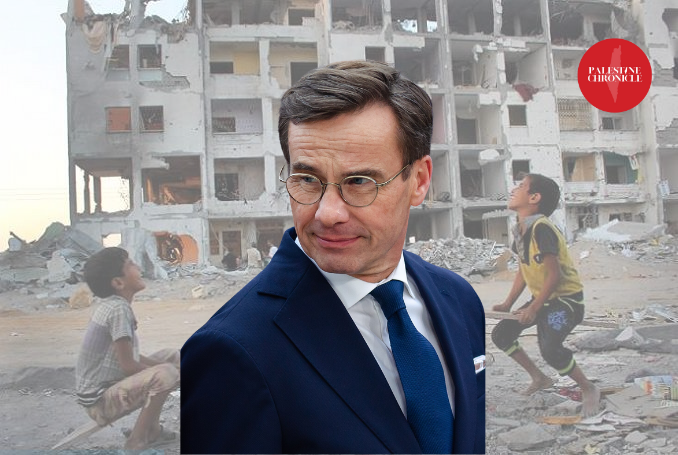
In contrast, Sweden has publicly declined to join the initiative. Speaking to reporters in Davos on Wednesday, Swedish Prime Minister Ulf Kristersson said Stockholm would not participate “in the form presented so far,” signaling unease among parts of Europe over the Board’s structure and political direction.
European hesitation appears linked to concerns that the initiative could bypass existing international institutions, particularly the United Nations, and centralize decision-making power in the hands of the US president.
Permanent Membership
According to a report by Bloomberg, the draft charter circulated by the Trump administration includes a controversial financial condition: countries seeking permanent membership may be required to contribute at least $1 billion to the Board.
Under the draft rules, Trump would serve as the Board’s first president, retain veto power over decisions, and personally approve member states and renewals. While decisions would technically be made by majority vote—one country, one vote—all resolutions would remain subject to presidential approval.
Membership would normally last three years, but countries contributing more than $1 billion in the first year would be exempt from term limits, effectively granting them extended or permanent influence.
Critics argue that this structure transforms the Board into a pay-to-play body and raises serious questions about accountability, legality, and its relationship to existing international law.
Lavrov: Palestinian Statehood Still Central to Gaza ‘Board of Peace’
Concerns Over UN Alternative
The charter describes the Board of Peace as an “international organization” tasked with promoting stability, restoring governance, and ensuring “lasting peace” in conflict-affected areas. The Board would become operational once three countries ratify the charter.
However, observers and critics warn that the initiative may be designed as a rival or alternative to the United Nations—an institution Trump has repeatedly criticized—and could be used to legitimize political arrangements imposed without the consent of affected populations, particularly Palestinians.
The Board’s launch also comes amid Israel’s ongoing violations of the Gaza ceasefire and in the aftermath of a genocidal war that has killed more than 71,000 Palestinians and devastated most of Gaza’s civilian infrastructure.
As more countries weigh whether to join, the growing divide between early adopters and European skeptics underscores mounting controversy around a body whose stated goal is peace—but whose structure, funding model, and political leadership have already sparked global concern.
(PC, AJA, Anadolu)