

Israeli occupation forces continue airstrikes, demolitions, and live fire across Gaza despite a declared ceasefire, while freezing weather, aid restrictions, and mass displacement deepen an unfolding humanitarian catastrophe.
Israeli occupation forces continued widespread military operations across the Gaza Strip on Wednesday, including airstrikes, artillery fire, building demolitions, and naval gunfire, in what Palestinian officials and local sources describe as systematic violations of the ceasefire that came into effect in October.
In northern Gaza, Israeli occupation forces opened heavy fire east of Jabaliya, while artillery shelled the center of the Jabaliya refugee camp. Overnight, Israeli occupation forces carried out demolition operations against remaining residential buildings east of the camp, following earlier explosions in areas surrounding the Sheikh Zayed roundabout near Beit Lahia.
Simultaneously, Israeli warplanes launched airstrikes on Bani Suheila, east of Khan Yunis in southern Gaza, and on areas southeast of Deir al-Balah in the central Strip. Israeli naval vessels also fired toward fishing boats off the coast of Gaza City near the Shati refugee camp, further restricting civilian livelihoods.
The latest escalation follows heavy gunfire reported east of Gaza City the previous evening, part of what Palestinian observers describe as a sustained campaign targeting residential areas and civilian infrastructure inside zones where Israeli occupation forces remain deployed under the terms of the ceasefire.
100 Days of Ceasefire Violations in Gaza – Hamas Lists Nine Demands to Mediators
Humanitarian Collapse Amid Freezing Temperatures
Alongside the military assaults, Gaza’s humanitarian situation continues to deteriorate rapidly, exacerbated by severe winter conditions. Mahmoud Basal, spokesperson for Gaza’s Civil Defense, warned that children are “shivering from extreme cold amid total inability to protect them,” urging immediate international action. “The voices of the free people can make a difference,” he said.
The Gaza Government Media Office stated that, 100 days after the ceasefire took effect, Israeli occupation forces have continued to commit “grave and systematic violations” that undermine both international humanitarian law and the humanitarian protocol attached to the agreement.
According to official figures, authorities have documented approximately 1,300 ceasefire violations during this period, including live fire, military incursions into residential neighborhoods, air and artillery strikes, and large-scale demolitions of civilian buildings.
These violations have resulted in hundreds of Palestinian deaths, the vast majority civilians, including large numbers of children and women, as well as more than a thousand injuries. Dozens of Palestinians have also been detained during the ceasefire period.
Aid Obstruction and Forced Deprivation
Despite commitments under the agreement, Israel has allowed less than half of the agreed humanitarian aid to enter Gaza. Of roughly 60,000 aid, commercial, and fuel trucks stipulated, only about 25,800 have been permitted entry, according to Gaza authorities.
Officials warn that this deliberate restriction of aid constitutes a policy of collective punishment, using food, fuel, shelter, and medicine as tools of pressure. The result has been widespread hunger, the collapse of healthcare services, and an inability to provide basic shelter to displaced families living in tents and makeshift structures.
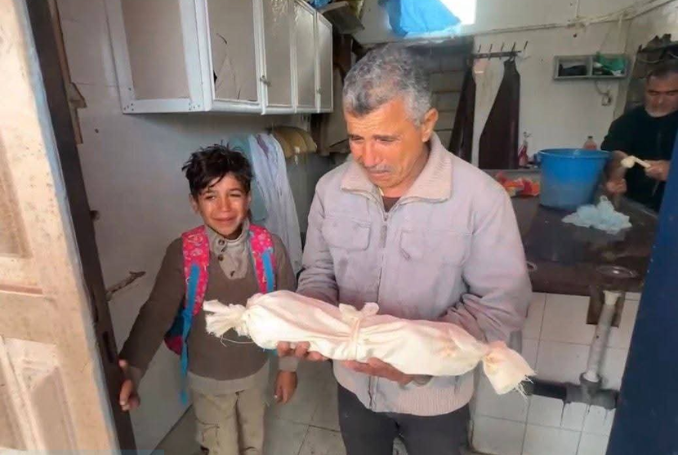
The consequences have been deadly. Gaza’s Health Ministry confirmed that nine infants have died from cold-related causes since the start of winter, the latest being a six-month-old baby who succumbed to freezing conditions amid a lack of heating, proper shelter, and medical care.
Doctors at Gaza’s major hospitals have also warned of rising deaths linked to influenza and other preventable illnesses, compounded by severe shortages of medicines, cancer treatments, dialysis supplies, and drugs for chronic diseases.
Israel, Azerbaijan Join Trump’s ‘Board of Peace’ as Sweden Rejects Initiative
Political Obstruction and Stalled Commitments
Politically, Hamas spokesperson Hazem Qassem said the movement has fully cooperated with mediators to locate the remains of the last Israeli captive but accused Israel of repeatedly obstructing search efforts in areas beyond the so-called “yellow line,” using the issue to evade its obligations under the ceasefire.
Meanwhile, the UN Office for the Coordination of Humanitarian Affairs (OCHA) reported that recent storms damaged or destroyed shelters housing around 4,000 families, underscoring the urgent need for durable housing solutions—needs that remain unmet due to continued Israeli restrictions.
Gaza’s Children at Risk of Preventable Disease Due to Missed Vaccines – UNRWA
A Ceasefire Hollowed Out
While the ceasefire was meant to halt violence and protect civilians, Palestinian human rights groups and UN agencies warn it has instead become a framework for managing, rather than ending, Israeli military domination of Gaza.
Israeli occupation forces continue to control more than half of the Strip, including extensive buffer zones in the north, south, and east, and have maintained the ability to strike, demolish, and restrict movement at will.
Since October 2023, Israel’s war on Gaza has killed more than 71,000 Palestinians, wounded over 171,000, displaced the vast majority of the population, and destroyed roughly 90 percent of civilian infrastructure. The United Nations estimates reconstruction costs at over $70 billion.
As winter deepens and violence persists, Gaza’s population remains trapped between bombardment, deprivation, and exposure—waiting for a ceasefire that exists on paper, but not on the ground.
(PC, QNN, Al-Mayadeen, AJA, Anadolu)