
Israel has decided not to reopen the Rafah crossing or allow full humanitarian aid into Gaza, claiming that Hamas has yet to return the remaining bodies of Israeli prisoners under the current ceasefire agreement.
The Israeli government has decided not to open the Rafah crossing between the Gaza Strip and Egypt on Wednesday, in response to what it described as the Palestinian Resistance Movement Hamas’ failure to hand over the remaining bodies of Israeli prisoners killed during the Israeli war on Gaza, according to Israeli media reports.
Israel’s Channel 13 reported that the political leadership resolved to keep the crossing closed and significantly reduce humanitarian aid to the Strip, in line with recommendations made by the Israeli security establishment.
Similarly, the Israeli Broadcasting Channel said that security officials had urged the government to halt the full entry of aid and block the reopening of the Rafah crossing until all bodies of Israeli prisoners are returned from Gaza.
Four Bodies Delivered
The Israeli daily Maariv quoted a security official as saying that “the agreement between the resistance and the occupation did not specify the number of abducted and killed Israelis that the resistance would hand over on Monday.”
The official added that Hamas had delivered to the International Committee of the Red Cross (ICRC) the bodies of four Israelis “in compliance with the agreement.”
Trump’s Gaza ‘Peace Plan’: The Predators to Share the Spoils
According to the Israeli newspaper Haaretz, Israeli officials had expected the process of returning bodies to take weeks, but did not anticipate that only four would be handed over in the first stage. The paper added that the Israeli army claims Hamas has information about many more deceased detainees, while the political leadership has avoided clarifying whether the delay constitutes a breach of the agreement or a manageable delay.
For its part, Yedioth Ahronoth quoted an unnamed political source as warning that the failure to return the remaining bodies “could lead to the failure of the agreement.” The official said no final decision had been made on whether the delay violated the terms of the deal, noting that “handing over the bodies will take a little longer.”
Meanwhile, CNN reported that families of Israeli prisoners sent a letter to US envoy Steve Witkoff, urging him to take swift action to ensure the return of all the bodies.
Under the ceasefire agreement announced by US President Donald Trump, the Palestinian resistance is expected to return the bodies of 28 Israeli prisoners in exchange for the handover by Israel of the remains of Palestinians from Gaza who were killed during the Israeli assault.
Netanyahu’s Claim of ‘Victory’ is Part of Hasbara Narrative to Conceal Defeat
Red Cross: “A Tremendous Challenge”
The International Committee of the Red Cross said that recovering and identifying bodies remains one of the most complex aspects of the ceasefire deal.
Spokesman Christian Cardon stated that “returning the bodies of hostages and detainees killed in the war will take time and represents a tremendous challenge,” citing the large-scale devastation across Gaza that has made recovery efforts extremely difficult.
He also acknowledged “the possibility that some bodies may never be found,” describing this as “a greater challenge than releasing the living.”
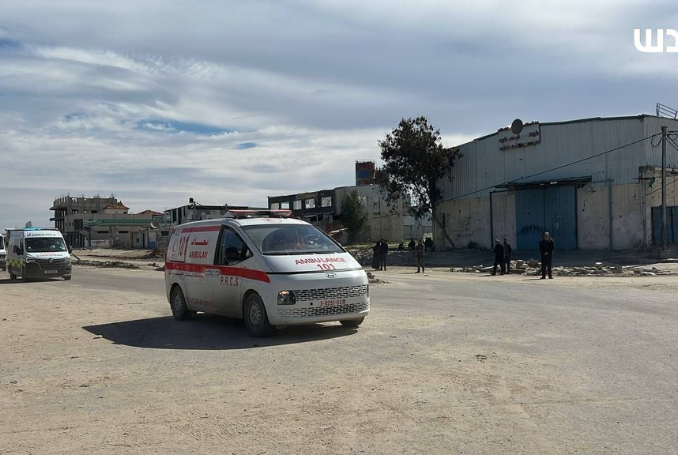
On Tuesday, the ICRC confirmed that it had received the bodies of 45 Palestinian prisoners from Israel, which were transferred through the Kissufim crossing into Gaza as part of the first phase of the ceasefire and body-exchange agreement.
Local health authorities in Gaza told Reuters news agency that the first batch of bodies arrived at the Nasser Medical Complex in Khan Yunis, where examinations and documentation were carried out before the remains were handed over to families.
The Red Cross reiterated its call on all parties and mediators to ensure the full implementation of the ceasefire deal and to facilitate the dignified return of the deceased to their families.
Israel Continues Negotiations
Al-Jazeera reported that the Israeli Coordinator for Prisoners and Missing Persons Affairs, Gal Hirsch, said on Tuesday that negotiations with Hamas were ongoing to recover the remaining bodies of Israeli captives.
“We are determined to recover all the bodies, and we will not stop until we bring them home,” Hirsch said, noting that the matter was discussed during President Trump’s visit to Israel and is being followed up with other international actors.
The Israeli army confirmed that four bodies had been identified following forensic examination. The deceased included Israeli citizen Guy Iluz and Nepalese citizen Bevin Joshi, alongside two others whose names have not been released.
The army said it had notified their families and called on Hamas to fulfill its commitments under the ceasefire agreement, stressing the need to return all 24 remaining Israeli captives, both the living and the dead.
As part of the ceasefire deal brokered by the United States, Hamas and Israel agreed to the formation of an international committee tasked with identifying the burial sites of Israeli prisoners killed in Gaza.
The ICRC previously confirmed that it had facilitated the exchange of 20 living Israeli prisoners and four bodies, in addition to 1,809 Palestinian detainees released by Israel as part of the first phase of the ceasefire agreement.
President Trump announced the deal last Thursday following indirect negotiations in Sharm el-Sheikh, with the participation of Qatar, Egypt, and other regional mediators.
(PC, AJA)