
Israel’s ultra-orthodox (Haredi) Parties hold the keys to undoing Israeli Prime Minister Benjamin Netanyahu’s coalition government.
Angered over a lack of process on passing a military conscription exemption bill, the Haredim are threatening to collapse Netanyahu’s whole deck of cards. However, the fall of the Netanyahu regime will not come easily for a range of reasons.
Rabbi Ephraim Luft, a prominent figure in the Haredi stronghold city of Bnei Barak, recently compared mandatory service for ultra-orthodox Jews to a pogrom. In a statement, he said that “people have to understand there’s no difference between the Spanish Inquisition or the Israeli draft law.”
An important thing to understand about the ultra-orthodox Israeli population is that they are different from the rest of the Jewish population in a range of ways. To them, they do not care about the Israeli economy, its wars, or its foreign policy, and don’t seek to serve in its army. They live in a highly religious bubble and see service in the army, for the most part, as a corrupting force against their youth. For them, religion comes above all else.
How Iran’s New Intelligence Operation Shatters Israeli Security Services’ Prestige
This has bred widespread hatred by most other components of Israeli Jewish society against them, as they are viewed as backward, a burden on the State, and that they refuse to contribute to the Zionist project.
In early 2023, the Haredim were said to number at around 13.5% of the total Israeli population and were on track to rise to 16% by 2030, yet that percentage appears to be increasing more quickly than anticipated due to an exodus of over 1 million Israeli Jews with foreign passports. The Haredi population has the highest poverty rates in the country, and their male population mostly refuses to join the workforce.
With the highest birth rate of any group of Israelis – 6.4 compared to the Israeli average of 2.4 – the Haredi population makes up 1 in every 3 illegal settlers living inside the West Bank. This makes them an integral part of the Israeli government in its project to continue colonising Palestinian territory, yet at the same time, they are a costly asset and in the long run a major problem to the survival of the Zionist entity.
Since the beginning of the Israeli regime’s reign in power over the land of Palestine, the ultra-orthodox have been granted a military draft exemption. The first Israeli PM, David Ben Gurion, passed a partial exemption bill that allowed for hundreds of Yeshiva (Jewish religious school) students to avoid serving in the Israeli military. In 1977, Israeli Prime Minister Menachem Begin, then extended this bill and expanded it to encompass the whole Haredi community.
‘Without a Doubt’: Biden Admin Knew about Israeli War Crimes, Gaslit the World
This exemption extension has caused tremendous division amongst Israelis, who overwhelmingly oppose it, yet understand the power that the Haredim wield through their sheer numbers.
Although Netanyahu managed to quiet down his two allied ultra-orthodox coalition parties last year, following a failure to extend the exemption that had been ruled by Israel’s Supreme Court to be illegal, the issue exploded in his face once again around a week ago. Both the Ashkenazi-led United Torah Judaism (UTJ) Party and Sephardic Shas Party are now gunning to vote Netanyahu’s government out of power over the issue.
Unless the Israeli prime minister can come up with a last-minute deal that pleases his Haredi coalition allies, they are set to vote on a no-confidence motion in the Knesset. This would lead to the first stage of passing a bill to dissolve the government and usher in early elections.
Evidently, this move would collapse Benjamin Netanyahu’s “total victory” on “seven fronts” of the ongoing regional war, but could also lead to the Israeli leader eventually being placed behind bars due to his ongoing corruption trial.
Trump and Israel: Is the Administration Really Purging Pro-Israel Officials?
On the other hand, if Netanyahu manages to score a last-minute deal to bring Shas and UTJ on board, it would mean that a vote of no-confidence can no longer be brought against the Israeli PM for a span of six months. This would be a huge political victory for Netanyahu.
One thing to keep in mind here is that the Israeli leader is a political survivor who has been in and out of power for three decades. In other words, this is far from his first rodeo. So it is expected that he will find a way to wriggle out of this crisis, before another suddenly rears its head soon after.
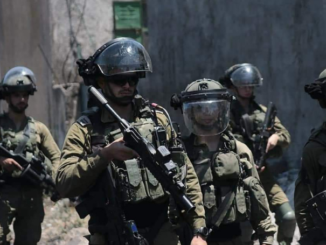
Yet, this kink in the coalition’s armour is indeed significant and reflects a growing issue inside the entirety of the Israeli regime. Israel’s army is incapable of maintaining a strong reserve and regular army force that meets the high demands of its multi-front war. It is now resorting to desperate social media campaigns in order to try and recruit more soldiers, as many refuse to return to service. This is why it needs to try its best to conscript some 14,000 Haredi Jews who become eligible for service yearly.
The tensions between the rapidly growing Haredi community and the rest of Jewish Israeli society are very much real and will only get worse with time. This means that the issue at hand is not going away, even if Benjamin Netanyahu’s coalition collapses.
In the event that the coalition is toppled, then there will undoubtedly be a range of tricks up the PM’s sleeve and could accelerate the pace at which preparations are made to carry out Israel’s long-desired assault on Iran’s nuclear facilities. The US ambassador to Israel, Mike Huckabee, even urged the Haredi Parties not to vote against the coalition now due to the threat of Iran, which is another tell-tale sign of what may be to come.
(The Palestine Chronicle)

– Robert Inlakesh is a journalist, writer, and documentary filmmaker. He focuses on the Middle East, specializing in Palestine. He contributed this article to The Palestine Chronicle.