
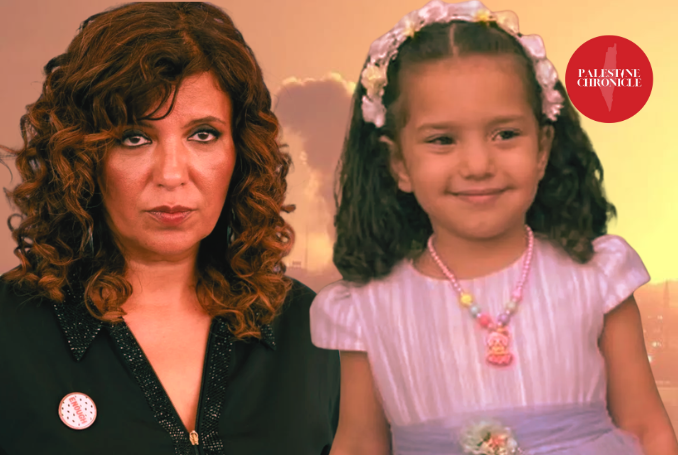

It quickly became clear that Tunisian filmmaker Kaouther Ben Hania was no ordinary artist — a realization that unsettled Berlin when she refused the prize.
Key Takeaways
- Kaouther Ben Hania rejected a Cinema for Peace award, calling Hind Rajab’s killing part of genocide.
- The refusal followed the honoring of a retired Israeli general at the same event.
- More than 80 filmmakers condemned the festival’s silence on Gaza.
- Arundhati Roy withdrew, rejecting claims that art should remain apolitical.
- Berlin became a cultural battleground over accountability and genocide.
The Moment the Ceremony Broke
The applause began normally.
Guests at the Cinema for Peace gala in Berlin expected the ritual choreography of awards season — a speech of gratitude, a photograph, polite applause. Tunisian filmmaker Kaouther Ben Hania stepped onto the stage to receive the organization’s “Most Valuable Film” prize for The Voice of Hind Rajab.
Instead, she paused, holding the statue as if weighing it.
“I feel responsibility more than gratitude,” she told the audience.
Her film reconstructs the final hours of six-year-old Palestinian child Hind Rajab, killed in Gaza alongside members of her family and two paramedics who attempted to rescue her. For Ben Hania, the award could not exist apart from that reality.
“What happened to Hind is not an exception. It is part of a genocide,” she said.
Then came the sentence that transformed the ceremony into a confrontation.
“Peace is not a perfume sprayed over violence so power can feel refined and comfortable. And cinema is not image-laundering.”
She explained that language portraying mass civilian death as tragedy, complexity, or unfortunate consequence was itself political cover.
“In Berlin tonight there are people who gave political cover to that genocide by reframing the mass killing of civilians as self-defense, as complex circumstances, and by denigrating those who protest.”
The hall — filled with diplomats, filmmakers and celebrities — had been prepared for celebration. Instead, it was forced into witness.
“The Israeli army killed Hind Rajab,” she continued. “Killed her family. Killed the two paramedics who came to save her — with the complicity of the world’s most powerful governments and institutions.”
She did not accept the award.
“I refuse to let their deaths become a backdrop for a polite speech about peace.”
She placed the statue on stage.
“So tonight, I will not take this award home. I leave it here as a reminder.”
Berlin Film Festival: The director of 'The Voice of Hind Rajab' delivers a powerful speech while declining her award. pic.twitter.com/RKFx8cCEY1
— Dr. Mansour Mansour (@DrMansourMansou) February 18, 2026
The Story Behind the Refusal
The decision was not spontaneous outrage but a response to the ceremony’s structure. The same event honored retired Israeli general Noam Tibon for his appearance in a documentary recounting his rescue of relatives during the October 7 attacks.
Ben Hania viewed the juxtaposition as moral symmetry imposed onto radically unequal violence.
She warned that presenting such narratives under the banner of reconciliation risks erasing responsibility.
“Justice means accountability,” she said. “Without accountability, there is no peace.”
She made clear the refusal was conditional, not symbolic.
“When peace is pursued as a legal and moral obligation rooted in accountability for genocide, then I will come back and accept it with joy.”
The statue remained where she left it — a physical contradiction: recognition rejected because recognition itself was the problem.
Observers noted that the gala, hosted by musician Bob Geldof and attended by figures including Hillary Clinton and Kevin Spacey, suddenly shifted from celebration to moral tribunal. The award ceased to represent artistic prestige and became evidence.
German Parliament Speaker Enters Gaza with Israeli Army, Meets No Palestinians
A Festival Already Under Pressure
The confrontation did not occur in isolation. For days, tension had been building inside the Berlin International Film Festival.
More than 80 filmmakers and actors — among them Javier Bardem, Tilda Swinton, and Adam McKay — signed an open letter accusing the festival of “institutional silence” on Gaza. Organized by Film Workers for Palestine, the statement argued that Berlin historically positioned itself as a political festival yet avoided clear language regarding Palestinian deaths.
They wrote the festival had shown clarity regarding Ukraine and Iran, but now adopted ambiguity where moral clarity was demanded.
The controversy intensified after jury president Wim Wenders argued cinema should remain separate from politics.
“If we make films purely political, we enter politics. We represent a counterweight to politics,” he said.
Indian novelist Arundhati Roy withdrew in response, calling the position astonishing.
“Hearing them say art should not be political while a crime against humanity unfolds before our eyes is shocking,” she said, adding artists must “do everything possible to stop it.”
The dispute moved from artistic theory to institutional legitimacy: whether neutrality itself constitutes a political stance.
Festival director Tricia Tuttle defended the principle that artists possess both “the right to speak and the right to remain silent.” Critics replied that a platform claiming moral history cannot suddenly become apolitical.
Hind Rajab’s Voice Lives On as Gaza’s Children Continue to Die Under Siege
The Death of ‘Neutrality’
Ben Hania’s speech sharpened the abstract debate into a concrete accusation. She argued that narratives of balance risk sanitizing violence.
“The Israeli army killed Hind Rajab, and as long as the structures that enabled that remain untouched, I cannot celebrate,” she said.
Her film reconstructs recorded calls between the child and emergency responders — material that already circulated globally as documentation of civilian death. For the director, the story cannot be aestheticized.
“Cinema is not a place to wash images clean,” she said. “It cannot become decoration.”
The language echoed beyond the hall. Journalists described the gala as the moment the festival’s internal argument became unavoidable. What had been panel discussions and statements turned into a visible rupture: an award nobody could applaud comfortably.
Outside theaters, protesters held signs demanding acknowledgment of genocide. Inside, audiences watched films about oppression in other contexts. The contrast became central to the controversy.
How, critics asked, could cinema condemn injustice everywhere except where political risk is highest?
‘Unconscionable’: Arundhati Roy Leaves Berlinale after Jury Comments on Gaza
After the Applause
In the days following, coverage of the festival increasingly centered not on competition films but on the abandoned trophy.
For some attendees, the act represented the politicization of art. For others, refusal itself was an artistic expression.
Ben Hania framed it differently: not activism but ethical continuity. “Justice means accountability. Without accountability, there is no peace,” she repeated.
Her position suggested the question was not whether art should be political, but whether art could avoid politics while depicting violence.
The empty pedestal became symbolic precisely because it was not dramatic — no shouting, no disruption. Only absence. By leaving the award, she transformed recognition into testimony. The object became a reminder rather than a reward.
Late in her speech, she summarized the logic guiding the refusal:
“I will not take this award home. I leave it here as a reminder. When peace is pursued as a legal and moral obligation — rooted in accountability for genocide — I will return and accept it with joy.”
When the gala ended, the ceremony resumed its schedule. Guests left. Cameras turned elsewhere. But the argument did not end with the evening.
Berlin 2026 became less about cinema’s aesthetics than its conscience: whether cultural institutions can maintain authority while avoiding naming state violence, genocide. The debate now extended beyond the festival into broader questions about Western cultural spaces and political responsibility.
The abandoned trophy lingered as a physical metaphor — art recognized yet unable to celebrate itself.
The lights dimmed, screenings continued, and the red carpet rolled on.
But the object stayed behind, carrying the meaning the ceremony could not contain.
And long after the applause faded, the reminder remained.
(Al-Mayadeen, Al-Arabi, Hollywood Reporter, AJA, PC)




All hail Kaouther Ben Hania! And this wim wenders, a totally tenth rate film maker, racist to the core. Any one film by, say, Majid Majidi, formidably exceeds wenders’ entire output.