


A 10-day ceasefire entered into force at midnight after Israeli strikes, rocket fire, and intense regional political coordination.
Key Developments
- Ceasefire took effect at midnight following heavy Israeli strikes and sustained rocket fire in final hours.
- Lebanese and Iranian officials said coordinated pressure imposed a ceasefire tied to broader regional understandings.
- Israeli officials and settlers reacted angrily, describing the agreement as surrender and warning of future escalation.
Ceasefire Takes Effect
A 10-day ceasefire between Lebanon and Israel entered into force shortly after midnight on Thursday, following hours of intense military escalation and coordinated political announcements.
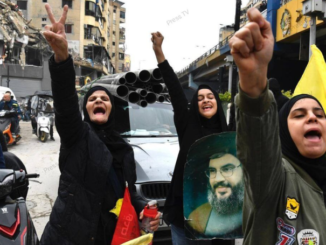
At 00:02, the ceasefire officially came into effect. In Beirut, vehicles filled the streets in celebration, while in southern Lebanon dozens of cars were reported heading toward the region following the announcement of the truce.
The ceasefire followed an earlier announcement by US President Donald Trump that the agreement would begin at midnight and last for 10 days.
Final Hours Escalation
The final hours before the ceasefire were marked by a sharp escalation in Israeli strikes and Lebanese resistance operations.
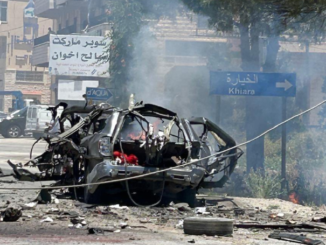
At 23:18, an Israeli airstrike targeted the town of Sahmar in the western Bekaa.
At 23:42, two Israeli strikes hit Mashghara, also in the western Bekaa.
Between 23:45 and 23:47, Israeli warplanes carried out multiple strikes targeting the towns of Ainqun, Jishit, Kfardounin, and Deir al-Zahrani, as well as Toul, Aba, Qaqaiyat al-Jisr, Rshaf, Adshit, and Kfar Rumman.
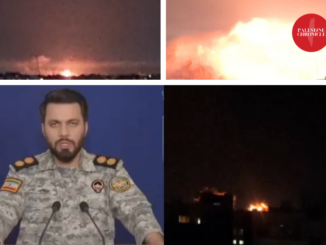
At the same time, the Islamic Resistance in Lebanon launched successive rocket salvos toward northern occupied Palestine.
At 23:30, it announced a rocket strike on Nahariya, alongside strikes targeting gatherings of Israeli soldiers and vehicles in the hills of Friz and Ghadmatha in Aita al-Shaab.
At 23:50, it announced simultaneous rocket salvos targeting the settlements of Kfar Giladi, Tel Hai, Kiryat Shmona, Metula, and Misgav Am.
🚨🇮🇱 Magen David Adom:
Serious injuries reported in Karmiel following Hezbollah rocket fire, as emergency teams respond to the latest strike. pic.twitter.com/AFz5SjTWGm
— The Palestine Chronicle (@PalestineChron) April 16, 2026
Last-Minute Fire
Rocket fire continued until moments before the ceasefire entered into force.
Israeli media reported that a final salvo was launched toward Kiryat Shmona minutes before midnight, while sirens sounded in Metula and surrounding areas.
Al Mayadeen’s correspondent reported additional rocket fire and the crossing of drones toward occupied Palestine, with sirens triggered across several settlements in the Galilee Panhandle.
Israeli authorities raised their alert level in the north amid assessments that the resistance would intensify strikes in the final moments before the ceasefire.
Casualties Reported
Israeli media reported multiple casualties resulting from rocket fire launched from Lebanon in the final hours.
According to Israeli reports, 15 launches were detected toward Nahariya and Karmiel, with explosions heard in and around Nahariya and reports of a direct rocket impact inside the city.
In Karmiel, emergency teams treated several wounded while power outages were reported in multiple areas.
At 23:14, Israeli emergency services reported six injuries, including one serious case.
By 23:27 and 23:28, Israeli media raised the number of injured to seven and then eight, including three in critical condition, following rocket strikes on Nahariya and Karmiel.
Trump Announcement
Earlier in the day, Trump announced that the ceasefire would begin at midnight and last for 10 days following contacts with Lebanese President Joseph Aoun and Israeli Prime Minister Benjamin Netanyahu.
In a statement, he said he had held “excellent” talks with both leaders and directed senior US officials—including Vice President JD Vance and Secretary of State Marco Rubio—to work toward what he described as a lasting peace.
🚨🔥 Flames rise over Kiryat Shmona after a rocket launched by Hezbollah strikes the area, as fires spread across the settlement amid ongoing exchanges. pic.twitter.com/ByjVwyiJKs
— The Palestine Chronicle (@PalestineChron) April 16, 2026
Resistance Informed
Lebanese officials said the ceasefire followed sustained diplomatic efforts tied to regional negotiations.
MP Hassan Fadlallah said the resistance had been informed by the Iranian ambassador in Beirut that Iranian efforts had succeeded in imposing a comprehensive ceasefire in Lebanon.
He added that the US side had committed to conveying the decision to Israeli Prime Minister Benjamin Netanyahu and Lebanese President Joseph Aoun.
Fadlallah said Iranian officials would monitor US compliance and that the continuation of Iran-US negotiations would depend on the implementation of the ceasefire.
He stressed that the resistance would monitor Israel’s actual adherence to halting all hostile actions and urged caution, citing repeated Israeli failures to uphold previous commitments.
Iranian Position
Iranian officials said the ceasefire was linked to broader regional understandings and was the result of developments on the ground.
Parliament Speaker Mohammad Bagher Ghalibaf said the ceasefire was “the result of Hezbollah’s steadfastness and the unity of the Axis of Resistance,” adding that Iran would approach the agreement with caution.
He thanked Pakistan and its army chief Asim Munir for their role in mediation efforts and said Tehran remained committed to the agreement.
Iranian Foreign Ministry spokesman Esmail Baghaei said the ceasefire in Lebanon was part of a broader understanding between Iran and the United States brokered through Pakistani mediation, and said Iran had insisted on a simultaneous ceasefire across the region, including Lebanon.
Baghaei also called for the full withdrawal of Israeli forces from southern Lebanon, the release of detainees, the return of displaced civilians, and the reconstruction of damaged infrastructure.
The Collapse is Real – Lebanon Ceasefire Marks a Historic Strategic Defeat
Political Coordination
Lebanese and Iranian leadership maintained contact throughout the day as the ceasefire took shape.
Lebanese Parliament Speaker Nabih Berri held a phone call with Ghalibaf, during which both stressed that Lebanon must be included in the ceasefire framework before any other matter.
They also discussed developments in southern Lebanon amid continued Israeli attacks, while Ghalibaf said he was closely following the situation and the ceasefire process.
Border Fighting Continues
Fighting on the ground continued until the final hours before the ceasefire.
According to Al Mayadeen’s correspondent, resistance fighters confronted ongoing Israeli attacks along the Lebanese-Palestinian border.
In Bint Jbeil, resistance fighters reportedly repelled Israeli attempts to advance, with clashes and heavy targeting inflicting losses and preventing Israeli forces from achieving field gains.
Israeli Backlash
The ceasefire triggered sharp reactions in Israeli political and local circles.
Settlement leaders in northern occupied Palestine described the agreement as a “document of surrender” and a “betrayal” of residents exposed to ongoing rocket fire.
They said they would raise white flags as a sign of what they described as the government’s surrender, while Israeli media reported widespread anger and frustration over the absence of security guarantees.
Moshe Davidovich, head of the Mateh Asher Regional Council, said the ceasefire was not a political achievement but a “death sentence” for northern residents.
David Azoulay, head of Metula’s local council, said the announcement by Trump rather than Netanyahu reflected a disconnect between the Israeli government and residents of the north.
Kiryat Shmona Mayor Avichai Stern said local authorities had not been informed of developments and questioned whether the event was being managed by the Israeli government.
Former Israeli Defense Minister Avigdor Lieberman described the ceasefire as a betrayal and warned that another round of fighting was inevitable and would come at a higher cost.
Final Alert
Israeli media reported that the military raised its highest level of alert in the north ahead of the ceasefire, amid expectations of intensified rocket fire in the final moments.
Sirens continued to sound across northern settlements until shortly before midnight, as rocket fire persisted in the final phase of the confrontation.
‘Full Surrender’ – Inside Israel’s Uproar over Trump-Imposed Lebanon Ceasefire
Truce Begins
By 00:02, the ceasefire had entered into force.
In Lebanon, movement in Beirut and along roads toward the south reflected an immediate response to the halt in fighting, while Lebanese officials emphasized that the implementation of the ceasefire and Israel’s adherence to its terms would be closely monitored.
(Al Mayadeen, Palestine Chronicle)


Be the first to comment