Since October 2023, the WHO has documented 844 attacks on healthcare facilities in the West Bank, resulting in 31 deaths and 168 injuries.
The health crisis in the occupied West Bank is rapidly deteriorating, with mounting restrictions on access to care, attacks on medical services, and critical shortages of supplies, the World Health Organization (WHO) warned on Friday.
Of 559 health facilities assessed by WHO in June, 71 face partial accessibility due to insecurity and physical barriers, said Richard Peeperkorn, WHO spokesperson in the occupied Palestinian territory, according to the Anadolu news agency.
Worrying trends in the #WestBank:
⚠️Israeli forces taking over homes
⚠️Casualties linked to settler violence
⚠️Ongoing demolitions
⚠️84 schools (13,000 students) under threat
⚠️1,200+ at risk of displacement in Masafer YattaLatest update: https://t.co/AvntVXVZQm pic.twitter.com/Q7S6bfmCvu
— OCHA OPT (Palestine) (@ochaopt) June 26, 2025
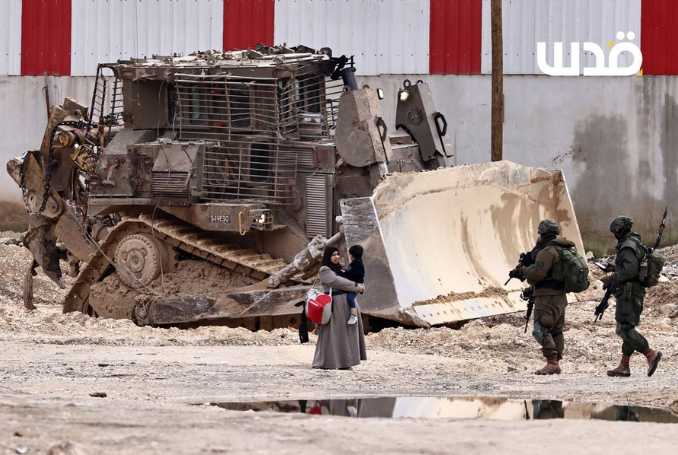
Peeperkorn warned that new roadblocks, checkpoint delays, and permit denials are obstructing access for patients and ambulances, particularly in Jenin, Hebron, Nablus, and Salfit.
844 Attacks on Healthcare Facilities
Since October 2023, he said the WHO has documented 844 attacks on healthcare facilities in the West Bank, resulting in 31 deaths and 168 injuries.
“They include attacks on health infrastructure and ambulances, detention of health workers and patients, obstruction of their access to health facilities, use of force on health workers and militarized searches of ambulances and staff,” Peeperkorn reportedly said.
Intensified movement restrictions are inflicting immense suffering on Palestinians in the #WestBank.
Women give birth outside hospitals, denied access to care, with potentially life-threatening consequences.
Healthcare is not a privilege. It’s a human right. pic.twitter.com/gYQiOw7EDl
— UNFPA Arab States (@UNFPA_ASRO) June 26, 2025
Only 345 out of 476 government health units remain fully functional.
WHO cited staff shortages due to unpaid salaries, and near-zero stock levels for essential items. According to the Ministry of Health, 16 percent of the total essential medicines, 14% of medical consumables, and 9% of laboratory supplies are at zero stock balance, he added.
‘Barriers to Healthcare’
Meanwhile, Médecins sans Frontières (MSF) warned in a recent statement that Israel’s increased military operations in Jenin, Nablus, and Tulkarem governorates, along with additional troop deployments, “have led to heightened restrictions on Palestinians.”
MSF warned that these actions “exacerbate the already dire situation for Palestinians in the West Bank, who face significant barriers to accessing healthcare and essential services, especially since October 2023.”
The organization has suspended mobile clinics in Hebron (al-Khalil) and Nablus that provide mental health, sexual reproductive care, and basic healthcare “due to these checkpoint closures and security concerns from the intensified military operations.”
Blocked checkpoints, increased military operations, and additional troop deployments are impeding Palestinian’s access to care in the West Bank. We had to suspend our mobile clinics, and heard that sick people had to walk long distances to reach care:https://t.co/h5O8Rkvs5g
— MSF International (@MSF) June 24, 2025
In Jenin and Tulkarem, mobile clinics had to adapt working hours, running on some days, not others, “because of Israeli forces’ presence in nearby villages.”
This has forced patients to rely on phone consultations, MSF stated.
The organization urged an immediate halt to measures that “contribute to forced displacement and a system of annexation, including prolonged military presence, movement restrictions, demolitions, excessive use of force, and denial of basic services.”
Medical Supplies Enter Gaza
Meanwhile, in Gaza, the spokesperson said the WHO delivered its first medical shipment since March on June 25, with nine trucks carrying blood, plasma, and other supplies.
“These are only a drop in the ocean. Aid at scale is essential to save lives,” said Luca Pigozzi from WHO Gaza, calling for “immediate, unimpeded, and sustained delivery of health aid into Gaza through all possible routes.”
Yesterday @WHO delivered its first medical shipment into #Gaza since 2 March – 9 trucks carrying essential medical supplies, 2000 units of blood, and 1500 units of plasma.
The supplies were transported from Kerem Shalom, without any looting incident, despite the high-risk… pic.twitter.com/umwGRNXvXM
— Tedros Adhanom Ghebreyesus (@DrTedros) June 26, 2025
Emergency Medical Teams have conducted nearly 3 million consultations since December 2023 but now face severe restrictions, including denied entry and supply blockades, WHO warned.
At a press conference on Friday, a WHO official said the situation in Gaza “is beyond catastrophic.”
“Meanwhile, in #Gaza, the situation is beyond catastrophic.
Only 17 hospitals are functioning even partially out of 36 across the Strip, with no hospitals operating in the North of Gaza or Rafah.
In the last two weeks, 500 people have been killed while seeking food aid at…
— World Health Organization (WHO) (@WHO) June 27, 2025
“Only 17 hospitals are functioning even partially out of 36 across the Strip, with no hospitals operating in the North of Gaza or Rafah,” the official stated.
(Anadolu, PC)