
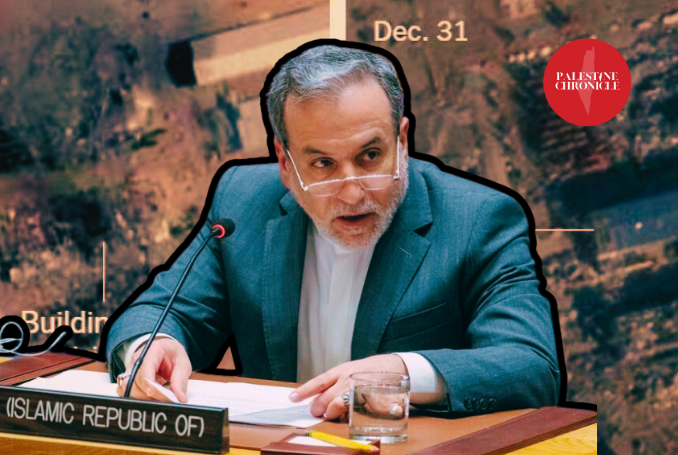

Satellite analysis indicates Iran quickly restored ballistic missile facilities after last year’s war while nuclear reconstruction remained partial, as Tehran rejects limits on missiles and warns of regional escalation.
Key Developments
- Satellite imagery shows rapid repair of multiple Iranian missile facilities.
- Nuclear sites received slower, partial reconstruction and fortification.
- Iran says missile program is non-negotiable and purely defensive.
- Tehran signals willingness for enrichment deal but rejects zero enrichment.
- Iran warns any US attack would trigger strikes on regional bases.
Iran has rapidly repaired much of its ballistic missile infrastructure following last year’s 12-day war involving Israeli and US strikes, while reconstruction of nuclear facilities appears slower and more limited, according to satellite analysis reported by The New York Times and statements from Iranian officials.
The analysis, based on imagery of roughly twenty sites hit during the June 2025 conflict, found construction activity at more than half the locations, particularly at missile production and storage facilities. The pace of repairs suggests Tehran prioritized restoring its missile capabilities immediately after the strikes and sought to quickly reestablish a deterrence posture.
By contrast, major nuclear facilities showed only partial rebuilding and reinforcement work in the months following the attacks. Western and Israeli officials cited in coverage said there was little evidence Iran had significantly advanced its ability to enrich nuclear fuel or produce a nuclear warhead since the bombardment.
Experts cautioned satellite images reveal only surface-level activity, leaving uncertainty about underground work. However, the visible pattern — rapid missile repairs alongside slower nuclear reconstruction — indicates a strategic focus on restoring conventional military capacity first while avoiding escalation linked to nuclear development.
Additional imagery showed Iran installed roof coverings over at least two facilities since December 2025, obscuring activity from aerial observation. Analysts said such measures could conceal restoration efforts, protect sensitive equipment and complicate future targeting calculations.
Intelligence assessments reported in Western media concluded Iran had largely rebuilt its ballistic missile program after the attacks. Iranian state media simultaneously unveiled a new underground missile complex and showcased the Khorramshahr-4 missile, which Iranian outlets said can reach about 2,000 kilometers and carry a heavy warhead, presenting it as evidence of continued military readiness.
Iran Demands Sanctions Relief as US Talks End in Oman with Agreement to Continue
Araghchi Speech
In related development, Iranian Foreign Minister Abbas Araghchi said Israel’s actions were destabilizing the entire region and called for sanctions and accountability.
Speaking at the Al-Jazeera Forum in Doha, Araghchi said the Palestinian issue represents “the defining question of justice” in West Asia and described events in Gaza as “genocide,” warning that normalization of destruction and displacement would lead to further annexation in the West Bank.
“What we are witnessing in Gaza is not merely war; it is not a conflict between equal parties … It is the deliberate destruction of civilian life on a massive scale. It is genocide,” he said, adding,
“If the Gaza issue is settled through destruction and forced displacement, if that becomes the model, then the West Bank will be the next. Annexation will become policy.”
He argued Israel’s regional conduct has direct security consequences for neighboring countries and urged international actors to act to prevent the region from being reshaped by force. His remarks reflected Tehran’s broader effort to frame regional tensions as interconnected rather than isolated conflicts.
In an interview with Al-Jazeera, Araghchi also confirmed Iran is open to a “reassuring agreement” on uranium enrichment but firmly rejected any demand for zero enrichment.
He said negotiations remain the only path to resolving the nuclear dispute and described recent indirect talks with Washington as a “good start,” while acknowledging rebuilding trust would take time after military confrontation.
Iran is prepared to reduce enrichment levels as part of an agreement, he said, but enrichment itself is a guaranteed right that will continue. He added enriched uranium would remain inside Iran and negotiations would remain limited strictly to the nuclear file.
At the same time, the foreign minister declared Iran’s missile program non-negotiable “now or in the future,” describing it as a defensive matter essential to national security and deterrence.
Red Lines Collide in Muscat as Washington Pressures and Tehran Refuses Concessions
Deterrence and War Risk
Araghchi warned Iran would respond to any attack by targeting US military bases in the region rather than neighboring countries, drawing a distinction between regional states and foreign military presence.
He said Tehran does not seek regional war but is prepared for one if attacked, adding bombardment had failed to eliminate Iranian capabilities and therefore could not achieve strategic objectives through force alone.
Iran and the United States resumed indirect nuclear diplomacy after weeks of tensions following US threats of military action. Mediators described the discussions as serious, and both sides signaled willingness to continue talks, possibly again in Muscat, while acknowledging a long process ahead.
(Anadolu, PC, AJA, QNN, US Media)


an open letter to the Israeli Jewish Nazis-
Please…please attack Iran, so they can wipe you from the face of the Earth.
The world will be a better place when you’re finally gone.
and by the way…most of you are posers: fake Jews and pretend semites.
murdering little children in Gaza makes YOU an antiSemite.
” death, death to the IDF ”
To hell with Wasrael!
FTRTTSPWBF