
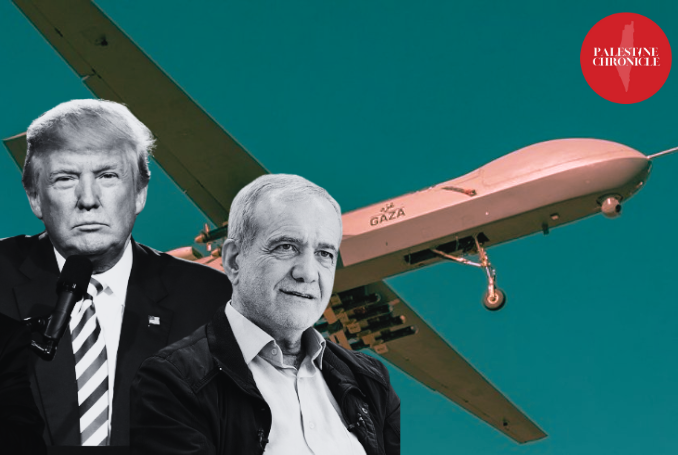
Oman talks begin amid threats, military deployments, and firm Iranian refusal to broaden negotiations scope.
Key Developments
- Iran says negotiations will remain limited to the nuclear file.
- Iran declares missile program and enrichment activities non-negotiable.
- United States maintains military pressure while continuing diplomatic talks.
- China and Russia call for diplomacy and warn against escalation.
- Israel warns collapse of talks could lead to wider confrontation.
Diplomacy Under the Shadow of Force
Indirect negotiations between Iran and the United States began Friday in Muscat, Oman, in what may become a decisive moment for regional stability. The talks come after weeks of mounting tension marked by American military deployments, public threats of military action, and growing fears of a broader confrontation in the Middle East.
Iranian Foreign Minister Abbas Araghchi, who heads Tehran’s delegation, said before the talks that Iran enters diplomacy “with open eyes and good faith,” but without forgetting past confrontations. He stressed that any agreement must be based on equality, mutual respect, and mutual interest, describing these principles as essential rather than symbolic.
Washington is represented by US Special Envoy Steve Witkoff and presidential aide Jared Kushner. A senior US military commander is also expected to participate, reflecting the security dimension surrounding what are formally diplomatic negotiations.
The talks are mediated by Oman following preliminary consultations between Araghchi and Omani Foreign Minister Sayyid Badr Al-Busaidi, aimed at preventing escalation and creating a framework for dialogue.
Tehran Draws Clear Red Lines
Iranian officials repeatedly emphasized that the negotiations must remain limited strictly to the nuclear file.
Tehran firmly rejected any attempt to expand discussions to include its missile capabilities or regional policies. Iranian officials warned that introducing such topics would immediately derail the negotiations and place responsibility for failure on Washington.
Araghchi reiterated that Iran seeks a fair and dignified agreement acceptable to both sides. Meanwhile, Iranian parliament representatives stressed that enrichment activities and missile capabilities are “non-negotiable,” warning that demands for a complete halt to enrichment would render the talks pointless.
Iranian officials also framed the negotiations as the first diplomatic engagement since last year’s military confrontation, which included US strikes on Iranian nuclear sites during a brief but intense conflict following an Israeli attack.
https://twitter.com/araghchi/status/2019633487465107473
American Pressure Strategy
While the White House confirmed its commitment to diplomacy, US officials simultaneously underscored that military options remain available.
The United States has reinforced its military presence in the region, deploying forces and maintaining naval assets including the aircraft carrier USS Abraham Lincoln. US Central Command stated that American forces are operating to protect US interests and warned they would respond to approaching military units.
White House statements indicated President Donald Trump is monitoring the talks closely while maintaining leverage through pressure. Officials suggested the objective is preventing Iran from acquiring full nuclear capabilities, though Washington has also pushed for broader concessions beyond the nuclear file.
This dual approach — negotiations backed by military power — has contributed to skepticism in Tehran regarding US intentions.
Why the Push for a US–Iran Nuclear Deal is Not Serious – and Never Was
International Mediation and Reactions
The negotiations have drawn immediate reactions from major global powers.
China declared support for Iran’s sovereignty, national dignity, and security, opposing unilateral pressure and military threats in international relations. Chinese officials also expressed readiness to coordinate diplomatic efforts to maintain stability.
Russia signaled willingness to assist in resolving technical issues related to enriched uranium stockpiles should an agreement be reached, warning the crisis could otherwise expand into a region-wide confrontation. Moscow emphasized its close partnership with Tehran and indicated it would not remain passive amid escalating tensions.
France, meanwhile, urged Iran to use the talks constructively and called on Tehran to make concessions regarding both nuclear and missile programs, a demand Iran has rejected.
Regional actors, including Qatar, Egypt, and Türkiye, have also worked to facilitate dialogue, reflecting widespread concern that failure could trigger military escalation.
Why the Push for a US–Iran Nuclear Deal is Not Serious – and Never Was
Israeli Calculations
Israel remains a central factor shaping the negotiations.
Prime Minister Benjamin Netanyahu, wanted by International Court of Justice for war crimes in Gaza, told lawmakers he does not know what final decision Washington will make regarding Iran, despite what he described as the highest level of coordination between the two allies.
He warned Israel could carry out a much larger strike if attacked, potentially exceeding the scale of previous operations. Israeli officials have long opposed any agreement they believe leaves Iran with nuclear capabilities, and their position continues to influence the broader strategic environment.
The uncertainty surrounding US decision-making has added another layer of tension to the diplomatic process.
Iran Unveils Khorramshahr-4 Missile, Warns War Would Engulf Region Ahead of US Talks
Military Activity Continues
Even as talks proceed, military signals have not diminished.
The US military confirmed encounters with Iranian forces in the region in recent days, saying actions were taken to protect American personnel and assets. Officials reiterated readiness for similar operations if required.
American officials also pointed to the aircraft carrier’s defensive posture, stating it would respond to nearby military units. These warnings reinforce the perception that negotiations are unfolding simultaneously with preparations for possible confrontation.
The Muscat talks highlight a familiar pattern: diplomacy conducted under the pressure of force. Iran seeks recognition of its rights and a limited nuclear agreement, while the United States appears to pursue broader restrictions backed by military leverage and desire to support the Israeli agenda in the region.
(PC, Al-Mayadeen, AJA, Anadolu, Iranian Media)


Trump must really have his head far up his ass, to expect “concessions” from Tehran. What’s the answer obviously going to be when Trump, on behalf of “Israel”, very foolishly demands that Iran terminate its completely legal nuclear energy program; that Iran terminate its completely legal ballistic missile program; and, that Iran rid itself of its regional allies? The answer, of course, is going to be a big, fat ‘No’; along with a big, fat middle finger up Trump’s nose.
Whatever Israel thinks they can get away with is what will happen. Negotiating with Jared Kushner? Under which flag?
Same with Gaza ‘Board of Piece plan’ – int’l investors will ‘own’ real estate, but Israelis are planning settlements for Jews only. Netanyahu is two-faced. Meanwhile, Jared Kushner resolves the contradiction: it will become greater Israel and billionaire investment at the same time.
The US has no interest in war with Iran, but wants to control oil. Israel wants both. As long as US military is there to protect Israel (which should be the other way around since Israel will be the one starting the conflagration), Israel has every motivation to strike.
And, because the U.S. wants to seize all of Iran’s oil and gas, it will therefore try to start a war against Iran, whether it’s now, or later on. The U.S. “government”, filled with all those Zionist neocons, really does want to have a war with Iran.
As for “Israel”, it wants a war with Iran, but much more than the U.S. does (even though, it wants its protector, the U.S., to do the fighting). It’s not only because of oil; “Israel” wants an extremely weak Iran, whose new “leadership” will be owned and controlled by Tel Aviv, or Washington (but, that’s also what the U.S. wants, as well). And, if those two can’t get that, then, they’ll attempt to wipe Iran off the map with nuclear weapons.
Dondolf Twitler…
what a douche.