
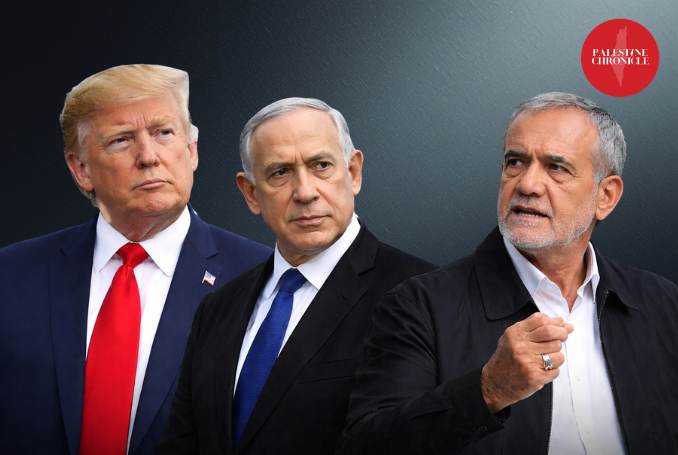

Israeli media and political voices describe the ceasefire with Iran as a strategic defeat, as Washington pauses attacks, Tehran declares victory, and negotiations move forward.
Key Developments
Israeli media describe ceasefire agreement as a “strategic surrender” and a major Iranian victory.
Trump announces two-week pause in attacks tied to reopening of the Strait of Hormuz.
Iran declares victory after 40 days and says US accepted framework for negotiations.
‘Surrender Agreement’
Israeli media outlets reacted to the ceasefire announcement with unusually sharp criticism, framing the outcome as a defeat rather than a diplomatic breakthrough.
Commentary across multiple outlets described the agreement as a concession under pressure, with some stating that the Iranians “did whatever they wanted with the Trump administration,” and that the outcome was “not just an Iranian achievement but a huge victory.”
Israel’s Channel 14 openly criticized US President Donald Trump, asking: “What world does he live in as he promotes a surrender agreement as an achievement?” It added that “what is most worrying is that Israel does not deny this madness.”
Other Israeli media described Trump as a “weak man” who “could not withstand the pressure,” and said the ceasefire announcement—coming as missiles were still being launched toward Israel—“reflects a state of mockery towards us.”
The military correspondent for i24 also mocked the ceasefire, calling for its timing “to be precisely determined in the future,” reflecting skepticism about both its substance and its implementation.
Iran ‘Fired the Last Shot’
Israeli assessments increasingly point to a gap between the declared objectives of the war and its actual outcome.
Media commentary highlighted that the campaign did not achieve its central goals, particularly the attempt to dismantle Iran’s military capabilities or destabilize its political system.
Reports noted that targeting the Iranian leadership “did not lead to the downfall of the regime,” and that Iran maintained both its political structure and operational capacity throughout the conflict.
The continuation of Iranian operations until the final phase of the war was also emphasized, with Israeli media noting that Iran maintained the pace of attacks and “fired the last shot.”
Lebanon Front: No Strategic Gain
Israeli commentary also focused on the Lebanese front, where the outcome was widely described as a failure.
Reports stated that “Israel lost the battle” in Lebanon, noting that ties between Iran and Hezbollah remained intact and that the ceasefire includes Lebanon without any disarmament of Hezbollah.
Shai Tzvi, a researcher at the Israeli Institute for Strategic Policy, said that including Lebanon in the agreement, if confirmed, would constitute an important achievement for Iran.
These assessments reflect concern that the war did not alter the regional balance in Israel’s favor and instead reinforced the position of Iran and its allies.
Meanwhile, the Israeli newspaper Maariv pointed to the domestic consequences of the war, describing widespread disruption and damage across the country.
The paper reported that thousands of missiles were launched from Iran, Yemen, and Lebanon, resulting in casualties, damage to more than five thousand buildings, and the closure of key infrastructure, including the airport.
Maariv added that the economic impact was severe, describing a state of “near-complete paralysis” that lasted for 41 days.
‘Total Failure’
The ceasefire has also triggered political backlash.
Israeli opposition leader Yair Lapid criticized Prime Minister Benjamin Netanyahu, stating that he had failed politically and strategically and had not achieved any of the goals set for the war, according to the Jerusalem Post.
Lapid, who had initially expressed full support for Netanyahu at the outset of the war, said earlier in the day that he could no longer maintain that position.
While acknowledging that the military was performing effectively, he argued that the overall management of the war had been flawed.
“Netanyahu has failed in all the objectives of the war. We supported, we explained, we showed resilience, we went down to shelters, we followed instructions. It’s time to ask: where is this going?” Lapid questioned.
‘Great Victory’
The Israeli reaction comes as US President Donald Trump announced a two-week suspension of bombing and attacks on Iran, conditional on the full reopening of the Strait of Hormuz.
At the same time, Iran’s Supreme National Security Council declared that Iran had “achieved a great victory in the past 40 days against the United States and Israel,” emphasizing that Washington had been forced to accept a framework proposed by Tehran.
Pakistani Prime Minister Shehbaz Sharif also announced an immediate ceasefire across multiple fronts, including Lebanon, with negotiations expected to follow.
(PC, Al Mayadeen, Israeli media)




More power to Iran. They did nothing wrong, and were chosen as the scapegoat in this massive campaign to restructure the Middle East. Trump needs to attack Israel while the irons are still hot: blame them for everything and move forward. Let’s call this, the ” nuclear option ” .
He has to save face, although he won’t be able to.
LOL! As if Israel will stop sending missiles over to Iran!
I don’t know who in Iran decided to accept a cease fire, but they must be really naive.
Iran is winning – it’s crazy to stop now. Israel will just keep attacking and Iran will have to do this all over again, but next time, the US will have figured out a more effective response..