Some analysts have posited that due to Iran’s seemingly successful crackdown on agents and collaborators, that they are in the clear, yet this would be a rather naive interpretation to say the least.
While Israel’s airforce is considered the most powerful in the region for a reason, it alone is not an existential threat to Iran in the event of war. In fact, the greatest threats faced by Tehran are collaborators and spies on the ground, who are responsible for the most significant blows landed during the so-called “12-Day War”.
As the world braces for the potential implications of an anticipated second round of hostilities between the Islamic Republic and Israel, various pressures are being applied on Tehran from the outside, but none are as concerning as the infiltration within. An issue that has led to a massive security campaign across the country since June 24.
Many analyses of the Iran-Israel trade off in June argued in favour of an Iranian or Israeli victory, the reality was that when the cessation of direct hostilities ended, the result was in the truest sense a stalemate. Understanding this is crucial to processing what really transpired.
Why Syria’s Instability Matters: The Media’s Failure to Tell the Story
No Clear Winner… Yet
If you read through pro-Israeli arguments that claim some kind of victory in its illegal assault on Iran, they list a few key achievements to support their claims, some imagined and others rooted in fact.
Dealing first with the allegations about the significant degradation of Iranian nuclear capabilities, missile production, launch pads and air defenses, there is little evidence to back these claims.
While the US strikes committed against the Natanz and Fordow facilities appear to have inflicted damage, even Israeli internal assessments consistently suggested that another round of strikes would be necessary to sufficiently degrade Iran’s nuclear capabilities.
This is also an argument we have seen made in the most influential pro-Israeli think tank’s publications, including the likes the Foundation for Defense of Democracies (FDD) and Washington Institute for Near East Policy (WINEP), who argued the need for a future round of strikes, although noting that this must be limited.
As for the claims about air defenses and Iran’s ballistic missile program, the continued frequent missile tests, military exercises and the capabilities demonstrated by Iran’s Islamic Revolutionary Guard Corps (IRGC) until the very last hour of the battle, all suggest that these capabilities were not touched in any irreparable way. To render an educated judgement, it is safe to say Israel didn’t inflict any serious blow in this regard.
What the ‘Legitimization Cell’ Really Proves about Israel’s Propaganda Tactics
However, part of the argument made by pro-Israeli publications, politicians and analysts, is indeed true. Israel did succeed in carrying out a pro-longed military campaign, it did assassinate at least 23 military leaders and a number of nuclear scientists, it did manage to hack into and put offline the Iranian air defenses to allow for its initial assault. This is all true.
Yet, Israel’s calculations in its attack was that it could do to Iran what it did to Hezbollah, an assumption that proved to be a major miscalculation. Within roughly 15 hours – some argue 17 in total – the Iranians were able to repair and get their air defences back online, replace their military leadership that had been lost and inflict a massive missile attack, including striking directly in the heart of Tel Aviv.
Almost all of the most significant blows inflicted by Israel were carried out within the initial wave of strikes, beyond that the successes were born of their collaborators and agents across Iranian territory.
Although we do not possess complete data on the issue, the majority of attacks carried out by Israel were committed through their proxies on the ground and not their airforce. This notably continued up until the very last day of open hostilities.
Meanwhile, Iran claimed victory due to its overall performance in the conflict, managing to significantly degrade the effectiveness of Israel’s air defences, while battering it in wave after wave of ballistic missiles. The IRGC were even given the last word, as they continued to bombard Israel until the ceasefire deadline, without any real response throughout a period of hours.
If we compare this to the war between Hezbollah and Israel that was sparked in September of 2024, the Israelis also proved less effective over time. However, the war resulted in what most people considered to be a de facto Israeli victory due to it clearly landing the largest blows.
On the ground, Israel failed to secure tactical, strategic or even operational victories in Lebanon. Yet, due to its infiltration of Hezbollah and its successful intelligence operations, it dealt a tactical defeat to the Lebanese resistance, which it has been trying to transform into a strategic defeat using internal forces inside the country; such as the current Lebanese Prime Minister Nawaf Salam.
Now, when it comes to Iran, the Lebanon strategy simply will not work. However, Israel controls key cards with the networks of Iranian traitors who are willing to drag their nation into a Syria-style civil war for the right price.
In order to combat this, Iran has launched a counter insurgency campaign in the Sistan-Baluchestan Province, as well as combating pro-Israeli Kurdish armed and other, while carrying out large raids, locating weapons manufacturing sites and managing to uncover countless networks of agents.
Netanyahu isn’t Just Talking About ‘Greater Israel’, He is Creating It
If you are to follow the reports in the anti-Iranian corporate media in the West, or the Israel-US-UK aligned Persian media, this campaign has resulted in the ringing of the alarm bells over a surge in executions across the country.
Take a report from Reuters citing the UN, on August 29, which notes “a major increase” in the number of executions to 841 so far this year. Last year, the number of executions was reported by the UNHRC to be 975. What goes unmentioned in the Reuters report is the statistical breakdown of these figures. For example in 2024 only 3% were on security-related charges, the rest were due to drug-related crimes, murder and sexual offenses.
According to the pro-Israeli Iran International news outlet, in July of this year alone there were around 100 executions, which would indeed represent an uptick and came right after the ‘12-day war’, although there is not sufficient evidence of what these executions were carried out on the basis of. Nevertheless, the framing by these outlets is used to stir social division and not in favour of clarity.
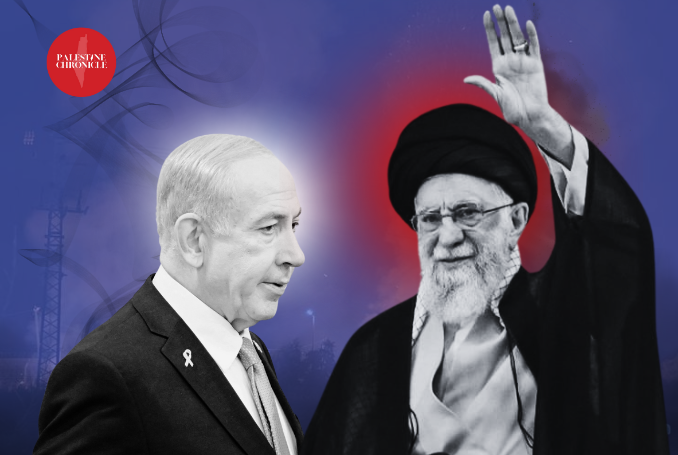
There is now a desperate attempt by the Israelis – as demonstrated through Israeli Prime Minister Benjamin Netanyahu’s more recent address where he drank a cup of water and encouraged Iranians to inflict regime change to solve their ongoing water crisis – to stir chaos.
What Threat Does Israel Pose?
Some analysts have posited that due to Iran’s seemingly successful crackdown on agents and collaborators, that they are in the clear, yet this would be a rather naive interpretation to say the least. The Israelis have been preparing for a regime change operation against Iran for decades and some 50 nations have their intelligence operatives located across the country, many of these countries maintain close ties to the Israeli Mossad.
Axis under Siege? The US-Israeli Plan to Isolate Iran before the Next War
It does appear as if Iran has succeeded to some extent at dealing with the issue of infiltration, as Israel certainly blew some of its cards during the last round of hostilities, but as we currently see in Lebanon with the frequent ongoing assassinations, despite the best attempts of Hezbollah to increase its security, there are still holes.
Reasonably it can be assumed the same is the case in Iran. After the assassination of Hamas leader, Ismail Hanniyeh, in Tehran, the breaches were clearly not dealt with. It also has to be assumed that Iran had been attempting to deal with the issue but had failed, not only due to the shock infiltration revealed in the case of Hezbollah that would have increased their determination, but also because of the decades of assassinations carried out against Iranian nuclear scientists.
In fact, the least infiltrated players in the Iranian-led Axis of Resistance turned out to be Yemen’s Ansarallah in first place, followed by Hamas. Due to the situation on the ground in Gaza today the ability to evade Israeli detection has become much more difficult; it should be noted.
It would be the expected move for the Israelis to attempt to launch a larger campaign using their agents and proxy militias on the ground during the next round, in addition to attempting to assassinate Iran’s Ayatollah Seyyed Ali Khamenei as a psychological blow designed to demoralize the country, while encouraging those Iranians, who consume their news from the likes of pro-Israeli media outlets Iran International and BBC Persian, to commit to an uprising.
The chosen Israeli revolution leader is the son of Iran’s deposed Shah, who they have declared the “Crown Prince” of a heretical monarchy while also seeking to bring “freedom and democracy” to Tehran. During the last Israeli assault, the son of the Shah was summoned to encourage this color revolution at the worst possible time and became instead a laughing stock that couldn’t manage to encourage even a small protest.
Tel Aviv’s failures came down to two primary issues: The first is that they do not possess any other cards beyond collaborators and intelligence operations; the second is that they underestimated Iran’s durability.
Iran’s primary failures have come down to its misreading of Israel’s intentions for the region since October 7, 2023, leading to hesitancy and miscalculation, this is in addition to the issue of infiltration.
Both will seek to correct the course. Meaning that the next round is going to look different. The Israelis have historically always been the aggressors and only appear to lose when lured into a trap or attacked first.
Really, the ball is now in Iran’s court, especially as they were the ones who truly decided to cease fire without securing any actual agreement. The Iranians have two options here:
To reinforce their own security to a level where they feel confident that Israel cannot carry out another operation using highly sensitive information on the scale it did earlier this year and set a trap for the enemy.
To prepare a preemptive attack, involving Hezbollah as a ground force, which is designed to batter the Israelis into complete submission.
The issue with option two is that it would be incredibly difficult to direct something of this nature without Israel knowing of it in advance. At the very least, the Israelis will receive a minimum of a ten minute warning for incoming missiles, while a full-scale Hezbollah attack would have clear signs that could tip them off.
The Disintegration of Syria’s Government and Israel’s Insidious Plot
It also appears as if the Israelis understand that the next round is likely to be far more costly for both sides, as it continues to reinforce its northern front and is continually sending forces into southern Syria from where they could launch an assault on the Lebanese Bekaa.
It is impossible to predict exactly how this is going to play out, but it is certain that the outcome will be largely dictated by how far the Iranians and their allies are willing to go. Will Iran trigger its allies in Lebanon and Iraq? Will it commit missile attacks which will serve to paralyze Israel? Or will it chase the idea of “deterrence”, which simply does not exist for any side in this ongoing regional war? One move here could be the difference between the strategic defeat of Israel and the beginning of a catastrophic regime change operation in Iran.
Much of what Israeli Prime Minister Benjamin Netanyahu says publicly is pure nonsense, yet the idea of “total victory” is clearly his goal in the region. Therefore, this regional conflict will not end until one side achieves “total victory”, it will either be the Iranian-led Axis of Resistance or the Israeli-US alliance.
– Robert Inlakesh is a journalist, writer, and documentary filmmaker. He focuses on the Middle East, specializing in Palestine. He contributed this article to The Palestine Chronicle.