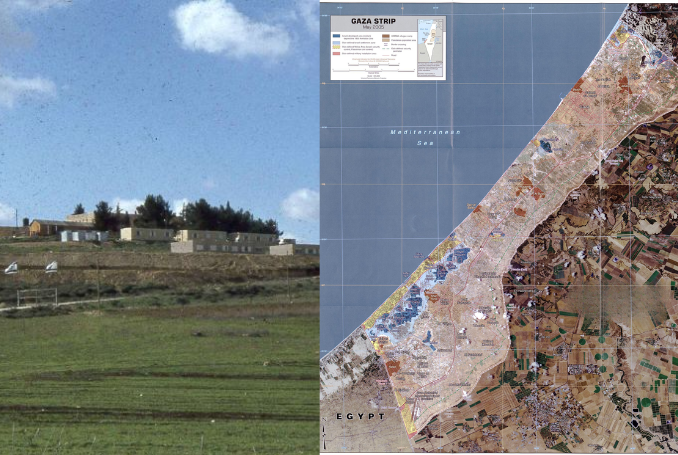

Israel advances plans to rebuild evacuated settlements, deepening control in northern West Bank and accelerating irreversible demographic transformation.
Key Developments
- Israeli authorities approved plans to reestablish the evacuated settlement of Ganim, with implementation expected to begin this summer.
- The move follows renewed settlement activity in Homesh and Sa-Nur, signaling a broader reversal of the 2005 disengagement.
- Settlement leaders say the goal is to dramatically increase settler numbers and entrench long-term Israeli control across the West Bank.
Reversing ‘Disengagement’
An Israeli government-backed plan to reestablish settlements in the northern occupied West Bank is moving forward, with the former settlement of Ganim expected to be rebuilt as early as this summer, according to a report by the Hebrew newspaper Yedioth Ahronoth – Ynet.
The move is part of a broader strategy aimed at reversing key aspects of the 2005 so-called Gaza Disengagement Plan, which included the evacuation of several illegal settlements in the northern West Bank, such as Homesh and Sa-Nur, while maintaining Israeli military control over the occupied territory.
These areas remained under Israeli control despite the removal of settlers, and have since been the focus of repeated attempts by settler groups to return.
Israeli settlers set up a settlement outpost near the Palestinian village of Kisan, southeast of Bethlehem, occupied West Bank. pic.twitter.com/QlqZk9Lb62
— Quds News Network (@QudsNen) April 23, 2026
According to the report, Israeli officials and settler leaders are now advancing what is described as a phased return to evacuated settlements, beginning with the establishment of a “core group” of settler families in Ganim, followed by the development of permanent infrastructure and institutions.
Military-Academic Nexus
The initial phase of the plan will reportedly involve families affiliated with the Bnei David Academy, a religious military preparatory institution based in the settlement of Eli. These families are expected to form the nucleus of the renewed settlement presence.
The same institution is also expected to establish a branch at the site, reinforcing the integration of ideological, religious, and military frameworks within the settlement project, which is considered illegal under international law.
The Ynet report notes that senior religious figures, including Rabbi Eli Sadan and Rabbi Yigal Levinstein, have been directly involved in planning discussions and site visits, alongside regional settler leadership.
Government Approval
The initiative received formal approval from the Israeli cabinet in December 2025, driven by key figures in the current government, including Finance Minister Bezalel Smotrich and Foreign Minister Israel Katz.
Following the approval, extensive field tours were conducted by Yossi Dagan, head of the Samaria Regional Council, who coordinated with religious leaders and settlement organizers to advance implementation.
Dagan outlined the broader strategic vision behind the expansion, stating that efforts are underway to increase the settler population dramatically.
“We are working so that there will be 20 times more residents in Samaria,” he said, according to the report, describing the return to evacuated settlements as part of a long-term demographic and territorial strategy.
Colonial Israeli settlers, protected by the army, head towards the “Sanur settlement, which was reestablished days ago in southern Jenin. pic.twitter.com/HXtAKTlaND
— Al-Jarmaq News (@Aljarmaqnetnews) April 22, 2026
Expanding beyond Ganim
The plan extends beyond Ganim itself.
According to Rabbi Yehuda Sadan, the settlement vision includes returning to Kadim, another settlement evacuated in 2005, with the aim of establishing communities that combine religious study with settlement activity.
This approach reflects a broader trend among settler movements seeking to consolidate territorial control through the creation of interconnected settlement blocs, supported by ideological institutions and civilian infrastructure, in areas internationally recognized as occupied Palestinian territory.
‘Historic Correction’
Israeli officials and settler leaders have framed the renewed settlement drive as a corrective measure to past withdrawal policies.
Speaking at a recent event marking the return to Sa-Nur, Smotrich described the effort as a “historic correction,” declaring that it represents “the final nail in the coffin of the Palestinian state.”
Such statements underscore the political dimension of the settlement expansion, which observers say is aimed at preempting any future negotiations by establishing irreversible realities on the ground.
Rapid Expansion in 2026
The developments come amid a significant acceleration in settlement activity across the occupied West Bank. According to figures cited in the Ynet report, Israeli authorities have either established or retroactively legalized more than 100 settlements and outposts in recent years, alongside approximately 170 agricultural outposts.
These settlements are widely regarded as illegal under international law, including the Fourth Geneva Convention, a position consistently upheld by the United Nations.
The pace and scope of current settlement activity indicate a coordinated push to reshape the territorial landscape of the occupied West Bank.
By reestablishing evacuated settlements and expanding existing ones, Israeli authorities and settler movements appear to be working toward consolidating long-term control over key areas.
(Israeli Media, QNN, PC)