
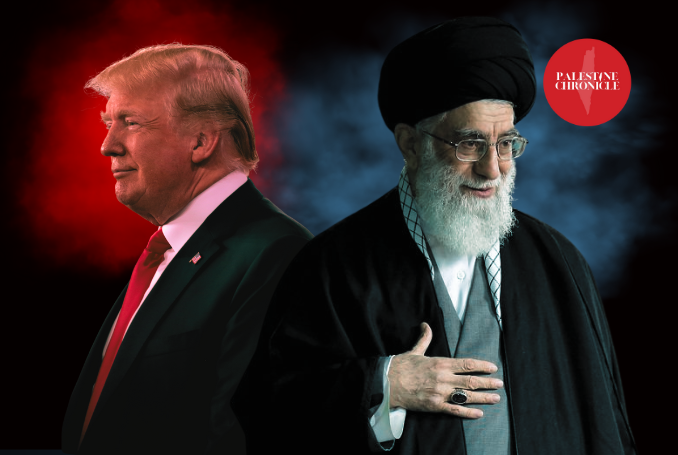

Trump signals meeting with Khamenei as US deploys carrier and Iran rejects limits on uranium enrichment program.
Key Developments
- Trump signals willingness for high-level talks while warning diplomacy may fail.
- US and Iran preparing for mediated nuclear negotiations in Geneva via Oman.
- Washington deploys additional aircraft carrier alongside negotiations.
- Tehran rejects political demands on enrichment and limits inspections of damaged facilities.
- Regional cooperation rhetoric contrasts with escalating military posture.
Meeting Khamenei
US Secretary of State Marco Rubio said President Donald Trump would be willing to meet Iran’s Supreme Leader Ali Khamenei if Tehran expressed interest in direct talks.
Rubio told Bloomberg that Trump prefers resolving disputes through an agreement but said it remains uncertain whether negotiations can produce results. He added that upcoming meetings would determine whether progress is possible.
Trump also stated that failure to reach an agreement could lead to serious consequences, referring to US strikes on Iranian nuclear facilities during the June 2025 confrontation. He further said political change inside Iran could ultimately be preferable.
US officials said Washington intends to keep forces in the region, citing what they described as Iran’s demonstrated ability to target US positions there.
Geneva Talks Planned
According to US officials and sources cited by Reuters and Axios, US and Iranian delegations are expected to meet Tuesday in Geneva for a second round of nuclear negotiations.
The US delegation is expected to include envoy Steve Witkoff and adviser Jared Kushner. Iran’s delegation will be led by Foreign Minister Abbas Araghchi.
Oman’s Foreign Minister Badr al-Busaidi is expected to participate as mediator after relaying messages between Washington and Tehran in recent days.
Iranian official Ali Larijani confirmed receiving a document containing US proposals after meeting Omani officials.
The talks follow indirect negotiations held in Muscat earlier this month, which resumed contact after roughly eight months of diplomatic suspension following last year’s military confrontation.
The Death of Law: Israel’s Permanent State of Exception is a Warning to the World
Additional Aircraft Carrier
US officials said the aircraft carrier Gerald Ford will be redeployed to the Middle East from the Caribbean, joining the Abraham Lincoln carrier group, guided-missile destroyers, fighter aircraft and surveillance planes already stationed in the region.
Trump said the carrier would be necessary if negotiations fail and warned Iran of consequences in that scenario.
The last time two US carriers were deployed simultaneously in the region was in June 2025, when US forces carried out strikes on Iranian nuclear facilities.
Officials also indicated preparations for sustained operations should negotiations collapse.
The Gerald Ford is the newest and largest carrier in the US fleet, capable of carrying more than 75 aircraft including F/A-18 Super Hornets and E-2 Hawkeye early-warning planes.
Iran’s Red Lines in US Talks: Missiles Off the Table as Israel Pressure Mounts
Iran Rejects Limits
Iranian Foreign Ministry spokesperson Esmail Baghaei said Iran’s right to uranium enrichment is fundamental and cannot be removed under political pressure.
He stated inspectors cannot visit nuclear facilities damaged in previous attacks due to safety and security considerations but said cooperation with the International Atomic Energy Agency continues at other sites under safeguard agreements.
Baghaei added that accusations regarding the nature of Iran’s nuclear program are used as a pretext for political pressure.
Iran rejected US demands to halt enrichment, export enriched uranium abroad or negotiate missile capabilities and regional alliances, maintaining talks must remain limited to nuclear issues.
The Iranian Atomic Energy Organization also said cooperation with the agency continues within existing legal frameworks.
Ansarallah Leader Warns of Regional War, Cites ‘Satanic Rituals’ in Epstein Files
Regional Statements
Iranian President Masoud Pezeshkian said regional countries can resolve disputes collectively without external guardianship.
Speaking at a conference in Tehran, he cited cooperation among Türkiye, Azerbaijan, Iraq, Saudi Arabia, Qatar, the UAE, Oman, Pakistan and Afghanistan.
He said conflict and violence do not lead to progress and emphasized that regional states are capable of managing their own security arrangements.
Why the Push for a US–Iran Nuclear Deal is Not Serious – and Never Was
Domestic Developments
Iran’s judiciary announced the conditional release of several detained political activists following protests over economic conditions that later turned violent.
Authorities said the releases came after initial investigations and warnings. Other detainees remain imprisoned under finalized court rulings.
Officials accused the United States and Israel of backing unrest described as riots and terrorism.
(PC, Anadolu, AJA, A-Mayadeen, QNN, Iranian Media)


Iran, it’s a trap! When the US means “let’s meet and talk” means “give us time & co-ords to bomb your”! Like Gen. Qassem Soleimani, Hamas Deputy Head Khalil al-Hayya, Ismail Haniyeh! I am certain Supreme Leader Ali Khamenei is wise enough to see this.