By Anisha Patel
What then is the relevance of investing our very limited resources and energies in engaging with the framework of international law?
For more than two years now, we have witnessed the brutality of Israel’s settler-colonial genocidal assault against the Palestinian people in Gaza. The annexation, forcible displacement, and racial segregation in the West Bank, including East Jerusalem, escalate rapidly with each passing day.
But these are only the most visibly violent manifestations of the ongoing Nakba and apartheid inflicted upon the entirety of the Palestinian people across the geography and in the diaspora.
Shifting Legal Paradigms
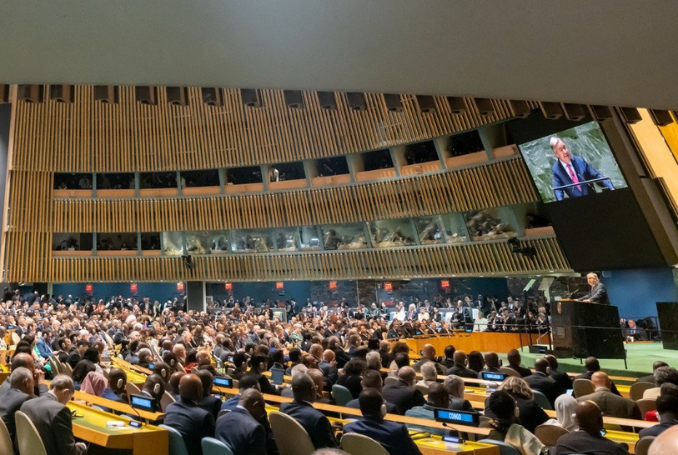
A number of concurrent cases are indicative that the notion of exceptionalism, and by extension the absolute legal impunity, that the state of Israel has enjoyed since its establishment, is now, finally, starting to unravel:
- The International Court of Justice’s (ICJ) three Provisional Measures Orders in South Africa v. Israel;
- The ICJ order in Nicaragua v. Germany.
- The ICJ Advisory Opinion on the Legal Consequences arising from the Policies and Practices of Israel in the Occupied Palestinian Territory, including East Jerusalem, and Advisory Opinion on Obligations of Israel in relation to the Presence and Activities of the United Nations, Other International Organizations and Third States in and in relation to the Occupied Palestinian Territory;
- UN General Assembly Resolution A/RES/ES-10/24 on Illegal Israeli actions in Occupied East Jerusalem and the rest of the Occupied Palestinian Territory;
- and the International Criminal Court’s (ICC) arrest warrants in the situation in the State of Palestine.
The shift out of the hitherto legal exceptionalism is also reflected in the various cases brought forward in different national jurisdictions against states, corporations, and individuals that are aiding and abetting or profiting from Israel’s unlawful presence in the occupied Palestine, genocide, and apartheid. Nevertheless, continued Israeli settler colonial violence against the Palestinian people, their land, and their dignity points to the immeasurable costs, being paid for by generations of Palestinians within the geography and across the world, of undoing the inaccurate legal parlance of a “sui generis situation” deliberately imposed by Israel and its allies.
What then is the relevance of investing our very limited resources and energies in engaging with the framework of international law? International law is one of the many tools we employ in the struggle for self-determination and liberation. It is a tool that is, by design, limited because of its imperial Eurocentric origins and character. A state-centric framework, invariably being made and remade by states through their words and actions, international law also reflects the power dynamics in the international order.
While these deficiencies of international law are clearly visible in its many failings when addressing the global South generally, this disparity has been most clearly exemplified in the case of Palestine. However, this has also meant that the “question of Palestine” is positioned at the heart of the post-World War II global order, as the location for its potential rupture, decolonization, and hopefully its eventual rebuilding.
Notwithstanding its flaws, history has shown that there is strategic value in mobilizing a harmonized reading of international law that enshrines non-domination and non-exploitation at the heart of international law-making and practice. Such an engagement with international law challenges the historical marginalization of the experiences of Global South peoples.
Until we reach the point of reordering the world to move beyond a state-centric configuration, we are obliged to use every tool we can, including the imperfect international legal system, as people from the Global South before us have, towards our collective liberation.
International Law as a Tool for Transformation
The ICJ Advisory Opinion, UNGA Resolutions, ICC arrest warrants, and other such legal precedents, like international law in general, are not the end of a legal process – they are but the beginning. They hold transformative hope. So, where do we go from here?
The critical issues we are obliged to continue engaging with revolve around understanding the implications of the monumental shifts that have taken place over the past year in the legal landscape of Palestine. As we have already seen, it is necessary to theorize and concretize what these legal shifts mean and the actions that need to follow, by states, international organizations, and corporations.
Limited enforcement mechanisms internationally necessitate the continued engagement with international law through national actions and legislations to ensure states, corporations, and individuals are held accountable for decades of atrocities committed against the Palestinian people.
Strategic litigation at the national level has the potential to be a key tool in reinforcing obligations arising from international law, including through universal jurisdiction and corporate accountability mechanisms. International law gains also need to be harnessed to protect students, workers’ unions, and human rights defenders who are at the forefront, pushing the boundaries of what counts as acceptable actions by those in power.
While we move along this path of operationalizing the recent legal gains, it is incumbent upon us to continue foregrounding the core objective – Palestinian self-determination as a process of decolonization. The ICJ Advisory Opinion of July 2024 has indicated the elements of restitution and reparations, including the return of Palestinian refugees and land for the unlawfully occupied Palestinian territory, in line with the bounds of the geographical limits of the request made to them by the UN General Assembly.
This is, of course, not reflective of the inalienable right of return that all Palestinian people have, as enshrined in international law. A critical part of engaging with the decolonization mindset, then, is to acknowledge that such fragmentation of the Palestinian people is a part of the settler-colonial apartheid strategy.
Countering Legal Deficiencies
To counter this calculated fragmentation, we must follow the lead of Palestinians, across geographies, on how they articulate self-determination for themselves. Grounding our international legal efforts within Palestinian articulations of self-determination is non-negotiable. While remaining cognizant of the limitations of international law, it is important to find pathways to ensure international institutions recognize and address the root cause, Israeli settler-colonialism, as a legal framework and its implications in the case of Palestinian self-determination and liberation.
As a part of this exercise, it is necessary to articulate how international law safeguards the Palestinian people’s right to resist colonial domination, apartheid, and foreign occupation by all means available. Only by stepping away from the frameworks that chastize Palestinian resistance to alien subjugation, domination, and exploitation can we move towards achieving liberation.
For decades now, Palestinian civil society actors, scholars, and practitioners have been articulating in great detail the conceptual expansion of international law, in line with the experiences of peoples from the Global South, and the tangible actions necessary to bring an end to the settler-colonial and apartheid regime still imposed by Israel.
Following the realities on the ground and the legal outcomes of the past two years, the only reasonable thing to do, legally and morally, is to center the myriad Palestinian voices of liberation in designing a collective legal strategy. Such a collective strategy of decolonisation, of liberation, needs to employ international law strategically, in parallel to and reinforcing other tools of liberation.
Converging Strategies
This cannot be achieved at the ICJ, the ICC, the UNGA, or any other state-centric institution alone. A strategic convergence of the different tools of liberation is essential. A demand for the emancipatory role of international law to be operationalized requires leveraging international law gains in conjunction with and in support of the broader mobilization by peoples and movements.
While the neocolonial realities that we exist in make this mobilization challenging, they also open up spaces for transnational solidarity and action. This has already been demonstrated by the large-scale mass movements, especially by students, academics, unions, and dock workers, that have come to the fore in support of Palestine over the past two years and have engaged with international law at different levels.
It would be prudent to recall that the colonial outposts of South Africa, along with its apartheid regime, were not brought to an end only because they were deemed morally unacceptable or because a court had determined their illegality. These discriminatory regimes were dismantled because they were made culturally and financially unsustainable, a condition created by a plethora of coordinated legal and non-legal actions, including cases at international courts, resolutions at the UNGA chipping away at the legitimacy of the situation in states parties forums, suspension of South Africa from the UNGA, litigation in national courts, and the Anti-Apartheid movement bringing these legal gains into action through mobilizing people across the world.
Today, we no longer live in a reality where historic state-driven coalitions such as the Non-Aligned Movement are a force to be reckoned with at the global stage. The Hague Group, an attempt to re-create such coalitions, has been inspirational but has been limited in driving large-scale changes. However, we do live in a world where social media, despite all of its shortcomings, has expanded access to information.
Over the course of the past two years at least, the reality of Israel’s colonial destruction and apartheid has been brought to every screen, allowing people to engage with the Palestinian people beyond the narratives framed by state-driven and mainstream media. The sheer scale of death and destruction in Gaza that people have witnessed over the past two years has left them gaping for vocabulary to describe the reality, a void that international law has come to partially fill, despite its indeterminacies.
Building on this transformative juncture requires international law gains to be translated in order to strategically reinforce everyday tools for people, which will in turn allow for building mass movements towards ensuring accountability and change. Decades of work by the Palestinian people, undertaken at unfathomable costs, have brought us to this moment, where the notion of Israeli legal exceptionalism is finally crumbling – it is now incumbent upon us to leverage the law in service of Palestinian liberation at every avenue available to us, at the UN, in the courts, at universities, at ports, in the banks, and on the streets.
Without Palestine’s decolonization as our compass, rebuilding the world order from the ruins of Gaza will only give rise to another world built on the foundations of oppression.

– Anisha Patel is a member of the Governing Council of Law for Palestine. She contributed this article to the Palestine Chronicle.