
A prominent Saudi analyst warns GCC states that entanglement in the US-Israel war on Iran threatens regional stability and development.
Key Takeaways
- A Saudi academic warns the Gulf states against becoming directly involved in the US-Israel war on Iran.
- Iranian strikes on radar systems exposed vulnerabilities in the US-led missile defense network protecting Gulf infrastructure.
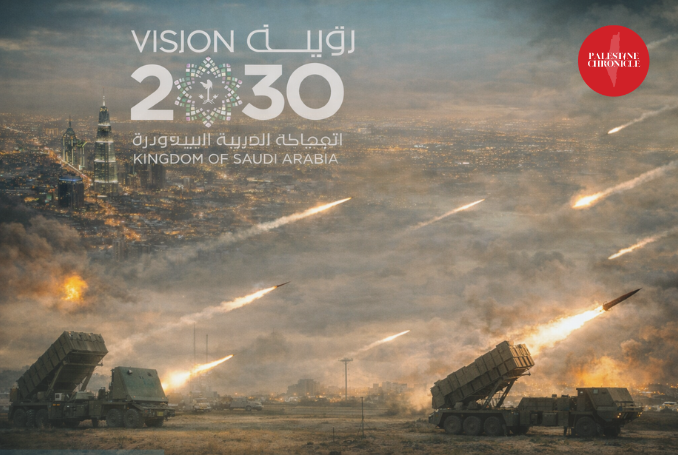
- The article argues that escalating war could threaten economic projects such as Saudi Arabia’s Vision 2030.
- Iran’s missile strategy has targeted key sensors and radars, weakening the layered missile defense architecture.
- The GCC should prioritize regional unity, independent defense capabilities, and diplomatic de-escalation.
Warning to the GCC
A prominent Saudi academic and policy commentator has warned that Gulf states risk severe strategic and economic consequences if they become directly entangled in the ongoing US-Israel war on Iran.
Writing in the Saudi newspaper Arab News, Dr. Turki Faisal Al-Rasheed, an adjunct professor at the University of Arizona and author on Saudi development policy, argued that the conflict has already exposed major vulnerabilities in the US-led missile defense architecture in the Middle East.
His analysis, published on March 11, called on the Gulf Cooperation Council (GCC) to prioritize regional unity and strategic autonomy rather than allowing external powers to draw the region deeper into confrontation with Tehran.
Missile Defense Network
According to Al-Rasheed, recent Iranian strikes have revealed significant weaknesses in the complex missile defense system that the United States has built across the Gulf.
“The ongoing US–Israel war on Iran has exposed a dangerous vulnerability in the US-led missile-defense architecture in the Middle East,” he wrote.
He argued that Iran has conducted a systematic campaign aimed at degrading the sensors and radars that form the backbone of the system.
“By destroying the Qatar-based AN/FPS-132 early-warning radar and at least three AN/TPY-2 X-band radars linked to THAAD batteries in Saudi Arabia, the UAE and Jordan, Tehran has turned what was designed as a layered, redundant sensor web into a patchwork with serious gaps.”
The implications, he said, extend far beyond the battlefield.
“This tactical success has strategic consequences,” Al-Rasheed warned. “It accelerates the depletion of high-end interceptors, exposes critical bases and energy infrastructure, and destabilizes key partners such as Jordan.”
He also argued that the strain on US missile defense resources could affect other regions where Washington relies on similar systems.
“It also erodes US deterrence credibility in the Indo-Pacific, because the same finite interceptor stockpile is supposed to help defend Taiwan and Japan.”
‘Who Gave You Permission?’ — Is the Gulf Finally Questioning the US-Israeli War on Iran?
‘Kill the Eyes’
In the article, Al-Rasheed outlined what he described as Iran’s systematic approach to undermining missile defenses.
“Iran’s approach follows a three-step logic familiar from suppression of enemy air defenses,” he wrote.
“First, ‘kill the eyes’ by striking early-warning radars. Second, ‘kill the aim’ by targeting fire-control radars that guide interceptors. Third, ‘destroy the batteries’ by hitting the launchers themselves.”
Once these elements are degraded, he argued, the remaining defenses become far less effective.
“Once enough eyes and aim points are removed, the remaining batteries operate in a fog, with compressed and uneven timelines for detection, classification, and engagement.”
He added that the cost imbalance between offensive weapons and defensive interceptors places defenders at a disadvantage.
“Cheap drones and relatively low-cost ballistic missiles are being mixed in large salvos, forcing defenders to fire interceptors that cost millions of dollars per shot.”
The People Have Spoken: What Global Polls Say About the US-Israeli War on Iran
Economic Stakes for the Gulf
For Gulf states, Al-Rasheed argued, the stakes extend well beyond military considerations.
He pointed to Saudi Arabia’s ambitious economic transformation plans as particularly vulnerable to regional instability.
“Vision 2030 rests on three interlinked pillars: diversifying the economy, transforming the Kingdom into a global investment hub, and building an ‘ambitious nation’ with secure, resilient infrastructure.”
Such ambitions, he noted, depend heavily on stable security conditions.
“All of this depends on the basic condition: physical security for legacy oil facilities, new gas and petrochemical projects, and a rapidly expanding network of renewable plants.”
He cited the 2019 attacks on Saudi energy facilities as an example of how vulnerable the region’s infrastructure can be.
“The 2019 Abqaiq–Khurais attacks were an early warning,” he wrote, recalling how strikes temporarily disrupted a significant portion of Saudi oil production.
Europe and the War on Iran: Between Hesitation and Strategic Confusion
Warning Against Escalation
A central argument in Al-Rasheed’s article is that Gulf states must avoid being drawn into a direct confrontation with Iran driven by external powers.
“This creates a dangerous trap for the Gulf Cooperation Council,” he wrote.
“A scheme appears to be unfolding in which the US and Israel, driven by their confrontation with Iran, risk pulling the Gulf deeper into a direct clash with Tehran.”
Such a confrontation, he argued, would carry severe long-term consequences for the region.
“External actors know that their war with Iran will, one way or another, eventually end. They also know that a prolonged Gulf–Iran confrontation would drain our resources, destabilize our societies, and open the door to deeper foreign intervention.”
He warned that the collapse or fragmentation of Iran could create even greater instability.
“The most dangerous outcome of escalation today is not necessarily regime change in Tehran, but the possible disintegration of the Iranian state into prolonged anarchy.”
Such a scenario, he suggested, could lead to refugee flows, militia spillover, and sustained disruption in global energy markets.
Is the Iran War Becoming a Global Economic Crisis? A Media Roundup
Call for GCC Unity
Instead of escalation, Al-Rasheed called for stronger regional coordination and greater independence in defense planning.
“In this context, the GCC has no choice but to close ranks,” he wrote.
He urged Gulf states to strengthen their own defense capabilities and avoid reliance on external systems that could fail during a crisis.
“First, we need more autonomous sensor coverage and command-and-control networks that do not collapse if a handful of US-owned radars are destroyed.”
At the same time, he stressed the importance of resisting pressure to join broader military campaigns.
“The GCC must resist being dragged into a direct US–Israel war on Iran.”
Ultimately, Al-Rasheed framed the moment as a strategic crossroads for the Gulf.
“One path leads to escalation, exhaustion and dependence,” he wrote.
“The other path demands courage, discipline and regional unity.”
“In the end,” he concluded, “the choice before the GCC is stark: either we become the ramp that wrecks someone else’s armored car, or we build the road that safely carries our own future forward.”
(The Palestine Chronicle)