

WHO warns ambulances may be targeted as Israeli strikes kill hundreds, displace millions, and push Lebanon into a humanitarian crisis.
Key Developments
- WHO warns Israeli threats now include targeting ambulances and medical infrastructure.
- UN says strikes triggered mass displacement and widespread destruction across Lebanon.
- Food insecurity surges as markets collapse and prices spike amid ongoing attacks.
WHO Receives Threats
The World Health Organization (WHO) said it received a new Israeli threat on Friday, indicating that ambulances could be targeted as the escalation in Lebanon intensifies.
In a statement, the WHO stressed that healthcare workers, medical facilities, and ambulances are protected under international humanitarian law, warning that any disruption to these services would severely limit life-saving operations.
Despite these protections, nearly 50 healthcare workers have been killed and more than 150 injured in Israeli attacks, with the WHO also pointing to the direct targeting of ambulances during the ongoing aggression.
WHO Director-General Tedros Adhanom Ghebreyesus also urged Israel to withdraw evacuation warnings affecting the Jnah area in Beirut, noting that the area includes two major hospitals—Al-Zahraa Hospital and Rafik Hariri Governmental Hospital—and that evacuation is not feasible.
The warnings come after a wave of Israeli attacks that, according to Lebanon’s Ministry of Public Health, killed at least 303 people and injured more than 1,150 in a single day, with search operations still ongoing.
The Lebanon Conspiracy: Massacres, Negotiations, and a New Order
The ministry said the majority of casualties were women, children, and elderly individuals, while hospitals across the country have issued urgent appeals for blood donations as reserves are rapidly depleted.
The scale of casualties, combined with repeated strikes on densely populated areas including Beirut and its southern suburbs, has placed Lebanon’s healthcare system under extreme strain, with emergency services struggling to cope.
UN Warns of Worsening Displacement Crisis
Meanwhile, the UN refugee agency (UNHCR) described Wednesday’s strikes as the most intense of the current war, with around 100 locations hit within minutes, including areas sheltering displaced civilians.
Spokesperson Eujin Byun said the attacks struck neighborhoods previously considered safe, triggering panic and forcing many to flee for the second or third time.
“Return is no longer possible, as the entire community have been partially or completely destroyed,” Byun said, noting that around 150,000 people remain trapped in southern Lebanon with limited humanitarian access.
She added that approximately one million people are now displaced across the country, with children making up around 35 percent of those affected.
For its part, the World Food Program (WFP) warned that Lebanon is entering a severe food security crisis as the conflict disrupts supply chains, livelihoods, and access to essential goods.
WFP Lebanon Country Director Allison Oman said the situation is rapidly worsening, with food prices rising sharply—vegetables by more than 20 percent and bread by 17 percent in just one month.
“What we’re witnessing is not just a displacement crisis, it is rapidly becoming a food security crisis,” Oman said, adding that more than 80 percent of markets in southern Lebanon are no longer functioning.
Around one million people have been displaced, while approximately 900,000 were already food insecure before the escalation, a figure expected to rise significantly.
Seven Messages – Can Israel Survive Defeat without Setting the Region Ablaze?
Hezbollah: ‘Till the Last Breath’
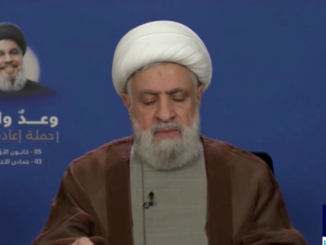
Amid the worsening humanitarian situation, Hezbollah Secretary-General Naim Qassem said the group would continue its operations, warning against what he described as “gratuitous concessions” and asserting that resistance would persist “till the last breath.”
At the same time, diplomatic efforts continue, with US officials confirming that Washington will host talks between Israel and Lebanon next week.
Lebanese sources described the meeting as preparatory rather than formal negotiations.
The developments follow a two-week ceasefire announced between the United States and Iran, which Pakistan and Tehran said includes Lebanon, while Washington and Tel Aviv have denied this—leaving the Lebanese front at the center of ongoing escalation.
(PC, Anadolu, Al Mayadeen)