

Israeli health authorities reported 77 new casualties in 24 hours as resistance operations continue on multiple fronts.
Key Developments
- Israel’s Health Ministry reported 77 new casualties in the past 24 hours, bringing the total since February to 9,119.
- Israeli authorities acknowledged 1,219 casualties linked to the Lebanon front since the ceasefire with Iran took effect in April.
- Iranian officials warned that any future attacks on Iran or the Resistance Axis would trigger a decisive and costly response.
Israeli Casualties
Israel’s Health Ministry announced on Monday that 77 new casualties had been recorded over the previous 24 hours, bringing the total number of casualties since the outbreak of the US-Israeli war against Iran in February to 9,119.
The figures were released as fighting and military operations continue across multiple fronts involving Iran, Lebanon and Yemen, following months of regional escalation.
According to the ministry’s latest update, casualty numbers have continued to rise despite repeated announcements of ceasefire arrangements.
The Lebanon Front
Israeli health authorities reported that 1,219 casualties have been recorded in connection with the Lebanon front alone since the ceasefire with Iran took effect on April 8.
The ministry also acknowledged that 803 casualties have entered Israeli hospitals since the ceasefire agreement with Lebanon was announced on April 17.
The figures come as the Lebanese resistance continues to carry out military operations against Israeli occupation forces in southern Lebanon, citing ongoing Israeli attacks and repeated violations of the ceasefire agreement.
Israeli attacks on Lebanon also continued on Monday.
According to Al Mayadeen correspondents, Israeli warplanes carried out strikes on Nabatieh, Deir Qanoun Ras al-Ain and areas around Tyre, while artillery shelling targeted towns in southern Lebanon.
Iran Says It Delivered ‘Painful Response’ to Israel, Suspends Operations for Now
Media Question Strategy
The latest casualty figures emerged alongside growing debate within Israeli political and media circles regarding the course of the confrontation.
Channel 12 reported that efforts to separate Iran from Hezbollah have encountered significant obstacles, while Yedioth Ahronoth acknowledged that Iran had demonstrated an ability to shape what it described as a new regional equation.
Other Israeli reports suggested that recent attacks on Beirut’s southern suburbs were carried out in coordination with Washington.
Haaretz, meanwhile, described attempts to reignite a high-intensity confrontation with Iran and expand attacks on Lebanon as politically motivated and potentially linked to domestic Israeli calculations.
The Dahiyeh Gamble: How Netanyahu’s Escalation Backfired into an Iranian Victory
Iran Warns of Costly Response
As casualty figures continued to rise, senior Iranian officials reiterated warnings against further military escalation.
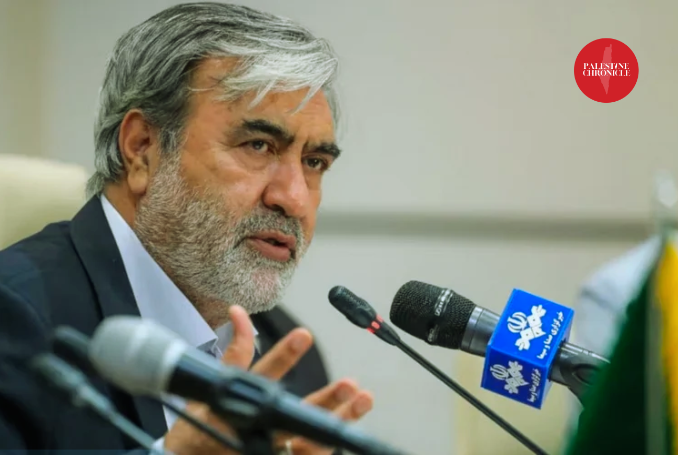
Ebrahim Azizi, chairman of the Iranian parliament’s National Security and Foreign Policy Committee, said any attack targeting Iran or the Resistance Axis would be met with a decisive and costly response.
Speaking to Iranian television, Azizi said the objective of Iran’s recent “Operation Victory” extended beyond responding to Israeli actions.
“The goal was not merely to respond to the enemy’s violations,” he said, “but to consolidate the ongoing defeat of the United States and the Zionist entity.”
Iranian officials have repeatedly linked their military actions to what they describe as efforts to defend both Iran and allied resistance movements across the region.
Al-Hayya, Araqchi Discuss Gaza as Hamas Praises Iran’s Stance on Resistance Fronts
Resistance Expands Coordination
The remarks came one day after Quds Force commander Brig. Gen. Esmail Qaani declared that a resistance security belt now extends from the Strait of Hormuz to Bab al-Mandab and from the Arabian Gulf to the Red Sea.
Meanwhile, Iranian Parliament Speaker Mohammad Bagher Ghalibaf reiterated that Tehran would not allow attacks against Lebanon, whether through military action, political pressure or efforts to derail negotiations.
The statements follow successive waves of Iranian missile attacks targeting Israeli sites on Sunday and Monday.
Iran said the attacks were carried out in response to the Israeli strike on Beirut’s southern suburbs, which killed and wounded civilians despite ongoing ceasefire arrangements.
(Al Mayadeen, Israeli Media, Iranian Media, PC)



Be the first to comment