
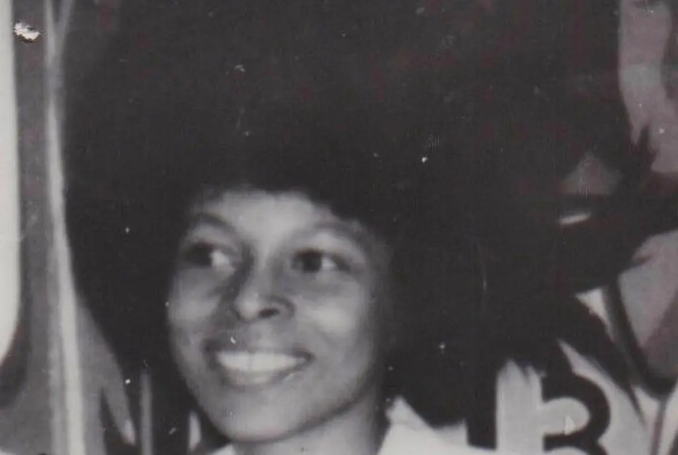
By Benay Blend
Assata Shakur has left a legacy of resistance for all global movements that fight against oppression, particularly for the Black Radical Tradition and for the Palestinian Struggle Movement.
On the occasion of her death on September 26, 2025, the British-based Fight Freedom! Fight Racism! (Part of Revolutionary Communist Group) republished a 1996 interview with American political activist Assata Shakur. In it, she discussed highlights of her life, beginning with her arrest by the FBI under its counter-intelligence program, COINTELPRO, after being framed for the murder of a New Jersey State Trooper and sentenced to life imprisonment.
At that time, the FBI, under J. Edgar Hoover, was targeting the Black Panther movement, of which Shakur was a member. Very much like the way that Palestinians in the diaspora and their supporters are harassed today, COINTELPRO fabricated charges against the Panthers, including, at one time, claiming that there was a conspiracy to blow up the botanical gardens in New York.
“We couldn’t figure out the basis of that. How do you defend yourself against conspiring to blow up flowers?” Shakur explained. These charges are very similar to the ways, today, that world governments contend, quite falsely, that organizations which support all forms of anti-Zionist resistance, such as Samidoun and Adameer, are in reality fronts for Hamas.
In 1979, she escaped from prison and left for Cuba, where she has lived since 1985. Under the influence of Cuba’s socialist government, Shakur formulated her political stance, which will live on long after her death to guide young activists around the world.
In August 2018, at the height of the Great Return March in Gaza, Brandon Do explored the connections between the Black Radical Tradition and the Palestine Solidarity Movement.
“In light of the United States’ key role in support of the Israeli occupation of Palestine, the Palestine Solidarity Movement in America has immense potential,” he wrote. “Its young organizers possess the determination needed to wage a struggle against the causes of war and poverty, and the moral courage to stand with the world’s oppressed and exploited masses.”
Nevertheless, Brandon noted pitfalls and shortcomings that continue today. By separating itself from the global movement for peace, the Solidarity Movement has not challenged the role of Zionist imperialism beyond Palestine. “This was most notable when the non-profit driven sector of the Palestine Solidarity Movement aligned with the interests of Israel and threw its support behind Western intervention to overthrow the Syrian government,” he explained. “This came at a moment when the United States was threatening to implement a no-fly zone over Syria, which aimed to provoke war with Russia and had the potential to result in a nuclear catastrophe.”
The late Palestinian revolutionary Ghassan Kanafani understood the importance of internationalism, a stance that links the Black Radical Condition with Palestine. On the 51st anniversary of his assassination in Beirut, Lebanon, Samidoun: Palestinian Prisoner Solidarity Network wrote that he was a “dedicated internationalist,” whose most famous quote has continued to be relevant today:
“Imperialism has laid its body over the world, the head in Eastern Asia, the heart in the Middle East, its arteries reaching Africa and Latin America. Wherever you strike it, you damage it, and you serve the World Revolution …The Palestinian cause is not a cause for Palestinians only, but a cause for every revolutionary, wherever he is, as a cause of the exploited and oppressed masses in our era.”
In a similar tribute for Assata Shakur, Black Alliance for Peace (BAP) declared that Shakur left behind “a legacy of uncompromising resistance and a blueprint for international solidarity.” Understanding that the struggle is multipronged, BAP attributed to it “a fight for human dignity, community survival, popular power, self-determination, and complete liberation.”
Moreover, she understood that there is no peace without justice, and that obstacles in achieving that end are systemic rather than resting on the shoulders of one person. Thus, peace can only be achieved “when empires fall and when the colonized are free.”
In “Framing Resistance Call and Response: Reading Assata Shakur’s Black Revolutionary Radicalism in Palestine,” Prof. Rabab Ibrahim Abdulhadi uses Shakur’s text “To My People” as a reference point to explore the ways that Black and Indigenous movements were part of her family’s stories.
Even as a child, Abdulhadi understood the links between “Israel’s colonial past and that of the United States: (The US) was founded as a settler colonial state that, like Israel, sought (but failed) to erase the existence of indigenous communities, and consolidates this settler colonial project first by kidnapping and enslaving Africans, and institutionalizing racist discrimination.”
Though this history is woven into the “stories of Palestinian uprootedness and dispossession” that she heard quite often, Abdulhadi refused to conflate the Black liberation struggle with Palestinian resistance. Thus, Abdulhadi limited her exploration of Shakur’s piece to three questions that are framed as the call-and-response pattern often heard in African music.
First, Abdulhadi ponders how to develop a comparative practice that incorporates questions of identification, radicalism, identity politics, and coalitions.
Identifying as a Black revolutionary, Abdulhadi notes, Shakur makes clear that she rejects internalized colonialism and assimilationist politics. Moreover, she linked the Black struggle in the US to other oppressed groups around the world, thus following in the footsteps of Kanafani.
Second, she asks how to frame violence and non-violence as each relates to strategies of resistance.
In her answer, Abdulhadi confirms that Shakur saw non-violent resistance as complementary to armed resistance rather than its opposite. She reiterates that the anti-apartheid struggle employed all means of resistance, thereby calling attention to an important precedent in the global struggle for liberation.
Palestinians, too, have reserved the right to employ a diversity of tactics. As Omar Zahzah notes, there is a tendency among international supporters to privilege non-violent resistance over other means employed in the struggle for liberation. Anything less gets dubbed as terrorism, thereby failing to distinguish between the violence used by the occupier and armed resistance, sometimes favored by Palestinians.
Finally, Abdulhadi ponders the relationship between the individual and the collective, and how each contributes to meaningful social change.
What Abdulhadi calls a “specific feminist practice (that) links the individual with the collective” characterizes both the Black Radical Tradition and Palestinian intellectuals, resistance fighters, and other significant groups. In both instances, there is a reluctance to claim personal achievements over the contributions of the collective, as well as a reluctance to gain professional acclaim on the backs of people who are actually experiencing oppression.
In “Black Politics and Mutual Comradeship: A Manifesto,” Charisse Burden-Stelly lays out a guide for Black organizing in 2025. Expressing hope that the masses can organize and win, Burden-Stelly reiterates Abdulhadi’s faith in the power of community to create change.
“As mutual-aid collectives, migrant cleanup brigades, student organizers, anti-imperialist organizations, worker uprisings, and tenants’ unions have demonstrated, even if we are resource poor, we are people rich,” Burden-Stelly claims, “and this means we have the raw material for victory.”
After reviewing “To My People,” Abdulhadi concludes that Shakur delivered a similar message that is relevant to transnational revolutionaries today. “In the spirit of the indivisibility of justice and the praxis of resistance and liberation,” she claims that Shakur succinctly addressed the intersection of the Black liberation movement with that of Palestinians, a connection that holds true to this day.
In her review of Ghassan Kanafani: Selected Political Writings, edited by Louis Brehony and Tahrir Hamdi (2024), Farah-Silvana Kanaan attributes a quote to Kanafani that serves as a testament to both Palestinians and Africans in the struggle.
“Bodies fall, but ideas endure”—a “short but stunning line,” Kanaan says, these words are not only attached to Kanafani but also to “Yahya Sinwar and Refaat al-Areer to Sayyed Hassan Nasrallah, and the now hundreds of Palestinian journalists killed by the relentless Israeli murder machine,” and, now, also to Assata Shakur.
“When we call (Shakur’s) name, let it not be a performance, nor a virtue signal,” cautions Abbas Muntaqim. “Let it be a commitment to oppressed people,” so that her legacy, too, is carried on.

– Benay Blend earned her doctorate in American Studies from the University of New Mexico. Her scholarly works include Douglas Vakoch and Sam Mickey, Eds. (2017), “’Neither Homeland Nor Exile are Words’: ‘Situated Knowledge’ in the Works of Palestinian and Native American Writers”. She contributed this article to The Palestine Chronicle.



Be the first to comment