
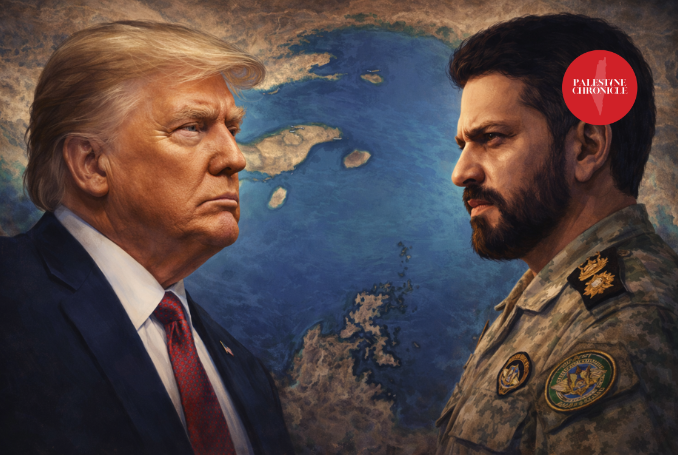
Iran signals conditional Strait of Hormuz access while warning enemies, as Trump threatens strikes on energy infrastructure amid escalating tensions.
Key Developments
- Iran confirms selective access to the Strait of Hormuz, excluding vessels linked to its enemies.
- Tehran signals willingness to cooperate with International Maritime Organization on maritime safety.
- Trump threatens to strike Iranian power plants if navigation is not fully restored within 48 hours.
- Iran warns it will target US energy infrastructure if its own facilities are attacked.
Conditional Access to Strait of Hormuz
Iran has signaled readiness to work with the International Maritime Organization (IMO) to ensure the safety of navigation in the Gulf, while maintaining firm restrictions on vessels linked to states involved in ongoing aggression.
Addressing the UN maritime body, Iran’s representative Ali Mousavi stated that Tehran remains open to international cooperation aimed at protecting seafarers and stabilizing shipping conditions.
The Self-Undoing of Israel: Has Zionism Crossed the Point of No Return?
“Diplomacy remains Iran’s priority,” he said. “However, a complete cessation of aggression as well as mutual trust and confidence are more important.”
Mousavi made clear that access to the Strait of Hormuz is not universally denied, but rather regulated in line with security conditions imposed by the conflict.
“The Strait of Hormuz remains open to all shipping except vessels linked to ‘Iran’s enemies’.”
Crisis Roots
Mousavi directly linked the current maritime instability to the US-Israeli war on Iran, which began in late February.
He described these actions as “the root of the current situation.”
Iran’s response has since reshaped conditions in one of the world’s most critical energy corridors, through which roughly 20 percent of global oil flows.
Rather than imposing a full closure, Tehran has adopted a selective access model, allowing passage for non-hostile states while restricting vessels associated with adversarial countries.
Coordinated Transit System Imposed
Iranian authorities have introduced a coordinated transit mechanism requiring vessels to communicate directly with Tehran before entering the strait.
“Everything should be communicated to the Iranian relevant authorities,” Mousavi said, emphasizing that coordination is necessary to ensure the safety of ships and crews.
Under this system, ships from countries maintaining neutral or cooperative relations with Iran have continued to pass, while vessels tied to hostile states remain excluded.
Six Conditions to End the War: Iran Defines Endgame in Unprecedented Shift
Mousavi reiterated that Iran is prepared to facilitate navigation under these conditions, adding that Tehran welcomes “any initiatives, any suggestions for more secure international shipping.”
Mousavi stressed that recent attacks on Iranian territory and infrastructure represent a serious escalation.
He warned that they are “crossing another red line,” adding that Iran would respond accordingly and treat hostile assets as legitimate targets.
At the same time, he called on the international community to address violations of sovereignty and prevent further escalation.
Trump Issues 48-Hour Ultimatum
US President Donald Trump threatened to escalate further, warning that failure to fully restore navigation in the Strait of Hormuz would trigger direct strikes on Iranian energy infrastructure.
“If Iran doesn’t FULLY OPEN, WITHOUT THREAT, the Strait of Hormuz, within 48 HOURS from this exact point in time, the United States of America will hit and obliterate their various POWER PLANTS, STARTING WITH THE BIGGEST ONE FIRST,” Trump wrote on Truth Social.
He did not specify which plant he was referring to.
The statement came as pressure mounts on Washington to secure the vital waterway, with disruptions driving up oil prices and impacting global markets.
Following Trump’s warning, the Iranian army said it would respond by targeting US energy infrastructure in the region if Iranian facilities are attacked.
From Dimona to Hormuz, War Expands Across Middle East Fronts — News in Brief
The exchange of threats marks a further escalation in the fourth week of the US-Israeli war on Iran, with the Strait of Hormuz emerging as a central pressure point in both military and economic dimensions of the conflict.
Trump’s latest escalation came just one day after he suggested the possibility of de-escalation.
In a social media post on Friday, he said the US was “getting very close to meeting our objectives as we consider winding down our great Military efforts in the Middle East”.
(PC, Iranian media, Al Mayadeen, Social media)


What a scumbag. Dondolf Twitler is a joke. NOW all of you can see what we, the
” theorists ” have been saying. He’s an actor. He’s about to sh!t himself on live TV and break the 4th wall. We all see a person uncomfortable in his own skin.
What’s next?
He’ll attack America and blame it on, …
…?