
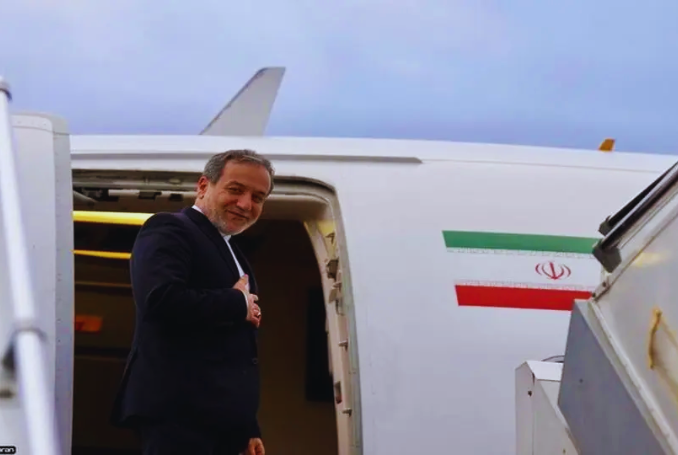
Iran says resistance forced adversaries into a ceasefire as diplomacy resumes amid US pressure and EU escalation.
Key Developments
- Iran says popular resistance and military readiness compelled adversaries to accept a ceasefire without conditions.
- Tehran confirms readiness to resume nuclear talks but categorically rejects US deadlines or ultimatums.
- US envoy Steve Witkoff is set to visit Israel amid mediation efforts involving Türkiye, Qatar, and Egypt.
- Iran summons EU envoys after IRGC designation and signals reciprocal political and legal measures.
- Military threats, diplomacy, and regional mediation are unfolding simultaneously in a volatile standoff.
Resistance as National Strategy
Iranian Foreign Minister Abbas Araghchi said Monday that the Iranian people “chose resistance over submission” and refused to accept external dictates, a stance he said ultimately forced Iran’s adversaries to return to diplomacy and accept a ceasefire without conditions.
Speaking from the shrine of Ruhollah Khomeini in Tehran, Araghchi emphasized that Iran’s diplomatic apparatus and armed forces operate “side by side” to defend the country. He said popular resistance, combined with military deterrence, altered the balance of power and reshaped the diplomatic landscape.
Araghchi added that Iran remains committed to diplomacy, but only based on mutual respect and without coercion, stressing that “the results of resistance will soon be reflected at the negotiating table.”
He also referenced what he described as renewed US-Israeli aggression on January 18–19, framing it as part of a broader continuum of pressure that Iran successfully confronted.
Iran Rejects Assassination Reports, Signals Readiness with Burial Sites for Potential US Casualties
Nuclear Talks Ordered to Resume
Iranian media reported that President Masoud Pezeshkian has ordered the resumption of nuclear negotiations with the United States, following a suspension triggered by the 12-day war launched after Israeli attacks on Iran in June 2025.
According to Tasnim News Agency, talks are expected to restart soon at the level of Araghchi and US envoy Steve Witkoff, though no official timetable or venue has been announced.
Iranian Foreign Ministry spokesman Esmail Baghaei confirmed that indirect communications are underway but firmly denied claims by US President Donald Trump that Iran had received any deadline or ultimatum.
Baghaei said Iran has “never accepted ultimatums” and will not negotiate under threat, reiterating that Tehran’s position is rooted in international law and its right to peaceful nuclear energy.
US Pressure and Military Signaling
Trump has publicly confirmed that a large US naval force is moving toward the region, describing it as a “very big, powerful armada,” while warning Iran to reach an agreement or face possible military action.
Iranian officials have interpreted these statements as pressure tactics rather than genuine diplomatic overtures. Baghaei noted that Washington’s messaging has been contradictory—combining threats with appeals for talks—while Iran remains in what he described as a “decision-making stage.”
During recent protests inside Iran, Iranian authorities accused the US and Israel of fomenting unrest, citing Trump’s public messages encouraging protesters to escalate.
Israeli Media Reveal Foiled Plan to Kill Hamas Leader Khalil al-Hayya in Beirut
Witkoff’s Visit
Amid these developments, Israeli officials confirmed that Witkoff is scheduled to visit Israel to meet Prime Minister Benjamin Netanyahu and the Israeli military leadership.
The visit comes as Israel faces growing regional and diplomatic scrutiny, particularly over Gaza, while simultaneously pushing Washington toward a harder line against Iran.
Israeli officials have framed Iran as the central regional threat, even as analysts warn that escalation could spiral into a broader conflict.
Signs of de-escalation have emerged through intensive mediation by regional actors. According to Axios, Türkiye, along with Qatar and Egypt, is working to convene a potential meeting in Ankara involving Witkoff and senior Iranian officials.
Iranian officials have welcomed mediation efforts, particularly those that prioritize dialogue over military escalation, while maintaining that talks must respect Iranian sovereignty.
Confrontation over IRGC
Tensions between Iran and Europe escalated sharply after the European Union designated the Islamic Revolutionary Guard Corps as a terrorist organization.
Baghaei said Iran has summoned all EU envoys in response and described the designation as “illegal, unjustified, and a strategic miscalculation.” He said a range of countermeasures is under review and has been submitted to Iran’s decision-making bodies.
Iran’s parliament has already approved a reciprocal move, classifying EU armies as terrorist organizations. Iranian officials accused Europe of acting to please Washington and Israel, noting that Israeli officials were among the first to applaud the designation.
Baghaei singled out France for what he described as a “destructive role” in diplomatic processes, saying Paris lacks the moral or legal standing to lecture Iran.
Military Readiness
Responding to US Central Command warnings about Iranian military exercises in the Persian Gulf, Baghaei said the drills are routine, defensive, and conducted annually to enhance Iran’s deterrence capabilities.
He dismissed claims that Iran’s exercises risk accidental clashes, emphasizing that Tehran does not seek confrontation but will respond decisively to any aggression.
Iranian officials have repeatedly stressed that resistance, deterrence, and diplomacy are not contradictory, but mutually reinforcing pillars of national strategy.
With military threats, diplomatic signaling, EU confrontation, and regional mediation unfolding simultaneously, Iranian officials describe the current moment as a narrow but real opportunity to prevent escalation.
Tehran insists that any agreement must recognize Iran’s rights under international treaties, reject coercion, and avoid repeating what it views as past Western failures that relied on pressure rather than diplomacy.
Iranian officials warn that continued threats or unilateral actions—whether military or political—will only strengthen resistance rather than produce concessions.
(PC, Al-Mayadeen, Tasnim, Anadolu, Axios; Iranian Foreign Ministry Statements)


“Europe escalated sharply after the European Union designated the Islamic Revolutionary Guard Corps as a terrorist organization” — Iran’s response to declare EU armies as terrorist was brilliant! Those armies are truly terrorist. Ranjan Solomon has an excellent analysis https://www.palestinechronicle.com/terror-lists-and-empire-the-case-of-irans-revolutionary-guards/
IRAN’S RESISTANCE INSPIRES US ALL!! … INSPIRES EVERY NATION !!! … INSPIRES EVERY HUMAN BEING !!! …. PEOPLE MUST BE MADE AWARE, EVEN THE MAJORITY OF US WHO EXIST IN THE SO-CALLED West ARE ALSO OPPRESSED BY THE Western elites and the shrinking 1% …FOR US, IRAN’S ABILITY TO RESIST Western dictat IS LIKE A BREATH OF FREEDOM TOO