
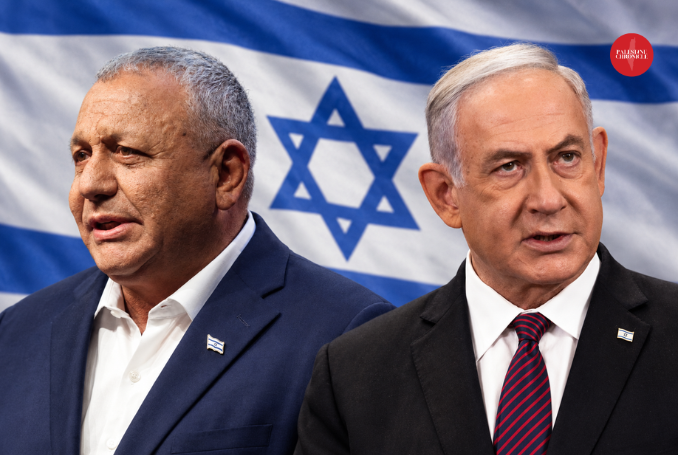

Israeli opposition leader Gadi Eisenkot leads Benjamin Netanyahu by nine points personally, while Netanyahu-aligned parties hold a narrow two-seat bloc advantage.
Key Takeaways
- Gadi Eisenkot leads Netanyahu 45% to 36% when respondents are asked who is better suited to serve as prime minister.
- Eisenkot’s Yashar is projected to win 22 seats, compared with just 18 for Netanyahu’s Likud, its lowest showing in a Channel 13 poll.
- Netanyahu-aligned parties nevertheless total 54 seats against 52 for the non-Arab opposition, leaving both short of the 61 required for a Knesset majority.
Eisenkot Leads Netanyahu by Nine Points
Israeli opposition leader Gadi Eisenkot holds a nine-point advantage over Prime Minister Benjamin Netanyahu on who is better suited to lead the government, according to a new Channel 13 poll.
The survey found that 45% of respondents preferred Eisenkot, leader of the Yashar party, as prime minister, compared with 36% who chose Netanyahu. Another 19% said they did not know.
The poll, conducted among 886 respondents with a margin of error of 3.3 percentage points, comes ahead of Israel’s October 27 general election.
The gap represents a notable advantage for Eisenkot on the personal leadership question. A Channel 12 poll in late July had put the two politicians level at 38% each, while an earlier July survey had Eisenkot ahead 43% to 34%.
Eisenkot’s party also leads Netanyahu’s Likud in the Channel 13 survey. Yashar is projected to receive 22 Knesset seats against 18 for Likud — the latter’s lowest result recorded in a Channel 13 poll.
Netanyahu:
Eisenkot cannot form a government, and he knows it. He is trying to hide that.
He cannot form a government without the Arab parties, and they reject the very existence of the State of Israel.
It is ridiculous and shameful to try to give legitimacy to something that… pic.twitter.com/04pj2DPlS6
— Clash Report (@clashreport) September 5, 2026
Netanyahu Bloc Holds Two-Seat Advantage
The picture changes, however, when the results are calculated by political blocs.
Parties expected to support a Netanyahu-led government receive a combined 54 seats, while the non-Arab opposition parties receive 52. The two Arab lists receive another 14 seats.
The result represents an improvement for Netanyahu’s bloc in Channel 13 polling. The network’s previous survey had the two blocs tied at 53 seats each.
Netanyahu’s 54 seats, however, remain seven short of the 61 required for a parliamentary majority.
The survey therefore presents two distinct findings: Netanyahu personally trails Eisenkot by nine percentage points, and Likud trails Yashar by four seats, while the collection of parties aligned with Netanyahu holds a narrow two-seat advantage over the non-Arab opposition.
No Clear Majority
Beyond Yashar’s 22 and Likud’s 18 seats, Naftali Bennett’s B’Yachad is projected to receive 12 seats, the Democrats 10, and Yisrael Beiteinu eight.
On Netanyahu’s side, the Religious Zionism-Zehut alliance and Itamar Ben-Gvir’s Otzma Yehudit each receive eight seats, Shas and United Torah Judaism seven each, and Ofer Winter’s People of Israel six.
אל תתרגשו מסקר ערוץ 13, שכבר כמה שבועות משדר פסימיות.
תסתכלו על הסקר בערוץ 16 הערב – התיקון בדרך! pic.twitter.com/GvMBBQqQQj
— Roi (@Roi_) September 16, 2026
The Joint List receives eight seats and Ra’am six, giving the Arab parties a combined 14.
The Channel 13 result is only one survey in a volatile election campaign. An average of five polls published the previous week put Netanyahu’s bloc at 53.6 seats and the non-Arab opposition at 53.4 — effectively level — while Yashar averaged 23.6 seats against Likud’s 21.8.
The latest Channel 13 poll therefore gives neither major bloc a parliamentary majority, even as it shows a substantial gap between Eisenkot and Netanyahu on who respondents consider better suited to serve as prime minister.
(PC, Israeli media, AA)




A prediction…
Eisenkot will ” die in his sleep ” , or,
be ” killed by Hamas ” …