
Hezbollah enters widening war as US deaths rise, Tehran is bombed, and Lebanon faces renewed Israeli devastation.
Key Developments
- Six US soldiers confirmed killed as Iranian retaliation intensifies across regional bases.
- Hezbollah launched rockets and drones toward northern Israel, formally opening a new front.
- Israel bombed Beirut’s southern suburbs and expanded strikes across southern and eastern Lebanon.
- Explosions hit central and western Tehran, including areas near state broadcasting facilities.
- Iran targeted US military assets and commercial shipping in the Strait of Hormuz.
- Evacuation orders were issued in Tehran and across dozens of Lebanese towns.
- Iraq and several Gulf states reported drone alerts and attacks on US-linked facilities.
- Washington outlined war objectives focused on dismantling Iran’s missile and naval capabilities.
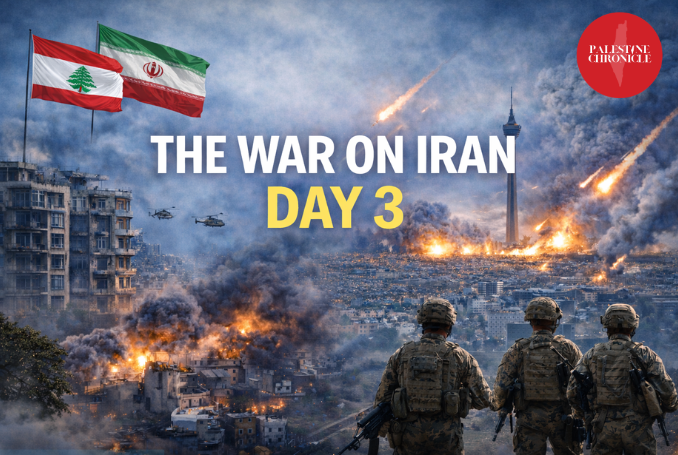
Day Three of the US–Israeli war on Iran marked a decisive and dangerous transformation of the conflict.
What began as coordinated US–Israeli airstrikes targeting Iranian military infrastructure has now evolved into a multi-front regional war. Tehran remains under sustained bombardment. Lebanon is once again facing heavy Israeli airstrikes. US military casualties are mounting. Maritime routes in the Gulf are under threat. And regional actors are being pulled deeper into the confrontation.
The escalation on the third day suggests that neither side is preparing to de-escalate.
US Casualties Confirmed
US Central Command confirmed that six American soldiers were killed during combat operations connected to Iranian retaliatory strikes on US facilities in the region. The remains of previously missing personnel were recovered from sites struck during Iran’s initial response. Additional US troops were reported wounded.
The confirmation of American deaths marks a critical political and military development. It shifts the conflict from a distant air campaign to one with tangible domestic consequences in the United States.
A White House memo circulated to Congressional Republicans outlined Washington’s stated objectives: dismantling Iran’s missile industry, neutralizing its naval capacity, weakening allied resistance movements across the region, and reshaping the regional security balance.
President Donald Trump publicly called on Iranians to “seize this moment and reclaim their country,” signaling that Washington’s objectives are not limited to military infrastructure but extend into political transformation.
Despite increasingly aggressive rhetoric, US officials continue to state that no ground invasion is currently planned. The strategy, for now, relies on air power, naval operations, and regional partnerships.
Tehran Under Bombardment
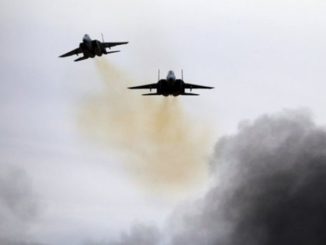
Israeli and US aircraft continued striking Iranian cities, including Tehran, Isfahan, Yazd, and other provinces.
Powerful explosions were reported in central and western Tehran. Strikes hit areas near the Iranian Radio and Television Authority complex. Israel claimed it targeted what it described as a “regime media and propaganda center.”
Iranian state television confirmed explosions near its headquarters but said broadcasting continued uninterrupted and reported no fatalities at the facility itself. However, Iranian officials elsewhere have reported civilian casualties since the war began.
Evacuation warnings were issued for districts of Tehran, including the Evin neighborhood and areas surrounding broadcasting facilities, ahead of additional announced strikes.
Strikes were also reported near nuclear-linked sites, including Natanz and Isfahan. However, the International Atomic Energy Agency stated there is no indication that Iran’s nuclear facilities have been destroyed.
Iranian air defenses reportedly intercepted multiple drones and missiles. Iranian officials insist that key strategic infrastructure remains intact despite days of bombardment.
Who Decides What Is Legitimate? Power, Democracy, and the War on Iran
Hezbollah and Northern Front
The most consequential development came from Lebanon.
Hezbollah confirmed it launched rockets and drones toward northern Israel, including areas south of Haifa. The Lebanese resistance group described its involvement as a defensive response to Israeli aggression and retaliation for the killing of Iran’s Supreme Leader.
Air raid sirens were activated across northern Israel as projectiles were detected. Israeli authorities said at least one rocket was intercepted, while others fell in open areas.
Israeli airstrikes targeted Beirut’s southern suburbs, long considered a Hezbollah stronghold. Additional strikes hit towns across southern Lebanon and the Bekaa Valley. Lebanese officials reported dozens killed and more than 150 wounded in Israeli bombardment since the escalation intensified.
Evacuation orders were issued for dozens of Lebanese towns, as well as specific buildings in Beirut’s southern suburbs. Israeli officials warned that Hezbollah would “bear the consequences” for joining the war.
The war on Lebanon has never truly ceased, marked by thousands of Israeli violations since the November 2024 ceasefire and the killing of hundreds of Lebanese.
The latest mobilization of Israeli reservists and expanded air operations signal not a reopening of a dormant front, but a dangerous escalation of an ongoing war.
Israel Kills 52 in Lebanon, Mohammad Raad Speaks after False Death Reports
Iraq and Regional Spillover
The conflict’s spillover continued across Iraq and the Gulf.
Iraqi resistance factions claimed dozens of rocket and drone operations targeting US military facilities inside Iraq and elsewhere in the region. Iraqi authorities stated they are preventing the use of Iraqi territory for attacks against neighboring states, attempting to contain further escalation.
In Kuwait, air raid sirens sounded amid reports of drone activity. Bahrain reported missile and drone alerts, with damage reported near maritime installations. Jordan denied claims that attacks originated from its territory.
Iran’s Revolutionary Guard said it targeted the USS Abraham Lincoln with cruise missiles and struck oil tankers in the Strait of Hormuz. It warned that commercial shipping routes would not remain secure if hostilities continue.
US Central Command countered that the Strait of Hormuz remains open, dismissing Iranian claims of closure.
The maritime dimension of the war now poses one of the most significant global risks. Any sustained disruption in Hormuz could severely impact energy markets and international trade.
Energy, Diplomacy and Global Reactions
Energy markets reacted sharply as European gas prices surged. Insurance companies began suspending war-risk coverage for Gulf shipping. Airlines extended flight suspensions to regional destinations.
Britain confirmed it permitted the defensive use of its bases following a US request. British facilities in Cyprus were placed on high alert after drone incidents.
China condemned the US–Israeli strikes as violations of international law. Russia rejected attacks on civilian targets and called for immediate restraint. European governments began preparing evacuation plans for nationals in the region.
Despite diplomatic warnings, no coordinated international ceasefire initiative has emerged.
A War Entering a Prolonged Phase
Day Three made clear that this is no longer a limited exchange of strikes.
- Hezbollah has formally entered the war, opening a northern front against Israel.
- US fatalities have hardened Washington’s political posture.
- Iran has expanded retaliation to include maritime and regional military targets.
- Lebanon is under renewed and sustained Israeli bombardment.
- Iraq risks becoming another active theater.
- Military leaders on all sides have indicated that operations could continue for weeks.
- Iranian officials state they are prepared for a prolonged confrontation.
The trajectory now points toward sustained regional instability.
The question is no longer whether the war will spread.
It already has.
LIVE BLOG: Hezbollah Joins War, Beirut Bombed and US Troops Killed – Day 3
(The Palestine Chronicle)